
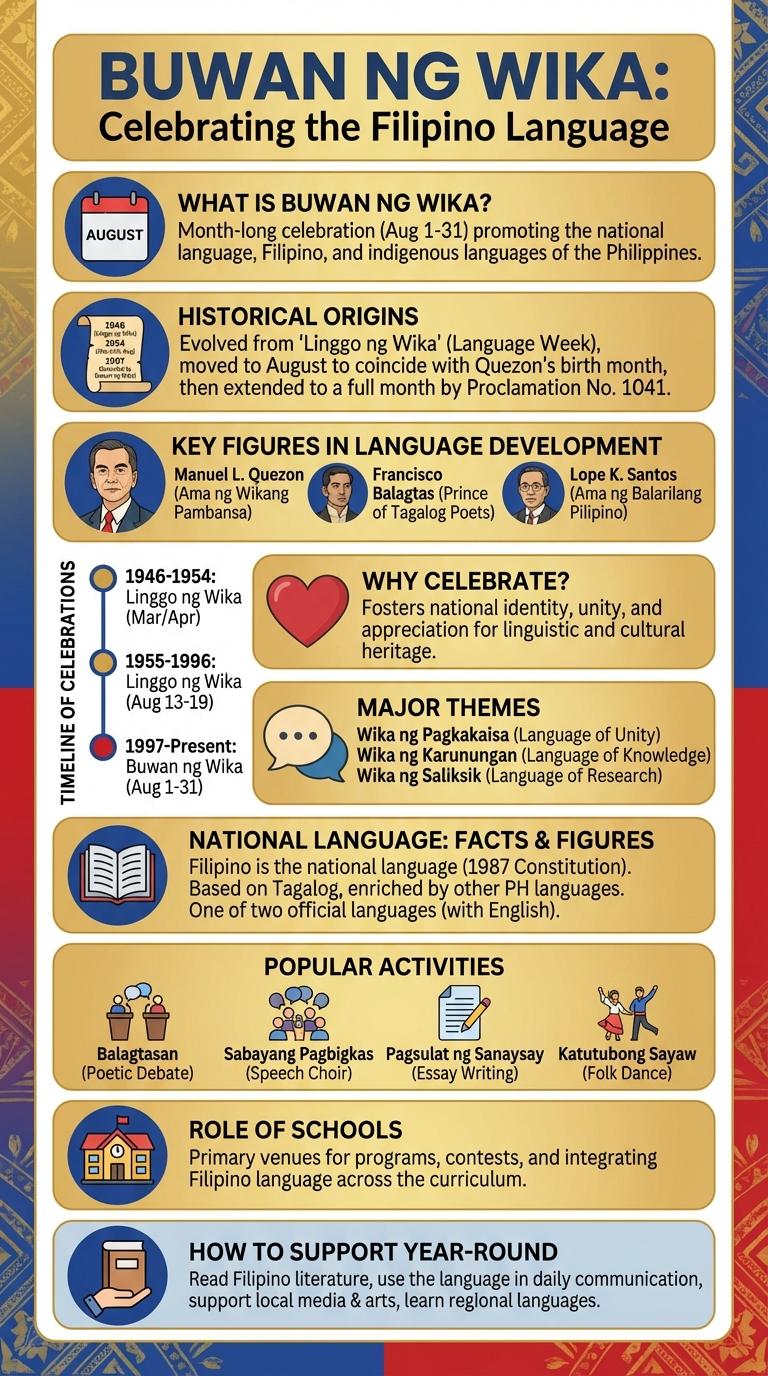
Celebrate the rich cultural heritage of the Philippines through the vibrant visuals of the Buwan ng Wika infographic. This informative graphic highlights the significance of the Filipino language and traditions celebrated every August. Explore key facts, milestones, and colorful imagery that showcase the enduring pride in Filipino identity.
What is Buwan ng Wika?
Buwan ng Wika is an annual celebration in the Philippines dedicated to promoting and preserving Filipino language and culture. It takes place every August, highlighting the importance of Filipino as a national language.
- Purpose - To encourage Filipinos to appreciate and use the Filipino language in daily life.
- History - Originally celebrated as Linggo ng Wika in 1946 and later expanded to a month-long event.
- Activities - Schools and communities organize cultural presentations, contests, and exhibits showcasing Filipino heritage.
Historical Origins of Buwan ng Wika
Buwan ng Wika, celebrated every August in the Philippines, honors the country's rich linguistic heritage and the national language, Filipino. The observance traces its origins to the establishment of Linggo ng Wika in 1946 by the Department of Education.
Linggo ng Wika was created to promote Filipino as the national language and to foster unity among Filipinos. In 1997, Presidential Proclamation No. 1041 extended the celebration to an entire month, highlighting the cultural and historical significance of Filipino language development.
Key Figures in Filipino Language Development
The Buwan ng Wika celebrates the rich heritage and evolution of the Filipino language. Key figures in its development include Francisco Balagtas, known for his epic poem "Florante at Laura," which helped elevate Tagalog literature. Another important figure is Lope K. Santos, who contributed to the standardization of the Filipino language through his works and leadership in language institutions.
Timeline of Buwan ng Wika Celebrations
The Buwan ng Wika celebration, inaugurated in 1997, honors the Filipino language and culture every August. Key milestones include the 2009 Executive Order No. 335, which expanded the celebration to the entire month of August. Annual events highlight traditional arts, literature, and indigenous languages to promote national identity and cultural heritage.
Why Celebrate Buwan ng Wika?
Why is Buwan ng Wika celebrated in the Philippines? Buwan ng Wika honors the Filipino language and promotes national identity. It fosters pride and unity among Filipinos by celebrating their cultural heritage.
Major Themes of Buwan ng Wika
Buwan ng Wika celebrates the richness and diversity of the Filipino language and culture every August. It highlights important themes that promote national identity and cultural pride.
- Language and Identity - Emphasizes the Filipino language as a key element of national identity and unity.
- Cultural Heritage - Showcases traditional Filipino customs, arts, and practices to preserve cultural heritage.
- Education and Awareness - Encourages learning about Filipino history, literature, and language to foster appreciation.
National Language: Facts & Figures
The Buwan ng Wika, celebrated every August, honors the rich linguistic heritage of the Philippines. It promotes the use of Filipino as the national language and highlights the diversity of regional dialects.
Filipino is the standardized form of Tagalog and serves as the country's national language. Over 170 languages are spoken across the Philippines, showcasing its vibrant cultural landscape. The Komisyon sa Wikang Filipino (KWF) oversees efforts to develop and promote Filipino and regional languages.
Popular Activities During Buwan ng Wika
| Popular Activities | Description |
|---|---|
| Language Contests | Competitions in Filipino language skills such as poetry, essay writing, and oratory |
| Cultural Presentations | Traditional dances, songs, and theatrical performances celebrating Filipino heritage |
| Art Exhibits | Showcases of Filipino visual arts highlighting national themes and history |
| Food Festivals | Events featuring traditional Filipino dishes promoting local cuisine |
| Seminars and Workshops | Educational sessions on Filipino language, culture, and history |
Role of Schools in Promoting Filipino Language
Schools play a crucial role in promoting the Filipino language by integrating it into the curriculum and daily activities. They create an environment where students actively use Filipino in communication and learning.
Through cultural programs and language workshops, schools nurture Filipino identity and pride among students. Teachers are trained to encourage the use of Filipino, enhancing language proficiency and appreciation.