
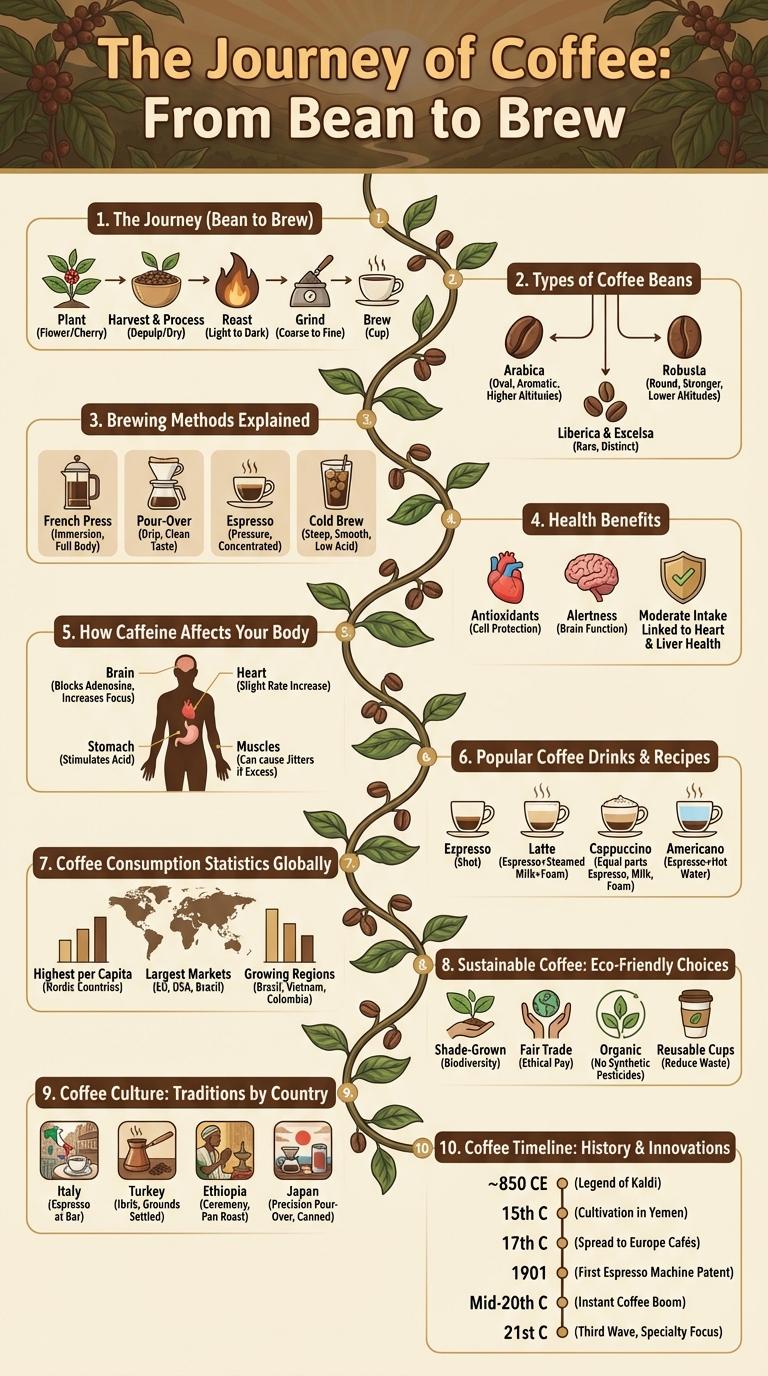
Coffee's rich history and global impact make it one of the most beloved beverages worldwide. This infographic illustrates key facts about coffee production, consumption trends, and its cultural significance. Insights into different brewing methods and health benefits are also highlighted to deepen appreciation for every cup.
The Journey of Coffee: From Bean to Brew
Coffee begins as a small cherry growing on coffee plants in tropical regions. These cherries are carefully harvested to ensure the highest quality beans.
After harvesting, the beans undergo processing methods like washing or drying to remove the outer layers. The beans are then roasted to develop their unique flavors before grinding and brewing.
Types of Coffee Beans Around the World
Coffee beans are the seeds of the Coffea plant, with the main types being Arabica, Robusta, Liberica, and Excelsa. Each type offers distinct flavors, caffeine levels, and growing conditions, influencing global coffee culture.
Arabica beans, prized for their smooth, mild taste, grow primarily in Latin America and East Africa. Robusta beans, known for their strong, bitter flavor and higher caffeine content, are mostly cultivated in Africa and Southeast Asia.
Coffee Brewing Methods Explained
Coffee brewing methods vary in technique, flavor extraction, and equipment used. Popular methods include drip brewing, French press, espresso, pour-over, and cold brew, each producing unique taste profiles. Understanding these methods helps coffee lovers select the best approach for their preferred flavor and strength.
Health Benefits of Drinking Coffee
Coffee is a popular beverage known for its rich flavor and stimulating effects. Consuming coffee in moderation offers several health benefits supported by scientific research.
- Boosts Mental Alertness - Caffeine in coffee enhances brain function, improving focus and cognitive performance.
- Rich in Antioxidants - Coffee contains antioxidants that help protect cells from damage and reduce inflammation.
- Supports Heart Health - Moderate coffee consumption is linked to a lower risk of heart disease and stroke.
How Caffeine Affects Your Body
Caffeine is a natural stimulant found in coffee that impacts your central nervous system. It temporarily boosts alertness and reduces the perception of fatigue.
Once consumed, caffeine blocks adenosine receptors, preventing drowsiness. It increases the release of neurotransmitters like dopamine and norepinephrine, enhancing focus and mood. The effects typically peak within 30 to 60 minutes and can last several hours depending on individual metabolism.
Popular Coffee Drinks and Recipes
| Popular Coffee Drink | Recipe Highlights |
|---|---|
| Espresso | Strong, concentrated coffee brewed by forcing hot water through finely-ground beans. Base for many coffee drinks. |
| Americano | Espresso diluted with hot water for a smoother, larger cup. Typically 1 shot espresso plus 6-8 oz hot water. |
| Latte | Espresso combined with steamed milk and topped with a small amount of milk foam. Ratio approx. 1:3 espresso to milk. |
| Cappuccino | Equal parts espresso, steamed milk, and milk foam, known for its rich texture and strong flavor. |
| Macchiato | Espresso "stained" with a small amount of foam or steamed milk. Stronger than a latte with less milk. |
Coffee Consumption Statistics Globally
How much coffee is consumed worldwide each year? Coffee ranks as one of the most popular beverages globally, with over 165 million 60-kilogram bags produced annually. The global coffee consumption averages around 10 million tons per year, reflecting its widespread appeal and cultural significance.
| Region | Annual Coffee Consumption (Million kg) |
|---|---|
| Europe | 35 |
| North America | 25 |
| Asia | 20 |
| South America | 15 |
| Africa | 5 |
Which countries consume the most coffee per capita? Finland leads with an average consumption of 12 kg per person annually, followed by Norway and Iceland. These Nordic countries show a strong cultural preference for coffee, surpassing many other nations globally.
What are the trends in global coffee consumption? Coffee consumption has steadily increased by approximately 2% annually in recent years, driven by emerging markets in Asia and sustained demand in traditional markets like Europe and North America. Specialty coffee and sustainable sourcing are key growth areas influencing consumer preferences worldwide.
Sustainable Coffee: Eco-Friendly Choices
Sustainable coffee promotes environmentally friendly farming that supports biodiversity and reduces carbon footprint. Choosing sustainable coffee means investing in ethical production methods that benefit both ecosystems and communities.
- Shade-Grown Coffee - Cultivated under forest canopies, shade-grown coffee preserves wildlife habitats and enhances soil health.
- Organic Farming Practices - Avoids synthetic chemicals, minimizing pollution and promoting healthier ecosystems in coffee-growing regions.
- Fair Trade Certifications - Ensures fair wages and safe working conditions while encouraging sustainable agricultural methods.
Coffee Culture: Traditions by Country
Coffee culture varies significantly across the globe, with unique traditions shaping each country's approach to brewing and enjoying coffee. In Italy, espresso is a daily ritual enjoyed quickly at local bars, while in Turkey, coffee is thick, strong, and served with a side of fortune-telling using coffee grounds. Meanwhile, in Ethiopia, coffee ceremonies are a vital social event, symbolizing hospitality and respect.