
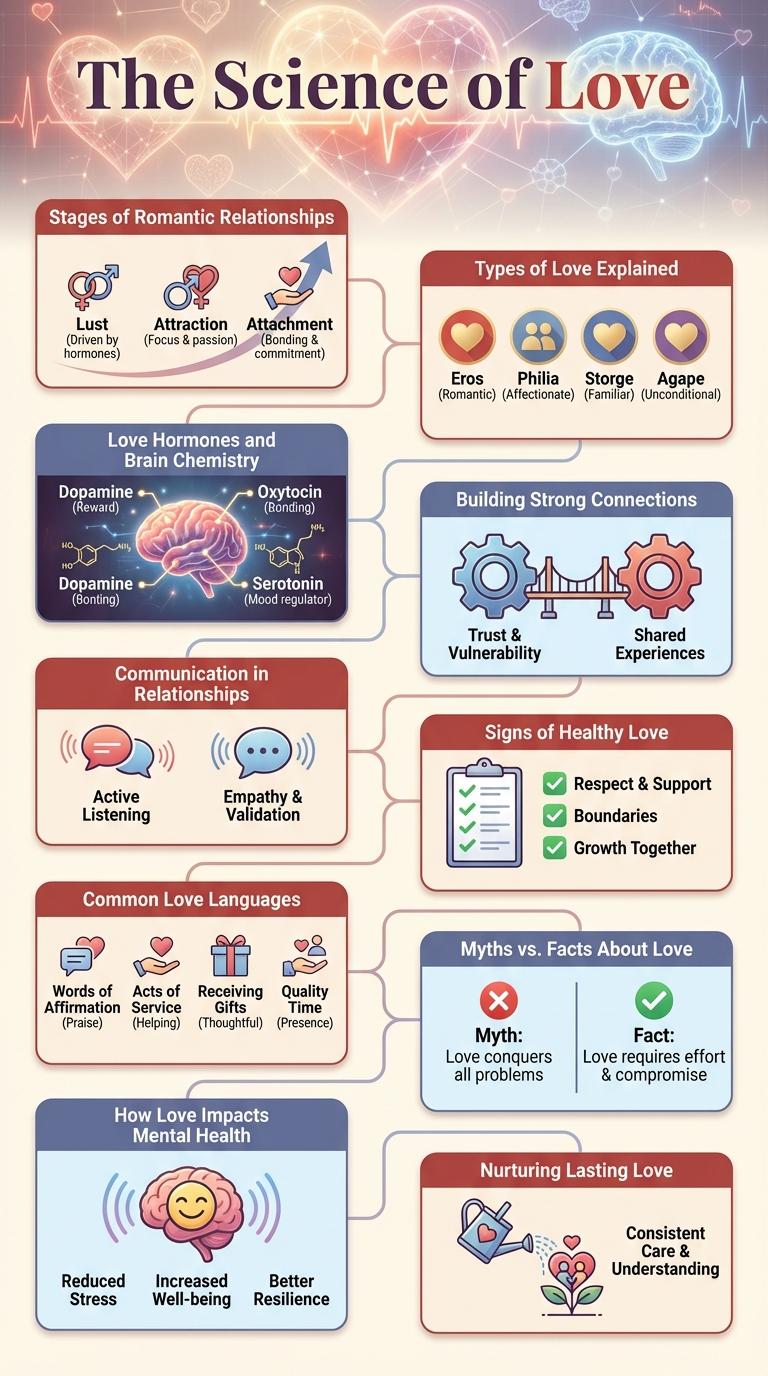
Love is a powerful emotion that shapes human connections and influences behavior across cultures. Visualizing its many facets through an infographic helps capture the complexity and beauty of relationships. This graphic representation highlights key statistics, expressions, and stages of love in an engaging and accessible format.
The Science of Love
| Aspect | Scientific Insight |
|---|---|
| Brain Chemicals | Love triggers release of dopamine, oxytocin, and serotonin, enhancing pleasure, bonding, and mood regulation. |
| Neural Activation | The brain's reward system, especially the ventral tegmental area, lights up during romantic attraction. |
| Biological Purpose | Love promotes pair bonding, increasing chances of offspring survival and social cooperation. |
| Heart Rate Response | Heart rate increases when viewing loved ones, linked to adrenaline and heightened emotional arousal. |
| Long-Term Effects | Oxytocin supports trust and attachment, strengthening long-term relationship stability. |
Stages of Romantic Relationships
Romantic relationships typically evolve through distinct stages that shape emotional connection and compatibility. Understanding these stages helps partners navigate challenges and deepen their bond over time.
The initial stage, Attraction, involves physical and emotional interest sparked by chemistry and first impressions. Next, the Building stage focuses on establishing trust, communication, and shared experiences.
Types of Love Explained
Love is a complex emotion that manifests in various forms, each with unique characteristics and significance. Understanding these types helps deepen connections and improve relationships.
Romantic love involves passion and intimacy, often marked by attraction and emotional bonding. Familial love is based on deep-rooted care and loyalty between family members.
Love Hormones and Brain Chemistry
Love triggers complex brain chemistry that profoundly affects emotions and behavior. Key hormones play essential roles in the experience of romantic attachment and bonding.
- Oxytocin - Known as the "love hormone," oxytocin enhances bonding and trust between partners.
- Dopamine - This neurotransmitter creates feelings of pleasure and reward during romantic interactions.
- Serotonin - Serotonin levels influence mood stability and obsessive thoughts in early-stage love.
The interplay of these hormones shapes the emotional intensity and attachment characteristic of romantic love.
Building Strong Connections
Building strong connections is essential for lasting love and emotional intimacy. Understanding key elements can help deepen relationships and foster mutual trust.
- Effective Communication - Open and honest dialogue strengthens understanding and resolves conflicts quickly.
- Emotional Support - Providing empathy and encouragement builds a safe and nurturing environment.
- Shared Experiences - Creating memories together enhances bonding and mutual appreciation.
Communication in Relationships
How vital is communication in fostering strong relationships?
Effective communication forms the foundation of trust and understanding between partners. Open dialogue helps resolve conflicts and strengthens emotional bonds.
Signs of Healthy Love
Healthy love fosters trust, respect, and open communication between partners. It creates a safe space where both individuals feel valued and understood.
Signs of healthy love include mutual support during challenges, honest and kind conversations, and appreciation for each other's individuality. Partners maintain boundaries and encourage personal growth. They resolve conflicts with empathy and a willingness to listen.
Common Love Languages
Understanding common love languages enhances relationship communication and connection. The five primary love languages are Words of Affirmation, Acts of Service, Receiving Gifts, Quality Time, and Physical Touch. Identifying your partner's love language helps express affection in the most meaningful way.
Myths vs. Facts About Love
Love is often surrounded by myths that can mislead our understanding of relationships. Common myths include the idea that love happens instantly or that true love means never having conflicts. In reality, love develops over time through trust, communication, and mutual effort, and encountering challenges is a natural part of strong relationships.