
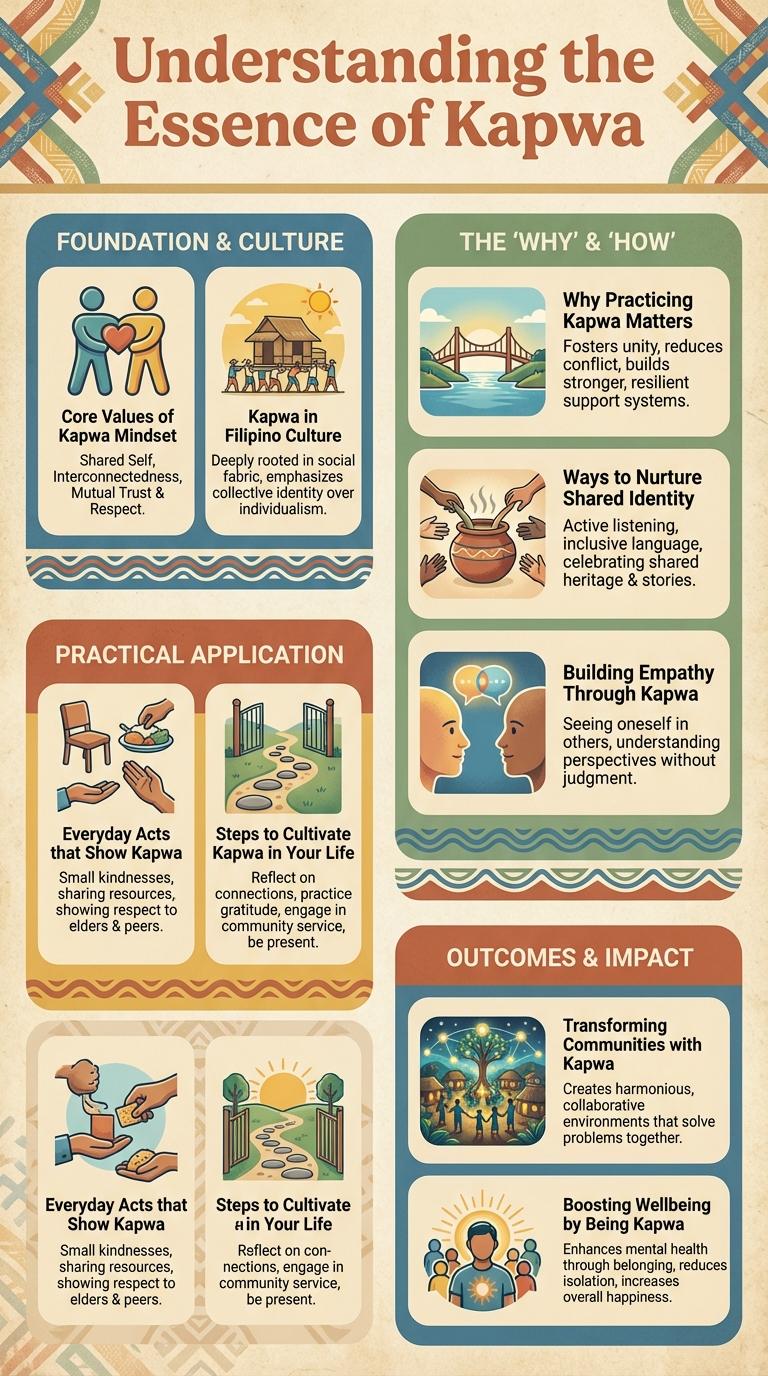
Be a Kapwa highlights the Filipino value of shared identity and interconnectedness through a visually engaging infographic. The design emphasizes empathy, compassion, and community support as core elements of Kapwa, fostering a deeper understanding of collective responsibility. This infographic serves as a powerful reminder of meaningful relationships that nurture unity and cultural pride.
Understanding the Essence of Kapwa
Kapwa is a Filipino value that embodies shared identity and interconnectedness among people. It emphasizes empathy, mutual respect, and collective responsibility within the community. Understanding kapwa fosters harmony by recognizing that others are an extension of oneself.
Core Values of Kapwa Mindset
The Kapwa mindset emphasizes interconnectedness and shared identity among individuals. It promotes mutual respect, empathy, and collective well-being within communities.
- Shared Identity - Recognizing that all individuals are part of a greater whole, fostering a sense of unity.
- Empathy - Understanding and feeling the emotions and experiences of others to build deeper connections.
- Collective Responsibility - Committing to the welfare of the group, ensuring everyone's needs are considered and met.
Why Practicing Kapwa Matters
Why practice Kapwa in daily life? Kapwa promotes unity and empathy by recognizing the shared identity between oneself and others. This values-based approach cultivates social harmony and mutual respect essential for community wellbeing.
How does Kapwa influence relationship building? It encourages genuine connection through understanding and compassion, fostering stronger interpersonal bonds. Kapwa nurtures inclusiveness, reducing conflicts and enhancing cooperation.
What role does Kapwa play in mental health? Embracing Kapwa reduces feelings of isolation by reinforcing relatedness and support networks. This collective mindset promotes emotional resilience and shared wellbeing.
Why is Kapwa important for cultural identity? Kapwa sustains Filipino communal values deeply rooted in social interconnectedness. Practicing Kapwa preserves traditions that underscore collective responsibility and care.
How can Kapwa impact societal development? It drives participatory growth by engaging community members in collaborative problem-solving. Kapwa-based initiatives lead to equitable and sustainable progress aligned with shared goals.
Ways to Nurture Shared Identity
Being a Kapwa means recognizing the shared identity that connects us all as fellow human beings. Nurturing this bond fosters empathy, unity, and collective well-being.
- Practice Active Listening - Engage deeply with others' stories to understand their perspectives and emotions.
- Celebrate Cultural Traditions - Honor shared customs and rituals that reinforce a sense of community and belonging.
- Promote Collaborative Actions - Work together on common goals to strengthen mutual trust and cooperation.
Embracing Kapwa encourages meaningful relationships that uplift both individuals and communities.
Everyday Acts that Show Kapwa
| Everyday Act | Meaning and Impact |
|---|---|
| Helping Neighbors | Offers support and builds community trust, embodying shared responsibility. |
| Listening Actively | Shows empathy and respect, strengthening interpersonal relationships. |
| Sharing Resources | Demonstrates generosity and unity, promoting collective well-being. |
| Practicing Patience | Reflects understanding and tolerance, fostering harmony in daily interactions. |
| Expressing Gratitude | Encourages positivity and mutual appreciation, enhancing social bonds. |
Building Empathy Through Kapwa
Building empathy through Kapwa highlights the Filipino value of shared identity and interconnectedness. It fosters a deep understanding and compassion among individuals by recognizing others as an extension of oneself.
Kapwa encourages seeing beyond personal differences and embracing a collective sense of belonging. It nurtures emotional bonds that strengthen social harmony and cooperation. Practicing Kapwa promotes kindness, respect, and genuine concern for the well-being of others.
Kapwa in Filipino Culture
Kapwa is a core concept in Filipino culture that emphasizes shared identity and interconnectedness among people. It reflects the Filipino value of seeing others as equals and part of a collective whole.
- Shared Identity - Kapwa represents the recognition of others as fellow human beings with shared experiences and emotions.
- Community Focus - It fosters strong social bonds and communal cooperation essential in Filipino society.
- Emotional Connection - Kapwa encourages empathy and mutual respect, promoting harmonious relationships.
Transforming Communities with Kapwa
Kapwa, a Filipino value embodying shared identity and togetherness, plays a vital role in transforming communities. Embracing Kapwa fosters empathy, cooperation, and collective progress.
Communities that practice Kapwa experience increased social harmony and resilience. This shared sense of belonging inspires collaborative solutions to local challenges.
Boosting Wellbeing by Being Kapwa
Being Kapwa means embracing shared identity and community, which significantly enhances mental and emotional wellbeing. This Filipino cultural value fosters empathy, social support, and a sense of belonging, crucial for reducing stress and promoting happiness. Practicing Kapwa strengthens relationships, creating a supportive environment that boosts overall life satisfaction and resilience.