
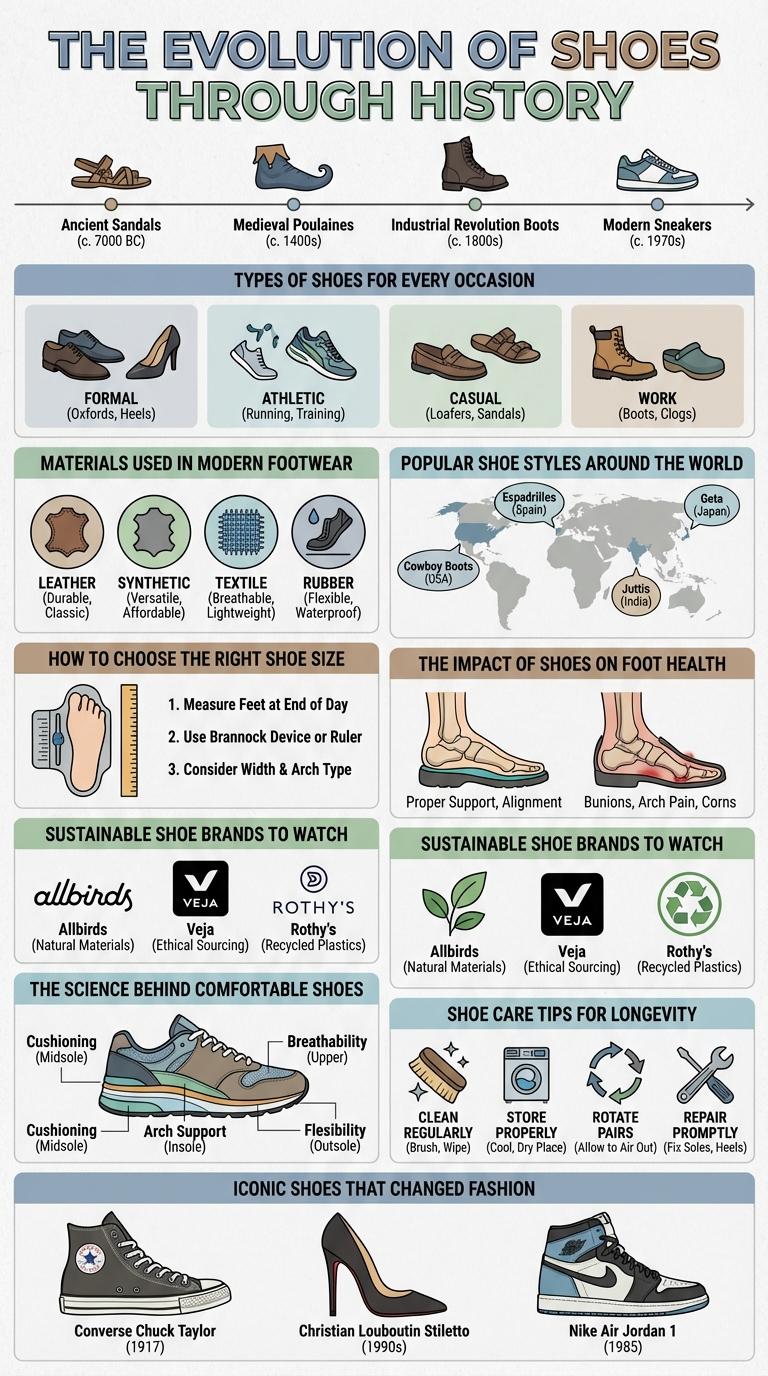
Shoes combine style and function to define footwear choices across cultures and climates. Understanding shoe types, materials, and designs helps consumers select the perfect pair for comfort and durability. Infographics visually simplify this information, making shoe selection easier and more informed.
The Evolution of Shoes Through History
Shoes have evolved significantly from simple foot protection to fashion statements and performance enhancers. Early footwear primarily focused on utility, made from natural materials like leather and wood.
During ancient civilizations, shoes symbolized social status and were crafted with intricate designs. Modern advancements introduced specialized shoes for sports, comfort, and style, incorporating synthetic materials.
Types of Shoes for Every Occasion
Shoes come in various types designed to suit different occasions and styles. Common categories include casual sneakers, formal dress shoes, athletic running shoes, comfortable sandals, and rugged boots. Selecting the right type of shoe enhances both comfort and fashion for any event.
Materials Used in Modern Footwear
Shoes today incorporate a variety of advanced materials to enhance comfort, durability, and style. Understanding the common materials used in modern footwear helps consumers make informed choices tailored to their needs.
- Leather - Durable and breathable, leather is prized for its natural texture and ability to conform to the foot over time.
- Synthetic Fabrics - Lightweight and water-resistant, synthetic materials like polyester and nylon provide flexibility and easy maintenance.
- Rubber Soles - Offer excellent traction and shock absorption, making them ideal for athletic and casual shoes.
- EVA Foam - Ethylene Vinyl Acetate foam is used in midsoles for lightweight cushioning and impact protection.
- Knit Uppers - Made with engineered yarns, knit uppers allow breathability and a snug, sock-like fit.
Popular Shoe Styles Around the World
Shoes vary widely across cultures, reflecting local traditions and fashion trends. Popular shoe styles highlight the diversity and innovation in footwear design around the world.
- Espadrilles in Spain - Lightweight, woven espadrilles are a staple of Spanish summer fashion, embodying casual elegance.
- Clogs in the Netherlands - Wooden clogs are traditional Dutch footwear, known for durability and unique craftsmanship.
- Flip-flops in Brazil - Brightly colored flip-flops are essential beachwear, symbolizing the laid-back lifestyle of Brazil.
How to Choose the Right Shoe Size
Choosing the right shoe size ensures comfort and prevents foot problems. Proper fit enhances performance and supports foot health.
- Measure Your Feet - Use a ruler or foot measuring device to get accurate length and width measurements.
- Shop Later in the Day - Feet tend to swell, so measuring in the afternoon guarantees the best fit.
- Check Shoe Sizing Charts - Sizes vary by brand, so consult specific sizing guides before purchasing.
- Allow Toe Room - Leave about a half-inch space between your longest toe and the shoe's front for comfort.
- Consider Foot Shape - Width and arch type influence the suitable shoe model for optimal support.
Try shoes on with socks you intend to wear regularly to confirm the perfect size and fit.
The Impact of Shoes on Foot Health
Shoes play a crucial role in maintaining foot health by providing support, cushioning, and protection. Proper footwear helps prevent common foot problems such as plantar fasciitis, bunions, and calluses.
Ill-fitting shoes can cause discomfort, pain, and long-term damage to the feet and posture. Choosing shoes with adequate arch support and cushioning reduces stress on joints and muscles. Regularly replacing worn-out shoes is essential to avoid increased risk of injuries.
Sustainable Shoe Brands to Watch
Which shoe brands lead the way in sustainability today?
Sustainable shoe brands focus on eco-friendly materials and ethical production methods. These companies reduce environmental impact while offering stylish, durable footwear.
| Brand | Key Sustainability Feature |
|---|---|
| Allbirds | Uses natural materials like merino wool and eucalyptus fiber |
| Veja | Offers fair trade leather and recycled plastic soles |
| Rothy's | Produces shoes from recycled plastic water bottles |
| Adidas x Parley | Creates footwear with ocean plastic waste |
| Native Shoes | Prioritizes lightweight, reusable, and cruelty-free materials |
The Science Behind Comfortable Shoes
Comfortable shoes combine ergonomic design and advanced materials to reduce foot strain and enhance support. Proper arch support, cushioning, and breathable fabrics contribute to overall foot health and comfort.
The science behind comfort involves biomechanics, analyzing how shoes absorb shock and distribute pressure evenly. Innovations like memory foam insoles and flexible soles help in adapting to individual foot shapes and movements.
Shoe Care Tips for Longevity
| Tip | Description |
|---|---|
| Regular Cleaning | Remove dirt and stains promptly using appropriate cleaning products specific to the shoe material. |
| Proper Drying | Air dry shoes naturally away from direct heat sources to prevent material damage and warping. |
| Use Shoe Trees | Insert cedar shoe trees to maintain shape and absorb moisture after wearing shoes. |
| Rotate Footwear | Avoid wearing the same pair every day, allowing shoes time to air out and recover. |
| Storage Techniques | Store shoes in a cool, dry place, using dust bags or boxes to protect from dust and sunlight. |