
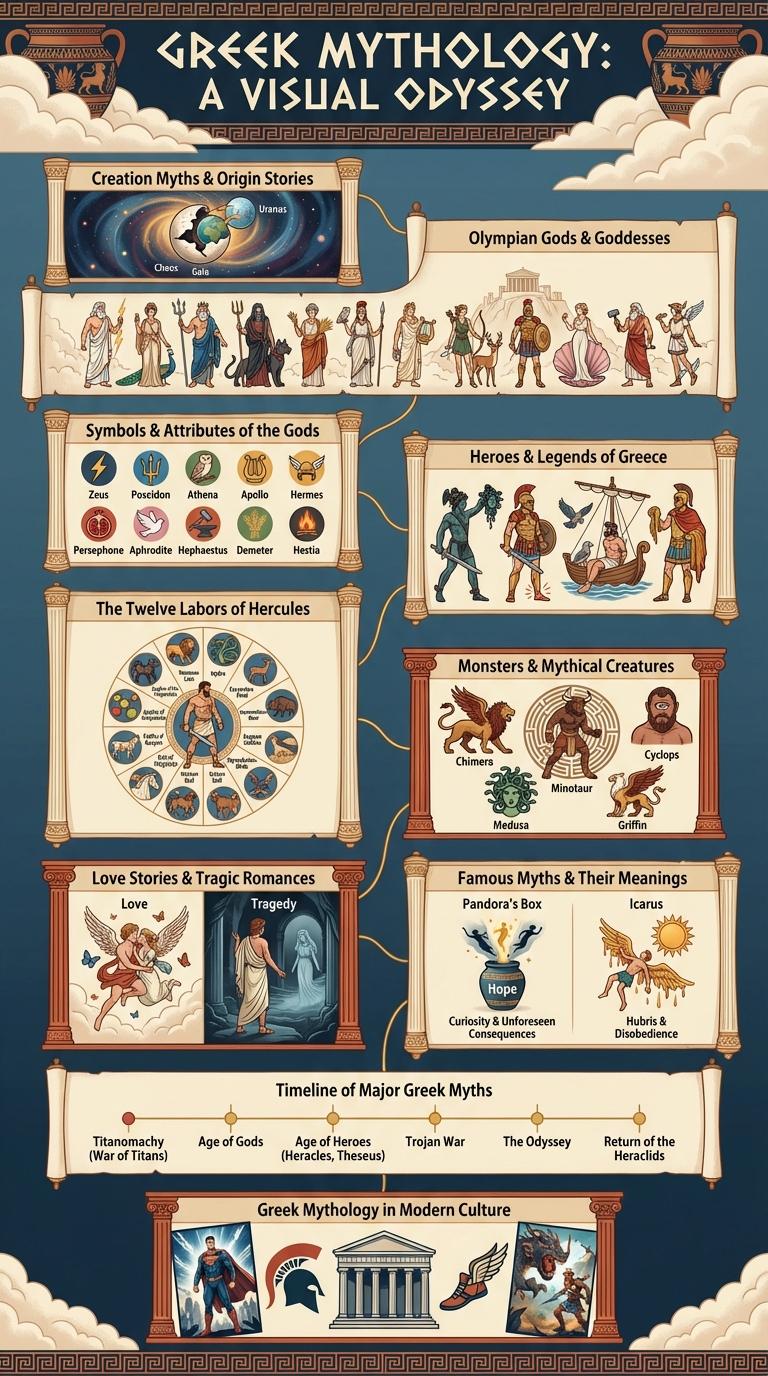
Greek mythology reveals a rich tapestry of gods, heroes, and legendary tales that have shaped Western culture for centuries. This infographic presents key figures and stories, highlighting their enduring impact on art, literature, and modern storytelling. Explore the symbolism and significance behind these timeless myths in a visually engaging format.
Olympian Gods and Goddesses
Greek mythology features twelve major Olympian gods and goddesses who reside on Mount Olympus. These deities represent various aspects of life, nature, and human experience, influencing many ancient Greek stories.
Zeus, the king of gods, rules the sky and thunder, while Hera, his wife, is the goddess of marriage and family. Other key Olympians include Poseidon, god of the sea, and Athena, goddess of wisdom and war strategy.
Heroes and Legends of Greece
| Hero / Legend | Key Information |
|---|---|
| Heracles | Known for his Twelve Labors, Heracles embodies strength and perseverance, completing impossible tasks to atone for past mistakes. |
| Perseus | Famed for slaying Medusa, Perseus used a mirrored shield and winged sandals to defeat the Gorgon and rescue Andromeda. |
| Theseus | Prince of Athens who defeated the Minotaur in the labyrinth, symbolizing bravery and intelligence in Greek myth. |
| Jason | Leader of the Argonauts, Jason sought the Golden Fleece, representing adventure, leadership, and quest for glory. |
| Odysseus | King of Ithaca, known for his cunning and endurance, his ten-year journey home is central to Homer's Odyssey. |
Monsters and Mythical Creatures
Greek mythology features a rich array of monsters and mythical creatures, each with unique stories and symbolism. Iconic beings like the Hydra, a multi-headed serpent, and the Minotaur, a half-man, half-bull, showcase the mythological world's complexity. These creatures often represent chaos, danger, or challenges heroes must overcome in ancient Greek tales.
Famous Myths and Their Meanings
Greek mythology is rich with famous myths that reveal deep meanings about human nature, the gods, and the cosmos. These stories have shaped literature, art, and culture for centuries, offering timeless lessons and insights.
The myth of Icarus warns against hubris and reckless ambition by telling the story of a boy who flew too close to the sun with wax wings. The tale of Prometheus highlights the value of knowledge and sacrifice, as he defied Zeus to bring fire to humanity. The story of Persephone explains the changing seasons, symbolizing rebirth and the cycle of life and death.
The Twelve Labors of Hercules
Hercules, a legendary hero in Greek mythology, was tasked with Twelve Labors as a penance to atone for past deeds. Each labor represented a formidable challenge, such as slaying the Nemean Lion and capturing the Golden Hind. These feats highlighted Hercules' strength, bravery, and ingenuity, making him one of the most celebrated mythological figures.
Timeline of Major Greek Myths
Greek mythology encompasses a rich collection of stories and legends that have shaped Western culture. Key myths are organized chronologically to highlight their significance and evolution over time.
- The Creation Myth - Describes the origin of the world with Chaos giving birth to primordial deities like Gaia and Uranus.
- The Titanomachy - Chronicles the epic battle where the Olympian gods, led by Zeus, overthrow the Titans for control of the cosmos.
- The Trojan War - Details the legendary conflict sparked by the abduction of Helen, involving heroes like Achilles and Hector.
Symbols and Attributes of the Gods
Greek mythology is rich with gods and goddesses, each identified by unique symbols and attributes. These icons reveal their powers, domains, and stories within ancient tales.
- Zeus - Lightning Bolt - The king of the gods wields the lightning bolt as a symbol of his authority and control over the sky.
- Athena - Owl - The owl represents wisdom and strategic warfare, reflecting Athena's role as a goddess of intellect and battle.
- Poseidon - Trident - The trident symbolizes Poseidon's dominion over the sea and his power to create storms and earthquakes.
Love Stories and Tragic Romances
Greek mythology is rich with love stories and tragic romances that reveal the complexities of human emotions and divine interventions. These tales often intertwine gods, mortals, and fate, highlighting themes of passion, betrayal, and destiny.
One famous romance is the love between Orpheus and Eurydice, where Orpheus's music attempts to defy death itself. Another tragic story is that of Pyramus and Thisbe, whose fateful misunderstanding inspired later literary classics.
Greek Mythology in Modern Culture
Greek mythology continues to influence modern culture through various forms of entertainment, literature, and art. Its themes and characters remain relevant, inspiring contemporary storytelling and media.
- Movies and TV Shows - Films like "Clash of the Titans" and series such as "Percy Jackson" adapt Greek myths for modern audiences.
- Literature - Authors use mythological motifs and characters to explore timeless human emotions and conflicts.
- Video Games - Games like "God of War" incorporate Greek gods and myths into immersive gameplay experiences.
Greek mythology shapes modern culture by providing a rich source of symbolism and narrative frameworks.