
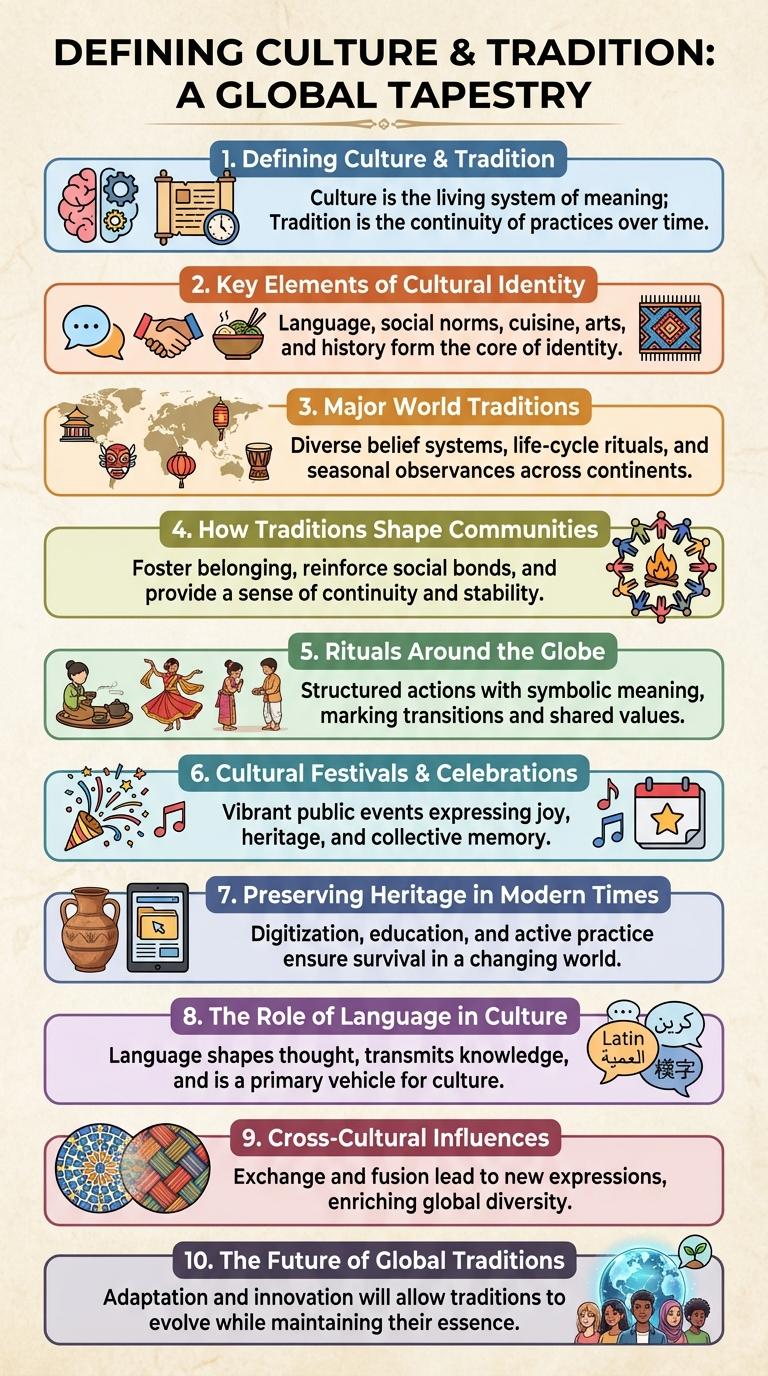
Culture and tradition shape the identity of communities, reflecting their unique values, customs, and heritage. Visual elements in infographics can effectively highlight these rich aspects, making complex information easily understandable and engaging. This method brings cultural practices to life, fostering appreciation and awareness across diverse audiences.
Defining Culture and Tradition
Culture encompasses the shared beliefs, customs, and practices that shape a community's identity. Tradition refers to the transmission of these cultural elements across generations.
- Culture as a social fabric - It includes language, art, morals, laws, and knowledge developed by a group.
- Tradition as inherited behavior - Traditions preserve historical practices and rituals within a society.
- Interdependence - Culture provides the context for traditions to evolve and sustain societal values.
Key Elements of Cultural Identity
Cultural identity shapes how communities express their shared heritage and values. It influences traditions, social norms, and collective behaviors across generations.
- Language - Language carries unique expressions and idioms that preserve a community's history and worldview.
- Customs and Rituals - Specific practices and ceremonies highlight important life events and social bonds within cultures.
- Beliefs and Values - Core principles guide moral decisions and collective priorities in societies.
- Arts and Symbols - Visual arts, music, and symbols embody cultural stories and identity markers.
- Social Institutions - Family structure, governance, and education systems reinforce cultural continuity and social roles.
Understanding these key elements fosters appreciation and respect for diverse cultural identities worldwide.
Major World Traditions
Culture and tradition shape the identity of communities worldwide through shared customs, beliefs, and practices. Major world traditions reflect diverse histories and values embedded in societies across continents.
Festivals, rites, and rituals represent integral components of many major traditions, such as Diwali in India, celebrating light and prosperity, and Hanukkah in Jewish culture, honoring historical resilience. The Chinese New Year unites millions globally with symbolic activities promoting luck and renewal. These traditions preserve heritage, foster social bonds, and influence contemporary cultural expressions worldwide.
How Traditions Shape Communities
Traditions serve as the foundation of community identity, fostering a sense of belonging and continuity among members. Cultural practices and rituals transmit values, history, and shared experiences across generations. These traditions create social bonds that strengthen community resilience and unity.
Rituals Around the Globe
What are some unique rituals practiced around the globe?
Rituals form the heart of cultural identity, reflecting diverse beliefs and values worldwide. These ceremonies often mark important life events, seasonal changes, or spiritual beliefs, showcasing rich traditions.
| Region | Ritual Example |
|---|---|
| Japan | Tea Ceremony (Chanoyu) - a meditative practice symbolizing harmony and respect |
| India | Diwali Festival - rituals involving lights and prayers to celebrate the victory of light over darkness |
| Mexico | Day of the Dead (Dia de los Muertos) - honoring ancestors through colorful altars and offerings |
| Ghana | Aboakyir Festival - a deer hunting ritual performed by the Effutu people to welcome the new year |
| New Zealand | Haka Dance - a powerful ancestral war dance performed by the Maori to display strength and unity |
Cultural Festivals and Celebrations
Cultural festivals and celebrations showcase the rich heritage and diversity of communities worldwide. These events often feature traditional music, dance, costumes, and cuisine unique to each culture. Participating in such celebrations fosters cultural understanding and preserves historical customs for future generations.
Preserving Heritage in Modern Times
| Aspect | Key Points |
|---|---|
| Importance of Culture | Defines identity, strengthens community bonds, and passes values across generations. |
| Challenges in Modern Times | Globalization, technology impact, and urbanization threaten traditional practices and languages. |
| Preservation Methods | Oral storytelling, festivals, cultural education, and digital archiving maintain rich heritage. |
| Role of Technology | Virtual museums, online cultural platforms, and social media increase accessibility and awareness. |
| Community Involvement | Local participation, intergenerational dialogue, and cultural workshops promote active preservation. |
The Role of Language in Culture
Language serves as the backbone of cultural identity, shaping traditions and social practices. It acts as a vessel for passing knowledge, beliefs, and customs across generations.
- Preserves Heritage - Language encapsulates historical narratives and ancestral wisdom, safeguarding cultural heritage.
- Enables Communication - It facilitates interpersonal connections and shared understanding within cultural groups.
- Shapes Worldview - Language influences how individuals perceive and interact with their environment, reflecting cultural values.
Cross-Cultural Influences
Cross-cultural influences shape the unique traditions and customs found around the world. These interactions occur through trade, migration, and communication, blending diverse cultural elements.
Art, language, cuisine, and rituals often reflect a mixture of cultural heritages. Understanding cross-cultural influences fosters appreciation and respect for global diversity.