
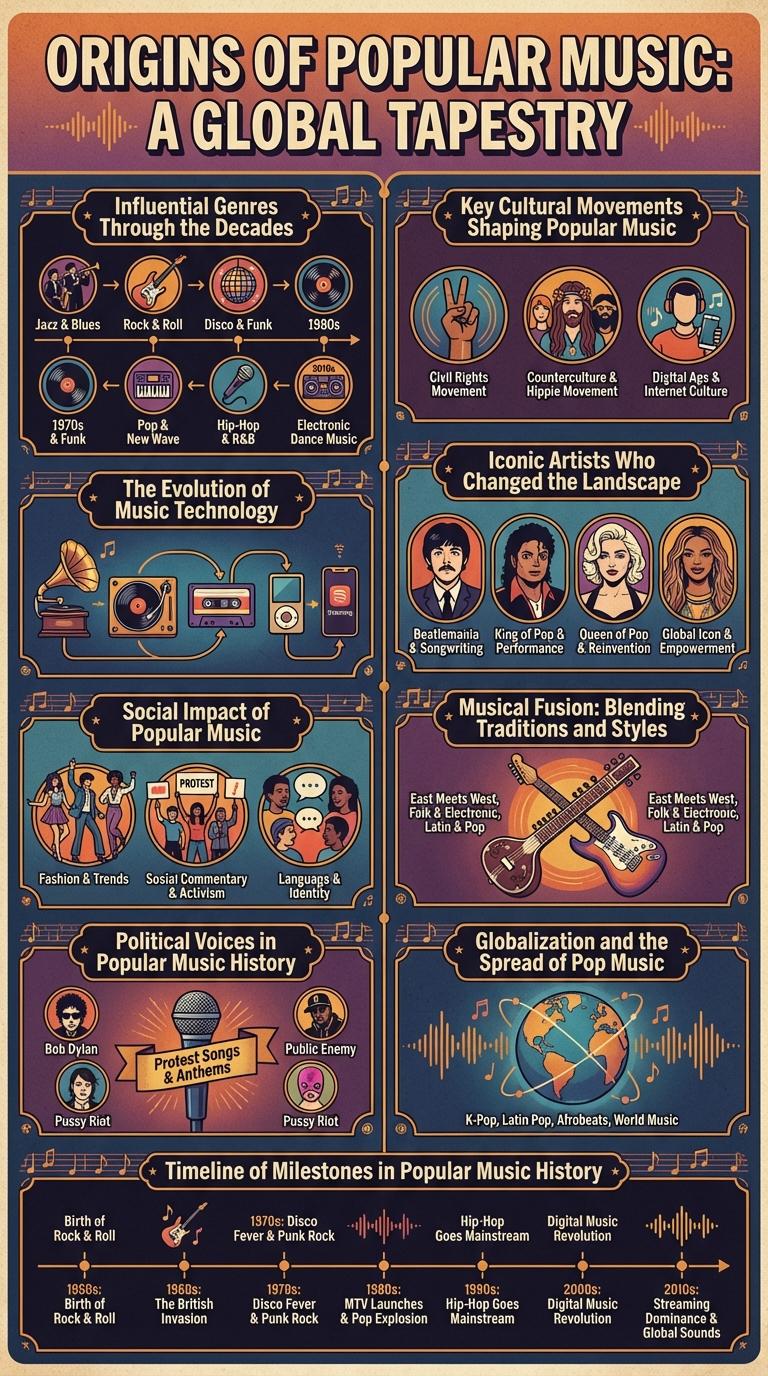
Popular music reflects rich cultural and historical influences that have shaped its evolution across decades. Understanding the origins and societal impact of different genres reveals how music serves as a powerful storytelling medium. This infographic highlights key moments, movements, and figures that define the dynamic heritage of popular music worldwide.
Origins of Popular Music: A Global Tapestry
Popular music originated from a rich blend of cultural traditions worldwide, reflecting diverse ethnic, regional, and social influences. Roots trace back to folk melodies, African rhythms, European harmonies, and indigenous sounds, creating a global tapestry of styles. This fusion evolved through centuries, shaping genres like blues, jazz, rock, and hip-hop that resonate universally.
Influential Genres Through the Decades
Popular music has evolved through diverse cultural and historical influences, reflecting social changes and technological advancements. Each decade introduced genres that shaped the landscape of music, connecting societies worldwide.
The 1950s saw the rise of Rock and Roll, blending blues, country, and gospel, breaking racial barriers and youth culture norms. The 1960s were dominated by Psychedelic Rock and Motown, echoing civil rights movements and countercultural shifts.
Key Cultural Movements Shaping Popular Music
Popular music reflects a rich tapestry of cultural and historical influences that have shaped its evolution over time. Key cultural movements have played a significant role in defining the sound, themes, and social impact of popular music.
- The Harlem Renaissance - This 1920s cultural movement celebrated African American art and music, profoundly influencing jazz and blues genres.
- The British Invasion - The 1960s surge of British bands like The Beatles introduced new rock styles and globalized popular music culture.
- The Civil Rights Movement - Music became a powerful platform during the 1950s-60s, with soul and protest songs reflecting social justice struggles.
The Evolution of Music Technology
Popular music has been profoundly shaped by advancements in music technology throughout history. Innovations in recording and playback devices have transformed how music is created, distributed, and experienced globally.
- Phonograph Invention - The phonograph, invented in 1877, was the first device to record and reproduce sound, enabling music to be preserved and shared widely.
- Electric Amplification - The introduction of electric amplification in the 1930s allowed for louder performances and the emergence of new music genres like rock and roll.
- Digital Recording - Digital recording technology, developed in the late 20th century, increased sound quality and facilitated easy editing and replication of music.
The continuous evolution of music technology remains a key driver behind the diversity and accessibility of popular music today.
Iconic Artists Who Changed the Landscape
Popular music has evolved through decades, deeply influenced by cultural and historical contexts. Iconic artists have played pivotal roles in shaping its diverse landscape.
- Elvis Presley revolutionized rock and roll - His fusion of country, blues, and gospel created a new sound that captivated global audiences in the 1950s.
- The Beatles transformed pop music - Their innovative songwriting and studio techniques expanded the possibilities of popular music in the 1960s.
- Bob Marley popularized reggae worldwide - His music conveyed messages of social justice and unity, bringing Jamaican culture to international prominence.
Social Impact of Popular Music
| Aspect | Details |
|---|---|
| Social Movements | Popular music has historically served as a vehicle for social change, influencing movements such as civil rights, anti-war protests, and gender equality. |
| Identity and Community | Music genres often foster a sense of belonging and cultural identity, linking listeners through shared experiences and values. |
| Economic Influence | The music industry drives job creation, promotes tourism, and impacts fashion and media trends globally. |
| Innovation and Technology | Technological advancements such as streaming and digital production have democratized music access and expanded global reach. |
| Political Expression | Artists use lyrics and performances to comment on political issues, shaping public opinion and inspiring activism. |
Musical Fusion: Blending Traditions and Styles
How has musical fusion shaped the cultural and historical background of popular music? Musical fusion blends diverse traditions and styles, creating innovative sounds that reflect global cultural exchanges. This blending highlights how artists draw from different musical heritages to craft new genres and movements.
What are key examples of musical fusion in popular music history? Genres like jazz, rock, reggae, and hip-hop each demonstrate synthesis of various cultural elements, combining African rhythms, European harmonies, and indigenous melodies. These fusions represent dynamic interactions between communities and their musical identities.
| Musical Fusion Style | Cultural Origins |
|---|---|
| Jazz | African American, European |
| Reggae | Jamaican, African, Caribbean |
| Rock and Roll | American Blues, Country, Gospel |
| Hip-Hop | Urban African American, Latino |
| Flamenco Fusion | Spanish, Gypsy, Arabic |
Political Voices in Popular Music History
Popular music has long served as a powerful medium for political expression and social change. Artists use their platforms to address issues such as civil rights, war, and social justice.
In the 1960s, folk and rock musicians like Bob Dylan and Joan Baez became voices of the anti-war and civil rights movements. Hip-hop emerged in the 1980s as a means to highlight urban struggles, with artists like Public Enemy challenging systemic inequality. Political messages in popular music continue to influence cultures worldwide, reflecting the ongoing dialogue between music and society.
Globalization and the Spread of Pop Music
Globalization has played a crucial role in the widespread dissemination of pop music, enabling artists to reach international audiences through digital platforms and media. The fusion of diverse cultural elements within pop music reflects the dynamic exchange between local traditions and global influences. The evolving accessibility of music streaming services and social media has accelerated the spread of popular music genres worldwide, shaping contemporary cultural landscapes.