
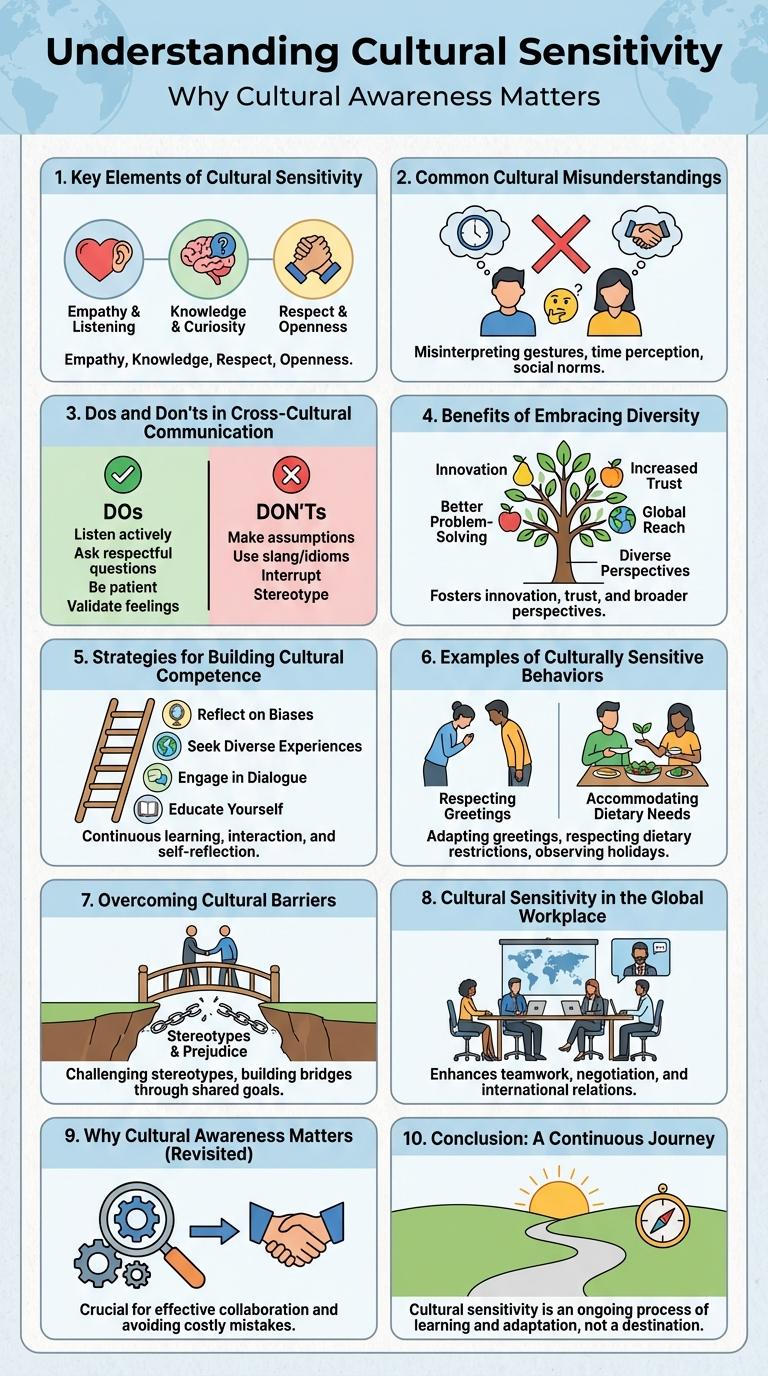
Cultural sensitivity enhances communication by respecting diverse traditions and perspectives. It fosters inclusive environments where individuals feel valued and understood. Embracing cultural sensitivity reduces misunderstandings and promotes effective collaboration.
Understanding Cultural Sensitivity
Cultural sensitivity involves recognizing and respecting the differences and similarities among cultures. It is essential for fostering effective communication and positive interactions in diverse environments.
Understanding cultural sensitivity helps reduce misunderstandings and promotes inclusivity in personal and professional settings.
- Awareness - Being conscious of cultural differences and how they influence behavior and communication styles.
- Respect - Valuing diverse cultural perspectives without judgment or bias.
- Adaptability - Adjusting behavior and communication to suit different cultural contexts effectively.
Why Cultural Awareness Matters
Cultural sensitivity fosters respectful interactions by recognizing and valuing diverse cultural backgrounds. It reduces misunderstandings and conflicts in global business, education, and social environments. Embracing cultural awareness enhances collaboration, innovation, and inclusivity across all sectors.
Key Elements of Cultural Sensitivity
Cultural sensitivity involves recognizing and respecting the diverse values, beliefs, and practices of different cultures. It promotes effective communication and fosters mutual understanding in multicultural environments.
Key elements include awareness, respect, and open-mindedness toward cultural differences. Active listening and empathy enhance interactions and reduce cultural misunderstandings.
Common Cultural Misunderstandings
What are common cultural misunderstandings in communication? Many people misinterpret gestures, tones, or expressions that vary across cultures. These misunderstandings can lead to offense or confusion in social and professional settings.
How do nonverbal cues create cultural confusion? Gestures like eye contact, hand signals, or personal space differ widely among cultures. Misreading these cues often results in unintended disrespect or discomfort.
Why is language translation a source of cultural errors? Literal translations may ignore idiomatic expressions or cultural context, causing miscommunication. This leads to messages that seem rude or nonsensical to native speakers.
What role do assumptions about time and punctuality play in cultural clashes? Some cultures view time flexibly, while others prioritize strict scheduling. Conflicts arise when differing expectations lead to perceived disrespect or inefficiency.
How can stereotypes contribute to cultural misunderstandings? Preconceived notions create biased interpretations of behaviors and intentions. Overcoming these biases requires awareness and open-mindedness toward cultural diversity.
Dos and Don'ts in Cross-Cultural Communication
Cultural sensitivity enhances effective cross-cultural communication by fostering respect and understanding. Recognizing diverse customs and behaviors prevents misunderstandings and builds stronger relationships.
- Do Research Cultural Norms - Learn about traditions, values, and communication styles before engaging with people from different cultures.
- Do Listen Actively - Pay attention to verbal and non-verbal cues to grasp the full message within cross-cultural interactions.
- Don't Make Assumptions - Avoid stereotypes or generalizations that can lead to misinterpretation and offense.
- Don't Interrupt - Allow others to express themselves fully without breaking the conversation flow.
- Do Use Clear Language - Speak simply and avoid idioms or jargon that may confuse non-native speakers.
Practicing these dos and don'ts cultivates respectful, meaningful communication across cultures.
Benefits of Embracing Diversity
Embracing diversity enhances creativity by bringing together different perspectives and ideas. It fosters a more inclusive environment where individuals feel valued and respected. Organizations that prioritize cultural sensitivity experience improved teamwork, higher employee satisfaction, and greater innovation.
Strategies for Building Cultural Competence
Building cultural competence is essential for fostering respectful and effective communication in diverse environments. Strategies such as active listening and open-mindedness promote understanding and reduce cultural misunderstandings.
Engaging in continuous education about different cultures enhances empathy and adaptability. Practical steps include participating in cultural training and seeking feedback from diverse groups to improve interpersonal skills.
Examples of Culturally Sensitive Behaviors
Cultural sensitivity enhances communication and fosters respect in diverse environments. Recognizing and practicing culturally sensitive behaviors supports inclusive interactions.
- Active Listening - Fully concentrating on the speaker shows respect and reduces misunderstandings across cultures.
- Respecting Traditions - Acknowledging and valuing cultural customs demonstrates open-mindedness and appreciation.
- Using Inclusive Language - Choosing words that avoid stereotypes promotes equality and avoids offense.
Overcoming Cultural Barriers
Overcoming cultural barriers is essential for effective communication in diverse environments. Understanding and respecting cultural differences fosters collaboration and reduces misunderstandings.
Active listening and open-mindedness help bridge gaps between cultural perspectives. Learning about other cultures enhances empathy and builds trust. Strategies like cultural training and adapting communication styles promote inclusivity and engagement.