
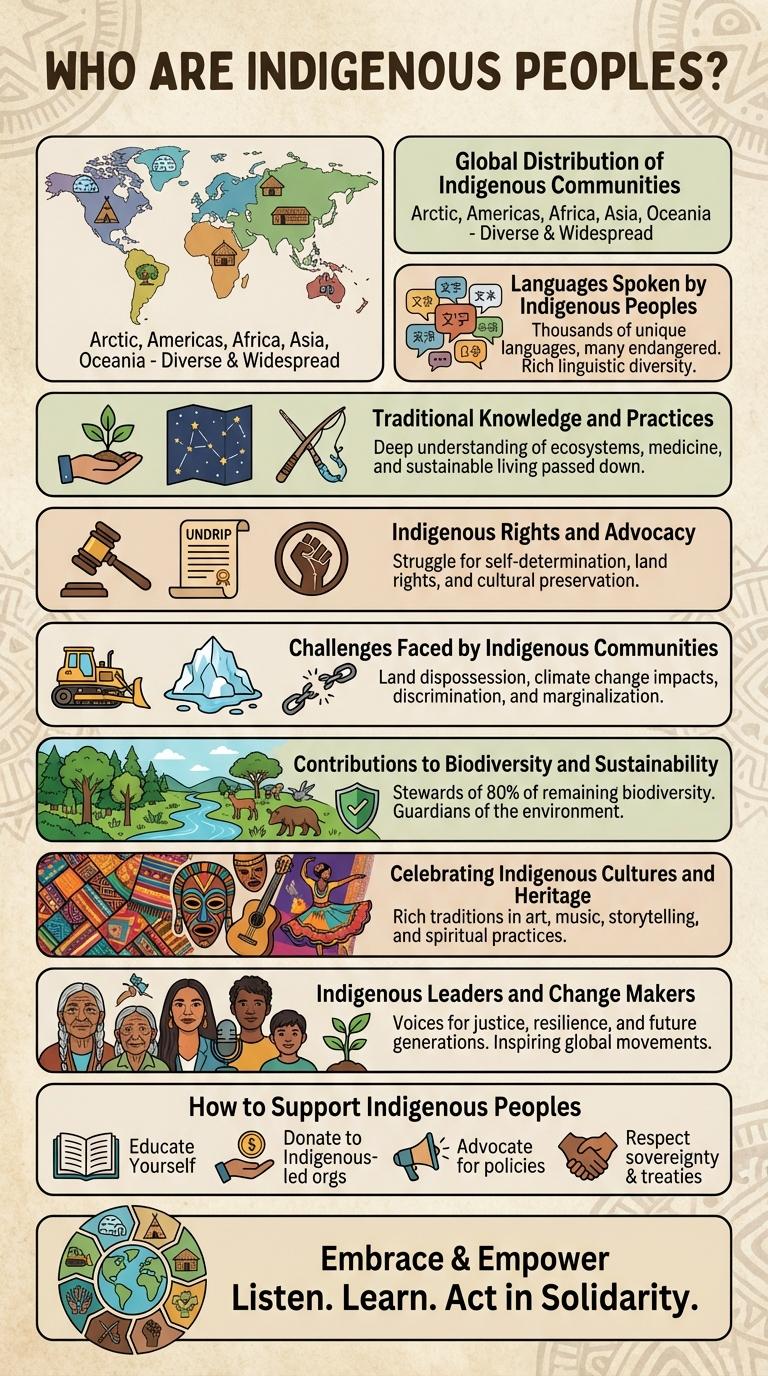
Indigenous people hold rich cultural heritage and deep connections to their ancestral lands, which shape their unique identities and traditions. This infographic visually explores their diverse communities, histories, and contributions across the globe. Understanding these aspects fosters appreciation and supports efforts to preserve indigenous knowledge and rights.
Who Are Indigenous Peoples?
Indigenous peoples are the original inhabitants of a region, with distinct cultures, languages, and traditions that predate colonial or outside influences. They maintain a unique spiritual connection to their ancestral lands and natural environment.
There are over 476 million indigenous individuals worldwide, representing more than 5,000 distinct groups across 90 countries. Their contributions to biodiversity, cultural diversity, and sustainable practices are invaluable to global heritage and environmental health.
Global Distribution of Indigenous Communities
Indigenous communities inhabit every continent, with the largest populations found in Asia, Latin America, and Africa. Over 370 million indigenous people belong to 5,000 different groups worldwide, preserving distinct languages, cultures, and traditions. Many indigenous territories coincide with biodiversity hotspots, highlighting their critical role in environmental stewardship.
Languages Spoken by Indigenous Peoples
Indigenous peoples speak a vast array of languages that reflect their rich cultural heritage and identity. Many of these languages face threats of extinction due to diminishing numbers of fluent speakers.
- Over 4,000 languages - Estimated number of indigenous languages spoken worldwide, showcasing immense linguistic diversity.
- Endangerment status - Approximately 40% of indigenous languages are at risk of disappearing within the next century.
- Language revitalization - Efforts in education and community programs help preserve and revive indigenous languages globally.
Protecting indigenous languages ensures the survival of unique knowledge, traditions, and cultural expressions.
Traditional Knowledge and Practices
What is traditional knowledge among indigenous peoples? Traditional knowledge refers to the understanding, skills, and philosophies developed by indigenous communities through direct contact with nature over generations. It encompasses diverse practices related to agriculture, medicine, and environmental stewardship.
How do indigenous practices contribute to sustainability? Indigenous peoples utilize time-tested methods such as rotational farming, seed preservation, and natural resource management. These practices promote biodiversity and maintain ecological balance.
Which role does traditional knowledge play in modern science? Indigenous knowledge offers unique insights into local ecosystems and species that scientific research can benefit from. Collaborative efforts between scientists and indigenous communities lead to innovative solutions for environmental challenges.
Why is preserving indigenous knowledge important? The loss of traditional knowledge threatens cultural identity and vital ecological wisdom. Safeguarding this knowledge supports both cultural heritage and sustainable development.
How is traditional knowledge transmitted within indigenous communities? Oral storytelling, ceremonies, and hands-on learning ensure the continuity of indigenous wisdom. These methods preserve heritage and teach younger generations essential survival skills.
Indigenous Rights and Advocacy
Indigenous rights are fundamental to preserving the cultures, lands, and identities of native peoples worldwide. Advocacy efforts empower Indigenous communities to secure legal recognition and protect their heritage.
- Land Rights - Indigenous peoples fight for the recognition and protection of their ancestral lands against exploitation and encroachment.
- Cultural Preservation - Advocacy supports the safeguarding of Indigenous languages, traditions, and knowledge for future generations.
- Legal Recognition - Securing formal recognition of Indigenous status enables access to rights and resources essential for community welfare.
Challenges Faced by Indigenous Communities
| Challenge | Description |
|---|---|
| Land Rights | Indigenous communities often face dispossession and lack of recognition of their ancestral lands, leading to conflicts and loss of resources. |
| Cultural Erosion | Traditional languages, customs, and knowledge are at risk due to external pressures and assimilation policies. |
| Health Disparities | Limited access to healthcare services and higher rates of diseases impact the well-being of indigenous populations. |
| Economic Marginalization | Many indigenous peoples experience poverty and exclusion from economic opportunities and markets. |
| Political Underrepresentation | Indigenous groups often lack adequate representation in government and decision-making processes affecting their communities. |
Contributions to Biodiversity and Sustainability
Indigenous people have preserved over 80% of the world's biodiversity through their traditional knowledge and sustainable practices. Their deep connection with nature fosters ecosystem balance and resilience.
Many indigenous communities manage forests, wetlands, and agricultural systems with techniques that enhance soil fertility and water conservation. These methods promote sustainability and combat climate change effectively.
Celebrating Indigenous Cultures and Heritage
Indigenous peoples encompass diverse cultures, languages, and traditions that have thrived for thousands of years across the globe. Celebrating their heritage fosters respect, understanding, and preservation of their unique identities.
- Rich Cultural Diversity - Indigenous communities maintain vibrant customs, art, music, and spiritual practices that contribute to global cultural wealth.
- Traditional Knowledge - Indigenous peoples hold invaluable environmental wisdom and sustainable practices passed down through generations.
- Heritage Preservation - Efforts to sustain indigenous languages and cultural expressions support the survival and recognition of their ancestral legacies.
Indigenous Leaders and Change Makers
Indigenous leaders have played a pivotal role in preserving cultural heritage and advocating for the rights of their communities. Their efforts drive social change and promote environmental stewardship worldwide.
Prominent Indigenous change makers include figures like Wilma Mankiller, the first female chief of the Cherokee Nation, who championed tribal sovereignty and education. Another key leader, Winona LaDuke, is known for her environmental activism and work in sustainable development. These leaders inspire new generations to continue the fight for justice and cultural preservation.