
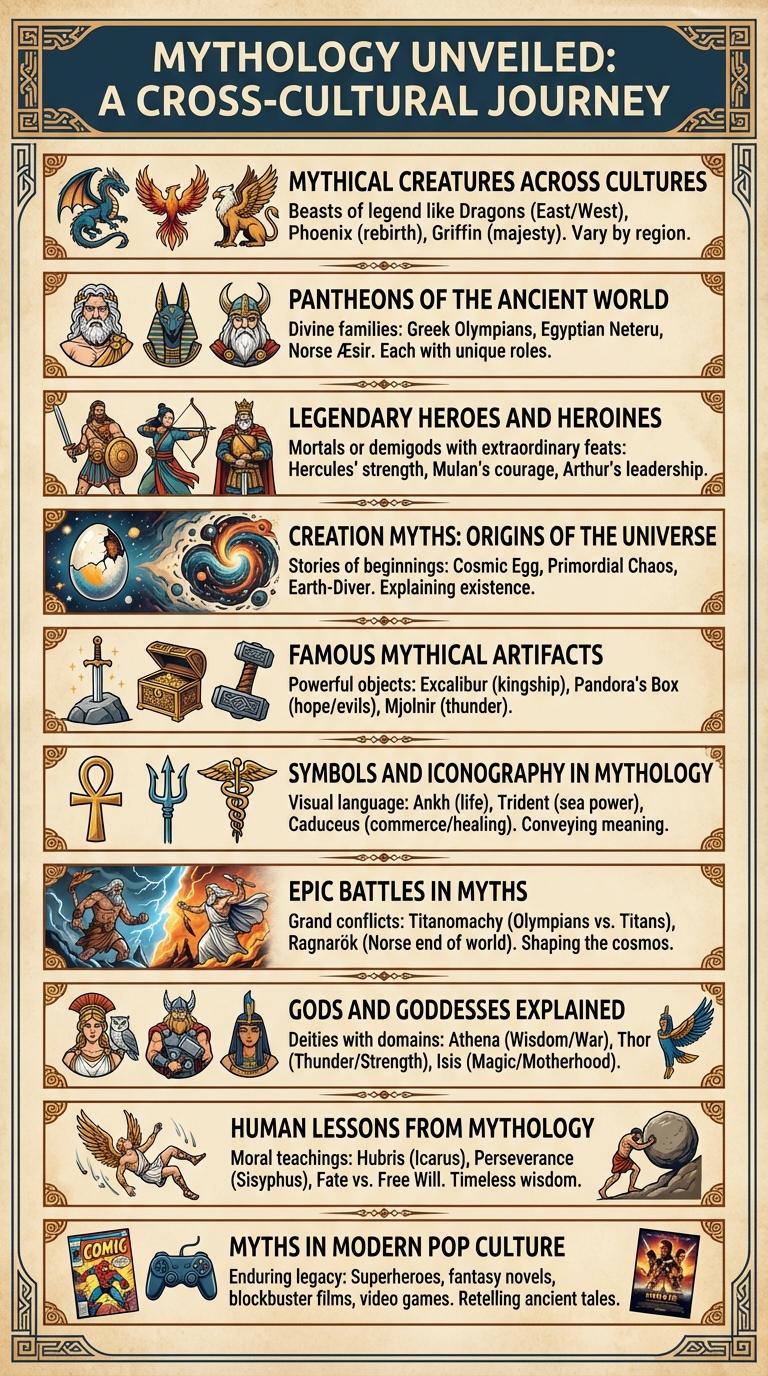
Exploring mythology through an infographic reveals the rich tapestry of ancient stories and legendary figures that have shaped cultures worldwide. Symbols, gods, and iconic tales are visually mapped to enhance understanding and retention. This approach offers a concise, engaging way to discover the timeless influence of mythological narratives.
Mythical Creatures Across Cultures
Mythical creatures appear across cultures, embodying unique traits and cultural symbolism. These beings often represent natural forces, human fears, and moral lessons.
Classic examples include dragons, which vary from benevolent protectors in East Asia to destructive beasts in Western legends. Creatures like the Phoenix symbolize rebirth, prevalent in Greek and Egyptian mythology.
Pantheons of the Ancient World
| Pantheon | Key Deities |
|---|---|
| Greek | Zeus, Hera, Poseidon, Athena, Apollo |
| Roman | Jupiter, Juno, Neptune, Mars, Venus |
| Egyptian | Ra, Osiris, Isis, Anubis, Hathor |
| Norse | Odin, Thor, Freyja, Loki, Baldr |
| Hindu | Brahma, Vishnu, Shiva, Lakshmi, Saraswati |
Legendary Heroes and Heroines
Mythology features countless legendary heroes and heroines renowned for their extraordinary feats and enduring legacies. These figures symbolize ideals such as bravery, wisdom, and sacrifice across various cultures.
- Heracles (Hercules) - A Greek hero famous for his twelve labors demonstrating immense strength and perseverance.
- Joan of Arc - A French heroine who led armies with divine guidance, symbolizing courage and faith.
- King Arthur - The legendary British king associated with chivalry, the Knights of the Round Table, and the quest for the Holy Grail.
Creation Myths: Origins of the Universe
Creation myths explain the origins of the universe according to various cultures and beliefs, describing how the world and life began. These stories often involve gods, cosmic eggs, or primordial chaos transforming into order. Famous examples include the Greek myth of Chaos, the Norse Ymir, and the Hindu concept of Brahma creating the cosmos.
Famous Mythical Artifacts
Mythology is filled with legendary artifacts that hold immense power and significance. These mythical objects often symbolize divine authority, magical abilities, or heroic feats in ancient tales.
- Excalibur - The legendary sword of King Arthur, symbolizing rightful sovereignty and unmatched strength.
- Mjolnir - Thor's hammer in Norse mythology, known for its power to summon lightning and defeat giants.
- Golden Fleece - A symbol of authority and kingship, sought by Jason and the Argonauts in Greek mythology.
- Cornucopia - Also called the Horn of Plenty, it grants an endless supply of food and abundance.
- The Holy Grail - A mystical chalice said to provide eternal life or divine grace in Arthurian legends.
These famous mythical artifacts continue to inspire storytelling, art, and popular culture worldwide.
Symbols and Iconography in Mythology
Symbols and iconography play a vital role in mythology, representing complex ideas and cultural beliefs through visual forms. These symbols often serve as universal signs, transcending language and time to convey deep meanings.
Mythological symbols like the serpent, the thunderbolt, and the tree of life appear across various cultures, each carrying unique interpretations. Iconography in myths helps to identify gods, heroes, and mythical creatures, making stories more memorable and impactful. Understanding these symbols reveals insights into ancient worldviews and spiritual values.
Epic Battles in Myths
Epic battles in mythology reveal timeless struggles between gods, heroes, and supernatural beings, shaping cultural legends across civilizations. Famous conflicts like the Trojan War and Ragnarok embody themes of bravery, fate, and divine intervention. These mythic battles continue to inspire literature, art, and popular media worldwide.
Gods and Goddesses Explained
Mythology features a rich tapestry of gods and goddesses representing various aspects of life and nature. These deities often embody human traits, natural forces, and cosmic principles, influencing cultures worldwide.
Greek mythology highlights Zeus, the king of gods, symbolizing power and authority, alongside Athena, goddess of wisdom and war strategy. In Norse mythology, Odin presides as the all-father and god of knowledge, while Freyja represents love and fertility.
Human Lessons from Mythology
Mythology offers timeless human lessons that continue to resonate across cultures and generations. These stories reveal fundamental truths about human nature, ethics, and the consequences of actions.
- Courage in Adversity - Myths inspire bravery by illustrating heroes who face overwhelming challenges yet persist with determination.
- Wisdom through Experience - Many myths highlight the importance of learning from mistakes to achieve growth and understanding.
- Balance of Power and Responsibility - Mythological tales often warn about the dangers of hubris and emphasize the need for responsible use of strength and authority.