
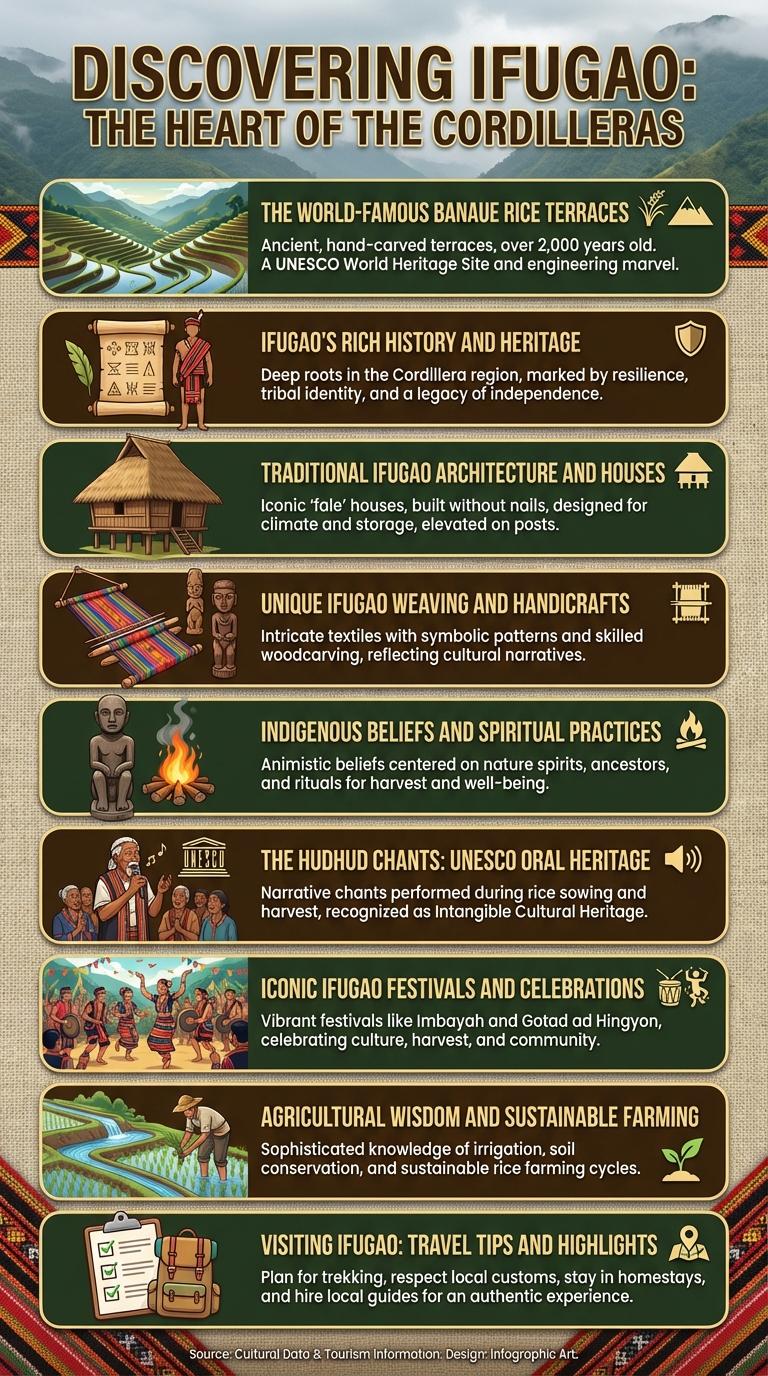
Ifugao is a province in the Philippines renowned for its stunning rice terraces, a UNESCO World Heritage site that showcases ancient agricultural engineering. The region's rich cultural heritage is reflected in its traditional crafts, rituals, and indigenous knowledge systems. This infographic highlights key facts about Ifugao's geography, culture, and history to provide a comprehensive overview.
Discovering Ifugao: The Heart of the Cordilleras
What makes Ifugao the heart of the Cordilleras? Ifugao is renowned for its breathtaking rice terraces, a UNESCO World Heritage site, showcasing ancient engineering and sustainable agriculture. This region preserves rich cultural heritage through indigenous traditions and stunning natural landscapes.
Where are the famous Ifugao Rice Terraces located? These terraces are carved into the mountains of Northern Luzon, Philippines, primarily in the Ifugao province. They demonstrate harmony between humans and nature, built over 2,000 years ago by the Ifugao people.
How does Ifugao culture stand out in the Cordillera region? Ifugao culture features intricate woodcarvings, traditional rituals like the Hudhud chants, and vibrant festivals such as the Gotad ad Ifugao. These customs reflect deep respect for ancestral spirits and agricultural cycles.
What natural attractions define Ifugao's landscape? Besides the rice terraces, ifugao is home to lush forests, crystal-clear rivers, and towering mountain peaks. These elements create a perfect environment for eco-tourism, trekking, and cultural exploration.
Why should travelers visit Ifugao today? Visiting Ifugao offers a unique glimpse into a living cultural landscape combined with spectacular scenery. It is a place to experience authentic indigenous life, historical architecture, and nature's grandeur in the Cordillera mountains.
The World-Famous Banaue Rice Terraces
The Banaue Rice Terraces, located in Ifugao province, Philippines, are an ancient marvel carved into the mountains over 2,000 years ago. They showcase the ingenuity and sustainable farming techniques of the Ifugao people.
- UNESCO World Heritage Site - Designated in 1995 for their cultural significance and exceptional agricultural engineering.
- Remarkable Engineering - Built with minimal tools, the terraces use a complex system of irrigation from mountain streams.
- Cultural Symbol - The terraces represent the Ifugao people's connection to their land, ancestors, and agricultural traditions.
Ifugao's Rich History and Heritage
Ifugao, located in the Cordillera region of the Philippines, is renowned for its rich cultural heritage and ancient traditions. The province is home to the famous Banaue Rice Terraces, often called the "Eighth Wonder of the World."
Ifugao's history dates back over 2,000 years, with indigenous communities preserving their ancestral customs and rituals. The rice terraces symbolize the ingenuity and sustainable farming practices of the Ifugao people. UNESCO recognized these terraces as a World Heritage Site, highlighting their global cultural significance.
Traditional Ifugao Architecture and Houses
The Ifugao people are renowned for their traditional architecture that harmonizes with the mountainous environment of the Philippines. Their houses, known as "bale," are elevated structures designed for both functionality and cultural significance.
- Stilted Design - Ifugao houses are built on wooden stilts to protect against flooding and pests while providing ventilation.
- Thatched Roofs - The steep, thatched roofs use indigenous materials such as cogon grass, allowing rainwater to easily run off.
- Bamboo and Wood Construction - Strong hardwoods and bamboo form the framework, showcasing the community's carpentry skills.
Unique Ifugao Weaving and Handicrafts
| Aspect | Description |
|---|---|
| Weaving Materials | Traditional ikat cotton threads dyed using natural plant extracts such as indigo and madder root. |
| Design Patterns | Geometric motifs symbolizing ancestral stories, rice terraces, and natural elements reflecting Ifugao culture. |
| Techniques | Hand-loom weaving utilizing backstrap looms passed down through generations with intricate tying and dyeing methods. |
| Handicrafts | Wood carvings, basketry, and beadwork often incorporating traditional symbols and used in rituals or daily life. |
| Cultural Significance | Weaving and handicrafts serve as expressions of identity, social status, and spiritual belief among the Ifugao people. |
Indigenous Beliefs and Spiritual Practices
The Ifugao people maintain rich indigenous beliefs deeply connected to nature and ancestral spirits. Their spiritual practices guide daily life and community rituals, preserving cultural identity.
- Anito Worship - The Ifugao honor anitos, ancestral spirits believed to influence fortune and health.
- Bulul Statues - Carved wooden figures called bulul represent rice gods, ensuring bountiful harvests.
- Rice Rituals - Ceremonies accompany planting and harvesting rice, expressing gratitude to deities and nature spirits.
These spiritual traditions sustain the Ifugao's connection to their land and heritage.
The Hudhud Chants: UNESCO Oral Heritage
The Hudhud Chants are a rich collection of epic poems from the Ifugao people of the Philippines, recognized by UNESCO as an Intangible Cultural Heritage of Humanity. These chants narrate stories of ancient heroes, ancestral traditions, and the Ifugao way of life, traditionally performed during harvest season and important rituals. The Hudhud serves as a vital cultural treasure, preserving the history and values of the Ifugao community for future generations.
Iconic Ifugao Festivals and Celebrations
Ifugao is renowned for its vibrant festivals that celebrate rich cultural heritage and agricultural traditions. The Hudhud Chants Festival showcases ancient oral traditions through epic chanting during rice harvesting seasons. The Imbayah Festival honors communal unity with traditional dances, rituals, and colorful ceremonies reflecting the Ifugao way of life.
Agricultural Wisdom and Sustainable Farming
The Ifugao people of the Philippines are renowned for their ancient rice terraces, a UNESCO World Heritage site that showcases exceptional agricultural wisdom. These terraces have been cultivated for over 2,000 years, demonstrating sustainable farming practices that adapt to the mountainous terrain.
Traditional Ifugao farming relies on indigenous knowledge, including the use of organic methods and natural irrigation systems that conserve water and maintain soil fertility. Their sustainable techniques ensure the preservation of biodiversity and cultural heritage while supporting local communities' livelihoods.