
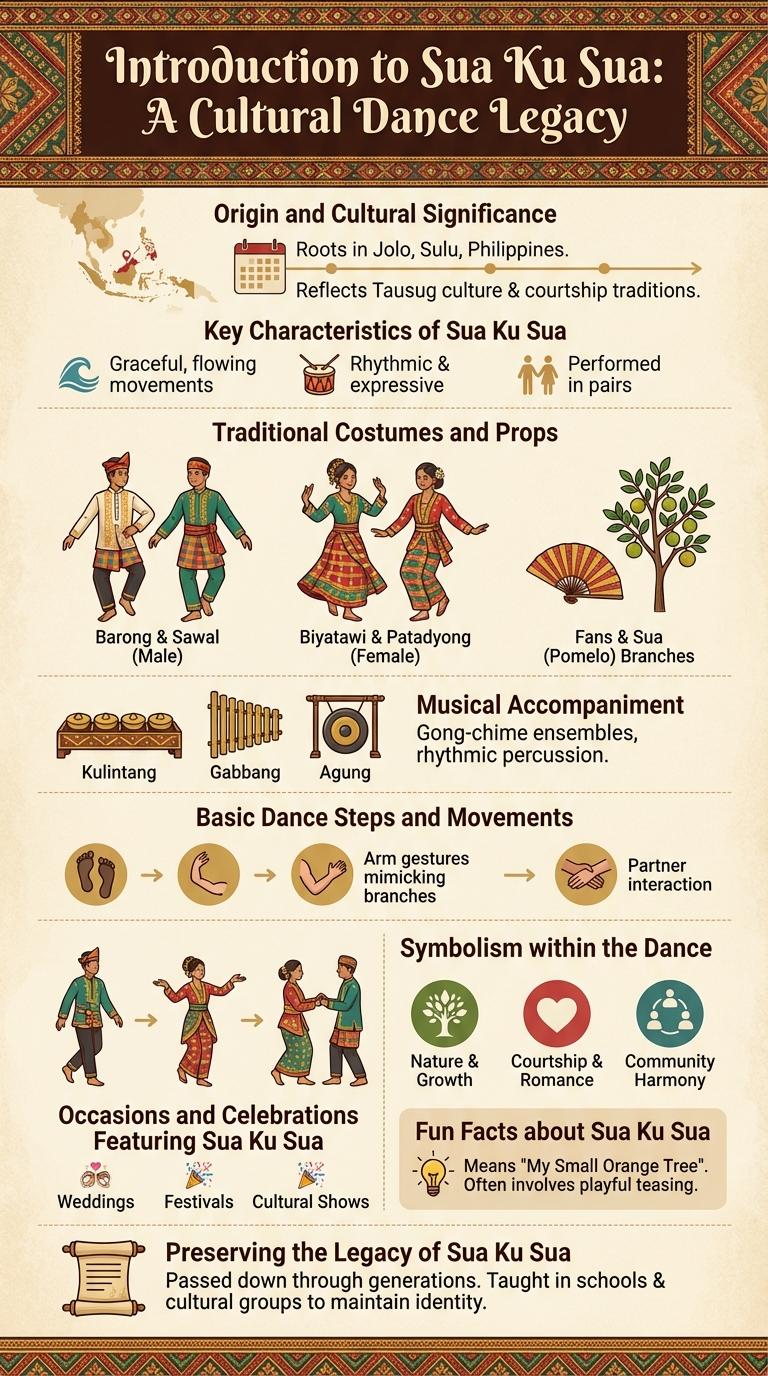
Sua ku sua, a traditional Ghanaian funeral dance, vividly captures the rich cultural heritage of the Ga people. This dynamic ritual combines rhythmic drumming and graceful movements to honor the departed and celebrate life. The infographic highlights the symbolism, history, and vibrant expressions embedded in this unique ceremonial dance.
Introduction to Sua Ku Sua
| Aspect | Details |
|---|---|
| Definition | Sua Ku Sua is a traditional dance originating from Ghana, symbolizing cultural heritage and community strength. |
| Origin | The dance comes from the Ga people of Ghana, performed during festivals and social gatherings. |
| Significance | Represents unity, resilience, and celebration among the Ga community members. |
| Music | Performed with traditional drums and songs that convey historical stories and social values. |
| Visual Elements | Dancers wear colorful traditional outfits paired with rhythmic hand and foot movements that reflect the community's spirit. |
Origin and Cultural Significance
Sua ku sua is a traditional Ghanaian drum used prominently in the Ga community. It serves as both a musical instrument and a symbol of cultural heritage.
The drum originates from the Greater Accra Region and plays a vital role in festivals, ceremonies, and communal storytelling.
- Historical Roots - Sua ku sua dates back several centuries, reflecting the rich history of the Ga people.
- Ceremonial Use - The drum is essential in rites of passage, including naming ceremonies and funerals.
- Symbol of Unity - It fosters social cohesion by bringing communities together during important events.
Key Characteristics of Sua Ku Sua
Sua Ku Sua is a traditional dance originating from Ghana, embodying rich cultural symbolism and vibrant energy. The dance features rhythmic movements that emphasize unity, strength, and community celebration. Dancers often wear colorful attire that enhances the visual impact and storytelling of the performance.
Traditional Costumes and Props
Sua ku sua is a vibrant traditional dance originating from Ghana, known for its colorful costumes and symbolic props. This dance highlights cultural heritage through its elaborate attire and unique accessories.
- Traditional Costume - Dancers wear bright, patterned smocks called "Fugu" made from handwoven fabric, representing the Northern Ghanaian culture.
- Headgear - Ornate hats or head wraps often accompany the costume, enhancing the dancer's appearance and signifying status within the community.
- Props - Wooden swords and shields are commonly used props, symbolizing bravery and historical warfare narratives portrayed in the dance.
Musical Accompaniment and Instruments
The traditional song "Sua Ku Sua" is often accompanied by a rich variety of musical instruments that enhance its rhythmic and melodic appeal. These instruments hold cultural significance and contribute to the unique soundscape of the performance.
Typical musical accompaniment includes the xylophone, drums, and string instruments such as the kora or lute, which provide both rhythm and harmony. Percussion instruments maintain the tempo, while melodic instruments deliver the main theme of the song. The combination of these elements creates an immersive auditory experience that reflects the cultural heritage of the community.
Basic Dance Steps and Movements
Sua Ku Sua is a traditional Ghanaian dance characterized by energetic and rhythmic movements. The basic dance steps include shoulder shaking, hip swaying, and alternating foot taps that synchronize with the drum beats. Dancers often use hand claps and body bends to enhance the expressive nature of the performance.
Symbolism within the Dance
What is the symbolism behind the Sua Ku Sua dance? The Sua Ku Sua is a traditional dance from Myanmar that embodies strength and unity. Its movements symbolize the prowess and coordination of a tiger prowling in the jungle.
How do the dancers convey meaning through their gestures? Dancers mimic the tiger's agility and power, using precise hand and body movements to represent courage and resilience. Each motion is carefully choreographed to showcase the connection between humans and nature.
Why is the dance significant to cultural identity? The Sua Ku Sua dance preserves the heritage of Myanmar's ethnic groups, reflecting their respect for wildlife and natural surroundings. It serves as a living narrative of history and values passed down generations.
What do the costumes symbolize in the Sua Ku Sua dance? Traditionally, dancers wear costumes resembling tiger stripes, enhancing the visual impact and emphasizing their role as embodiments of the tiger spirit. The attire reinforces themes of bravery and mysticism.
How does the Sua Ku Sua dance influence community bonding? Performing the dance fosters social cohesion by bringing participants and spectators together in shared cultural expression. The symbolic storytelling promotes collective pride and continuity of traditions.
Occasions and Celebrations Featuring Sua Ku Sua
Sua Ku Sua, a traditional Ghanaian plant, plays a significant role in various cultural celebrations and rituals. Its vibrant leaves symbolize prosperity and protection during key ceremonies.
During festivals such as Homowo and Odwira, Sua Ku Sua is used to decorate homes and sacred spaces, enhancing the spiritual ambiance. It is also incorporated in libations and offering rituals, highlighting its importance in honoring ancestors and deities.
Fun Facts about Sua Ku Sua
Sua Ku Sua is a popular Ghanaian highlife song released in the 1970s. It was performed by the legendary band Osibisa, known for blending African rhythms with Western music styles.
- Cultural Icon - Sua Ku Sua celebrates Ghanaian heritage through its dynamic lyrics and rhythms.
- Global Reach - The song gained international popularity, introducing highlife music to a wider audience.
- Lyrics Meaning - Sua Ku Sua translates to "Fight the Tiger," symbolizing courage and strength.
Sua Ku Sua remains an enduring anthem in African music history, cherished by fans worldwide.