
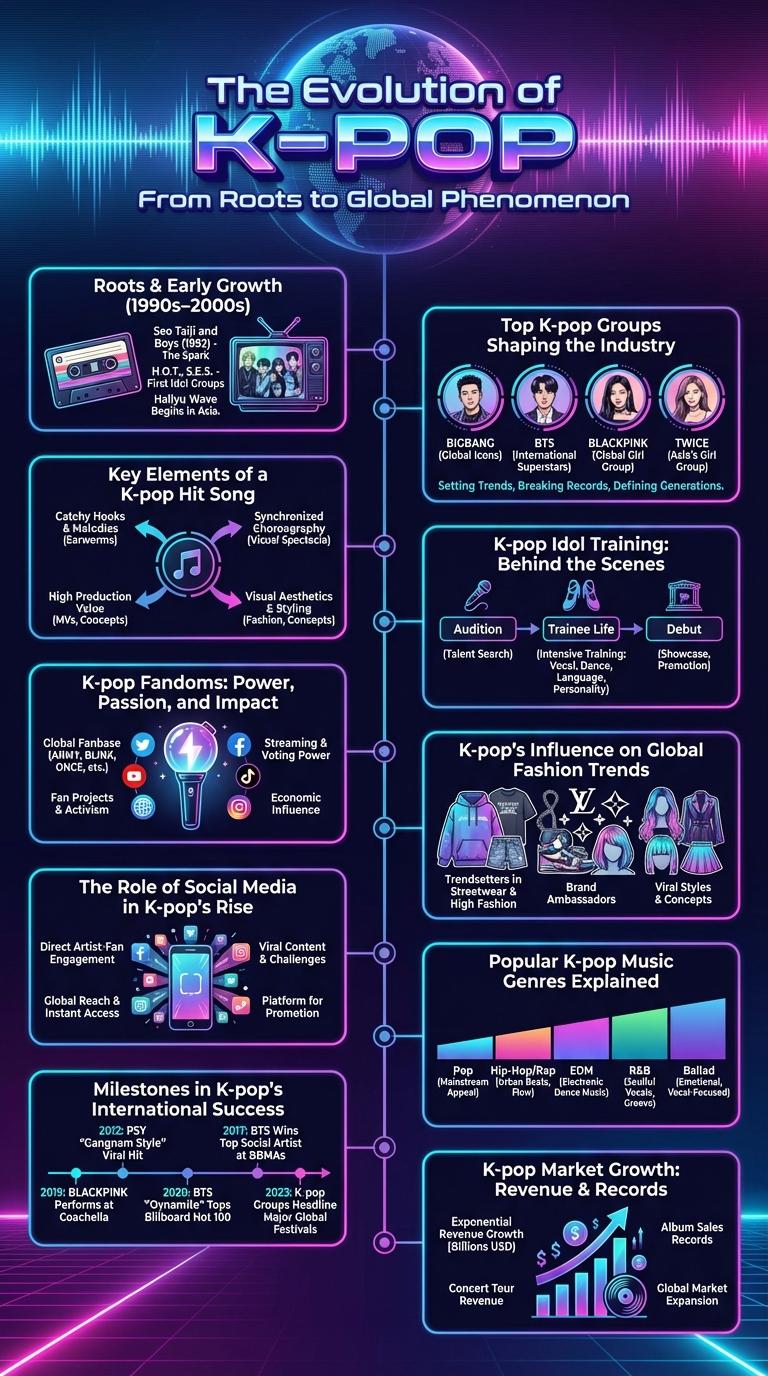
K-pop infographics visually capture the vibrant energy and global impact of the genre, highlighting key statistics, popular groups, and fan demographics. These graphics provide a clear overview of trends, chart achievements, and cultural influence. Fans and newcomers alike gain quick insights into the dynamic world of K-pop through engaging, data-driven visuals.
The Evolution of K-pop: From Roots to Global Phenomenon
K-pop originated in the early 1990s, blending Korean culture with Western music influences to create a unique genre. Over the decades, K-pop evolved through the rise of idol groups, advanced production techniques, and innovative visual concepts. Today, K-pop is a global phenomenon, with millions of fans worldwide and significant cultural impact across music, fashion, and entertainment industries.
Top K-pop Groups Shaping the Industry
K-pop continues to revolutionize the global music industry with its dynamic performances and dedicated fanbase. Top groups lead this transformation by setting trends and expanding international reach.
- BTS - BTS has broken numerous records worldwide with their innovative music and social influence.
- BLACKPINK - BLACKPINK's blend of powerful visuals and catchy tunes has garnered a massive global audience.
- TWICE - TWICE is known for their catchy melodies and consistent chart-topping hits, solidifying their industry status.
- EXO - EXO combines strong vocals and intricate choreography, maintaining a loyal fanbase across Asia.
- SEVENTEEN - SEVENTEEN's self-produced music and synchronized performances highlight their artistic autonomy and popularity.
Key Elements of a K-pop Hit Song
K-pop hit songs combine catchy melodies with dynamic choreography to captivate global audiences. Strong visuals and well-crafted music videos play a crucial role in the genre's widespread appeal.
Memorable hooks and repetitive choruses make songs easy to sing along and remember. Talented idols train extensively to perfect vocals, dance, and stage presence, enhancing each release's impact.
K-pop Idol Training: Behind the Scenes
| Aspect | Details |
|---|---|
| Training Duration | Typically 3 to 7 years before debut |
| Training Components | Vocal lessons, dance practice, language classes, media training, and fitness regimes |
| Daily Schedule | Up to 12-15 hours of practice including rehearsals and vocal exercises |
| Living Arrangements | Many trainees live in dormitories provided by entertainment companies |
| Evaluation Process | Regular assessments by trainers and company executives to determine progress and debut potential |
K-pop Fandoms: Power, Passion, and Impact
K-pop fandoms are dynamic communities driving global music trends and cultural exchange. These passionate fans support their favorite idols through streaming, voting, and promoting content worldwide.
Fandoms play a critical role in K-pop's international success by amplifying visibility and creating strong emotional connections. Their dedication influences chart rankings, concert attendance, and brand endorsements, shaping the industry's growth.
K-pop's Influence on Global Fashion Trends
K-pop has revolutionized global fashion trends by merging unique styles with mainstream appeal. Its idols set fashion benchmarks that inspire millions worldwide.
The fusion of streetwear, luxury brands, and traditional Korean elements defines K-pop's signature style. This eclectic mix fuels diverse fashion innovations, impacting global markets.
- Celebrity Endorsements - K-pop stars frequently collaborate with top fashion brands, boosting brand visibility and consumer interest internationally.
- Social Media Reach - Millions of fans engage with K-pop content, spreading fashion trends rapidly across digital platforms like Instagram and TikTok.
- Fashion Diversity - K-pop groups showcase a broad spectrum of styles from avant-garde to casual, setting trends across various fashion genres.
The Role of Social Media in K-pop's Rise
Social media platforms such as Twitter, Instagram, and YouTube have played a crucial role in the global rise of K-pop by enabling direct communication between artists and fans. Viral challenges, fan-driven content, and real-time updates create dynamic engagement that expands K-pop's reach across continents. Social media analytics reveal that K-pop hashtags generate billions of interactions monthly, driving international popularity and music chart success.
Popular K-pop Music Genres Explained
K-pop features a variety of music genres that blend Western styles with unique Korean influences. These genres contribute to the dynamic and diverse soundscape that defines K-pop music today.
- Pop - The most dominant genre in K-pop, characterized by catchy melodies and upbeat rhythms designed for a wide audience.
- Hip-Hop - Incorporates rap, strong beats, and street-style elements, often expressing personal and social themes.
- R&B - Focuses on smooth vocals, emotional delivery, and soulful instrumentation within K-pop ballads and mid-tempo tracks.
Understanding these popular K-pop music genres helps fans appreciate the distinct styles that shape the genre's global appeal.
Milestones in K-pop's International Success
K-pop has become a global phenomenon, breaking records and reaching new audiences worldwide. The genre's blend of catchy music, striking visuals, and dynamic performances drives its international appeal.
In 2012, Psy's "Gangnam Style" became the first K-pop song to top the Billboard charts, marking a vital breakthrough. BTS's 2020 album "Map of the Soul: 7" debuted at number one on the US Billboard 200, showcasing sustained global success. BLACKPINK's collaboration with Lady Gaga on "Sour Candy" and their Coachella performance further elevated K-pop's presence on the world stage.