
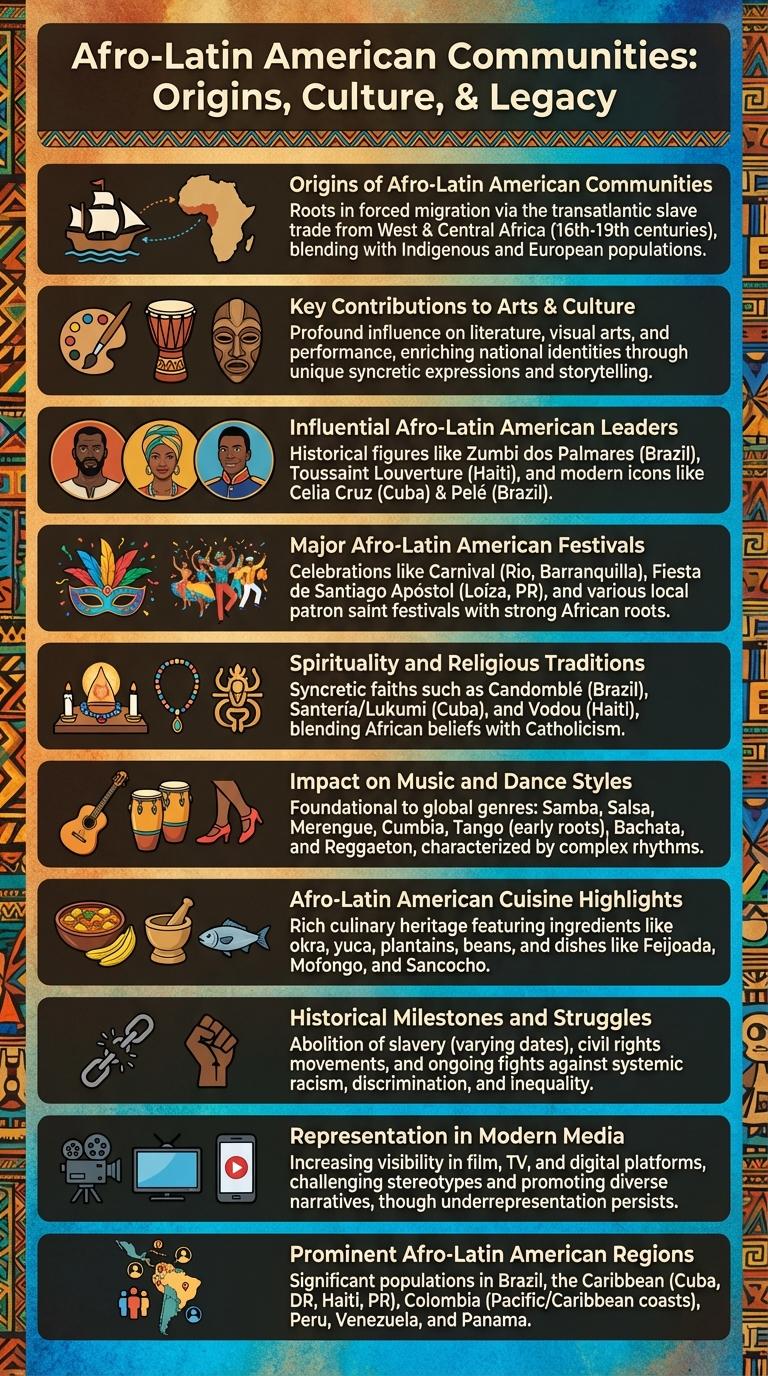
Afro Latin American communities have a rich cultural heritage that blends African, Indigenous, and European influences. This infographic highlights key aspects of their history, traditions, and contributions to society. Exploring their resilience and vibrant identity reveals the depth and diversity within Latin America's social fabric.
Origins of Afro-Latin American Communities
What are the origins of Afro-Latin American communities? Afro-Latin American communities primarily trace their roots to the transatlantic slave trade, which forcibly brought millions of Africans to Latin America from the 16th to 19th centuries. These communities developed uniquely through a blend of African, Indigenous, and European cultural influences across countries such as Brazil, Colombia, Cuba, and the Dominican Republic.
Key Contributions to Arts & Culture
Afro Latin Americans have significantly shaped arts and culture through vibrant music genres like samba, salsa, and cumbia, which blend African rhythms with Latin traditions. Their influence extends to visual arts, where artists use bold colors and themes reflecting Afro heritage and social struggles. Literary contributions include powerful narratives and poetry that celebrate Afro Latin identity and history.
Influential Afro-Latin American Leaders
Afro-Latin American leaders have played pivotal roles in shaping social justice, politics, and culture across Latin America. Their contributions continue to inspire movements for equality and recognition of Afro-Latin heritage.
- Marielle Franco - A Brazilian politician and human rights activist known for advocating against police violence and for marginalized communities.
- Joaquin de Olmedo - An Ecuadorian poet and politician who championed Afro-Ecuadorian rights in the 19th century.
- Celina Gonzalez - Cuban singer and composer celebrated for preserving Afro-Cuban music and culture.
Major Afro-Latin American Festivals
Afro-Latin American communities celebrate rich cultural heritage through vibrant festivals that honor their African roots. These events showcase music, dance, and traditional rituals that highlight the Afro-Latin identity across various countries.
Major Afro-Latin American festivals include the Carnaval de Bahia in Brazil, renowned for its Afro-Brazilian samba and Candomble influences. Another key festival is the Festival de la Cultura Afrocolombiana in Colombia, featuring traditional dances and music like currulao, emphasizing the African heritage in coastal regions.
Spirituality and Religious Traditions
Afro Latin American spirituality blends African religious practices with Catholicism, forming unique traditions such as Santeria, Candomble, and Palo. These faiths emphasize ancestral worship, ritual music, dance, and the use of sacred objects to connect with deities and spirits. Spiritual ceremonies play a vital role in community identity and cultural preservation across countries like Brazil, Cuba, and Colombia.
Impact on Music and Dance Styles
Afro-Latin Americans have profoundly influenced global music and dance, blending African rhythms with Latin sounds to create unique cultural expressions. Their contributions shape genres such as salsa, samba, and reggaeton, reflecting rich historical and social narratives.
The impact of Afro-Latin American culture is evident in musical styles like cumbia, bomba, and merengue, which incorporate African percussion and call-and-response vocals. Dance forms including the rumba and capoeira showcase African heritage through dynamic movement and rhythm. This fusion has enriched Latin American identity and global entertainment industries worldwide.
Afro-Latin American Cuisine Highlights
| Cuisine Highlight | Description |
|---|---|
| Feijoada | Brazilian black bean stew with pork, influenced by African cooking traditions. |
| Arroz con Gandules | Puerto Rican rice dish with pigeon peas, seasoned with sofrito, reflecting African and Spanish roots. |
| Fufu | Starchy staple made from yams or plantains, eaten in Afro-Caribbean communities. |
| Pescado Frito | Fried fish seasoned with spices, common in Afro-Caribbean coastal cuisine. |
| Mofongo | Mashed fried plantains mixed with garlic and pork cracklings, popular in Afro-Puerto Rican cuisine. |
Historical Milestones and Struggles
Afro Latin Americans have a rich history marked by resilience and cultural contributions. Their ancestors were forcibly brought through the transatlantic slave trade, shaping Latin America's demographic and cultural landscape.
Significant milestones include the abolition of slavery in the 19th century and ongoing struggles for civil rights and social equality. Despite systemic discrimination, Afro Latin Americans continue to influence politics, arts, and social movements across the region.
Representation in Modern Media
Afro Latin Americans remain underrepresented in modern media despite their significant cultural influence. Increased visibility in film, television, and digital platforms is essential for accurate representation and social inclusion.
- Limited On-Screen Roles - Afro Latin Americans often face stereotypical or minor roles in mainstream media productions.
- Growing Digital Presence - Social media and online content creators are amplifying Afro Latin American voices worldwide.
- Impact of Representation - Positive portrayal in media contributes to greater cultural awareness and combats racial prejudice.