
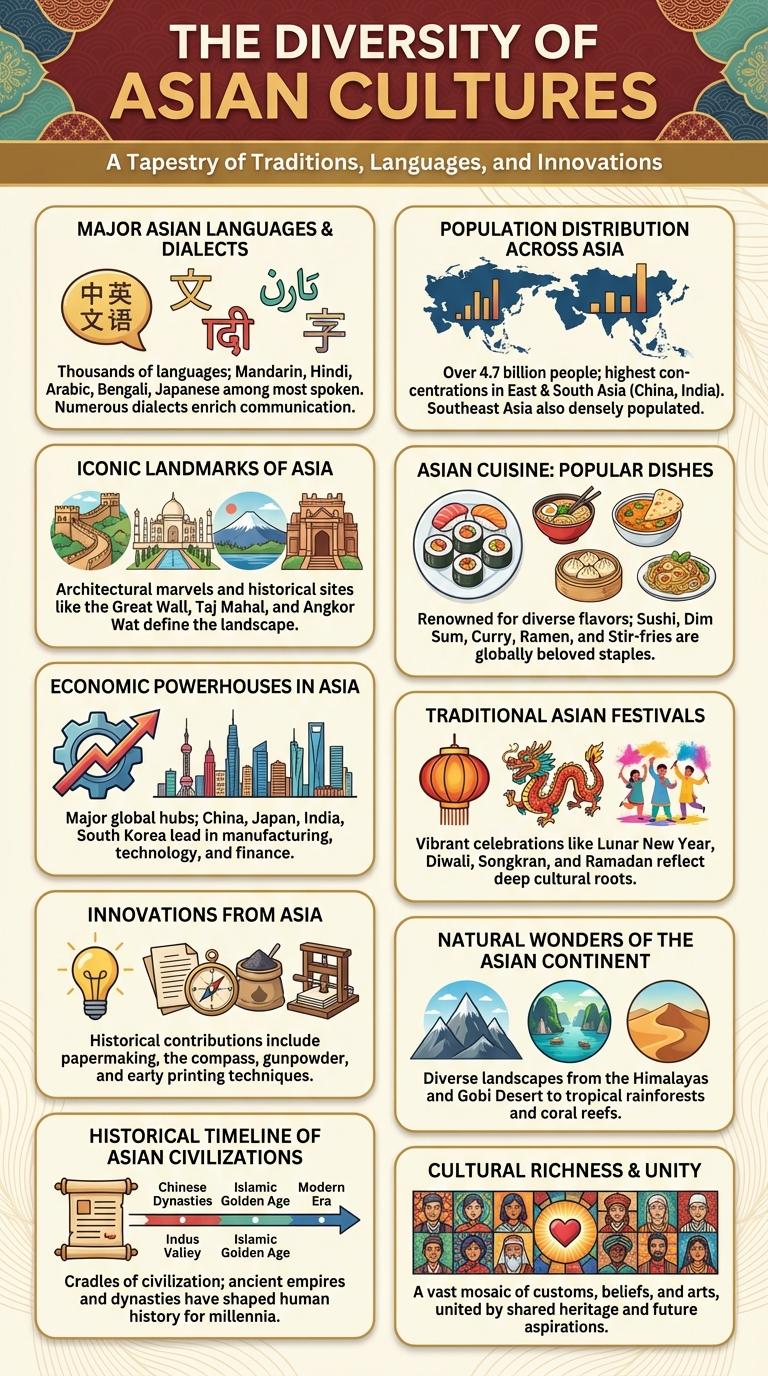
Asian culture is rich with diverse traditions, languages, and histories that span thousands of years and multiple countries. This infographic highlights key aspects such as population distribution, economic growth, and cultural landmarks across Asia. Visual data presentation offers a clear understanding of the continent's dynamic influence in the modern world.
The Diversity of Asian Cultures
Asia is home to a vast array of cultures, languages, and traditions that span thousands of years. The continent's cultural diversity is reflected in its varied customs, arts, and social practices.
- Multilingual Heritage - Asia hosts over 2,000 languages, making it the most linguistically diverse continent in the world.
- Religious Variety - Major religions such as Buddhism, Islam, Hinduism, and Christianity all originated or have significant followings in Asia.
- Rich Artistic Traditions - Asian cultures showcase unique art forms including calligraphy, dance, music, and traditional crafts that differ widely among regions.
Major Asian Languages and Dialects
Asia is home to thousands of languages and dialects, reflecting its vast cultural diversity. Major Asian languages include Mandarin, Hindi, Arabic, Bengali, and Japanese, each spoken by millions. These languages influence various dialects that vary regionally, enriching local communication and heritage.
Population Distribution Across Asia
Asia is the most populous continent, home to over 4.7 billion people, representing nearly 60% of the world's population. Countries like China and India alone account for more than 2.8 billion inhabitants, making them the two most populous nations globally.
Population distribution varies widely, with dense concentrations in urban centers such as Tokyo, Jakarta, and Mumbai, while vast areas like Siberia remain sparsely populated. Rapid urbanization continues to shape demographic trends, influencing economic development and infrastructure planning across the continent.
Iconic Landmarks of Asia
Asia is home to some of the world's most iconic landmarks that showcase its rich history and diverse cultures. These landmarks attract millions of visitors each year, symbolizing architectural brilliance and cultural significance.
- The Great Wall of China - This ancient fortification stretches over 13,000 miles, representing China's historical defense strategy.
- Tokyo Tower, Japan - Inspired by the Eiffel Tower, it serves as a communications and observation tower in Tokyo.
- Taj Mahal, India - A UNESCO World Heritage site, famous for its stunning white marble architecture and romantic history.
- Burj Khalifa, UAE - The tallest skyscraper in the world, located in Dubai, symbolizing modern engineering achievements.
- Angkor Wat, Cambodia - The largest religious monument globally, known for its intricate Khmer architecture and spiritual importance.
Asian Cuisine: Popular Dishes
Asian cuisine offers a diverse range of flavors and ingredients, reflecting the continent's vast cultural heritage. Popular dishes from different countries showcase unique spices, cooking techniques, and presentation styles.
Some of the most iconic Asian dishes include sushi from Japan, dim sum from China, and biryani from India. These dishes highlight regional preferences and have gained global popularity for their distinctive tastes and culinary artistry.
Economic Powerhouses in Asia
Asia hosts some of the world's fastest-growing and largest economies. This infographic highlights key economic powerhouses driving the region's growth.
- China - The second-largest global economy, leading in manufacturing and technology exports.
- Japan - A major player in automotive and electronics industries with high GDP per capita.
- India - Rapidly expanding IT services sector and a growing consumer market.
These Asian economies significantly influence global trade, innovation, and investment trends.
Traditional Asian Festivals
What are some of the most celebrated traditional Asian festivals? Asian cultures observe numerous vibrant festivals that showcase rich heritage and customs. These festivals often involve unique rituals, traditional clothing, and regional cuisines that attract millions of participants worldwide.
Which festival marks the Lunar New Year across many Asian countries? The Lunar New Year, also called the Spring Festival or Chinese New Year, is celebrated in China, Korea, Vietnam, and other regions. It symbolizes new beginnings with dragon dances, lanterns, family reunions, and special foods.
How does the Mid-Autumn Festival stand out in Asian traditions? The Mid-Autumn Festival is popular in China, Vietnam, and Taiwan, emphasizing mooncakes and lantern lighting. It honors the harvest moon and promotes family unity during the full moon night.
| Festival | Key Features |
|---|---|
| Diwali (India) | Festival of Lights, fireworks, family prayers |
| Songkran (Thailand) | Water festival, cleansing rituals, parades |
| Obon (Japan) | Ancestor spirits honored, lanterns, traditional dances |
| Tet (Vietnam) | Lunar New Year celebrations, lucky foods, family gatherings |
| Chuseok (Korea) | Harvest festival, ancestral memorials, sharing food |
Innovations from Asia
Asia has been a global leader in technological and cultural innovations, shaping many aspects of modern life. Countries like Japan, South Korea, and China have pioneered advancements in electronics, robotics, and telecommunications. Key innovations include the development of 5G technology, high-speed rail systems, and cutting-edge consumer electronics.
Natural Wonders of the Asian Continent
| Natural Wonder | Description |
|---|---|
| Mount Everest | The highest peak on Earth, located in the Himalayas, reaching 8,848 meters above sea level. |
| Great Barrier Reef of Asia: The Coral Triangle | Encompasses parts of Indonesia, Malaysia, and the Philippines; known for unparalleled marine biodiversity. |
| Lake Baikal | The world's deepest freshwater lake, situated in Siberia, Russia, containing 20% of the planet's unfrozen freshwater. |
| Gobi Desert | A vast desert region spanning northern China and southern Mongolia, renowned for unique climatic and ecological features. |
| Ha Long Bay | Located in northern Vietnam, famous for its emerald waters and thousands of towering limestone islands. |