
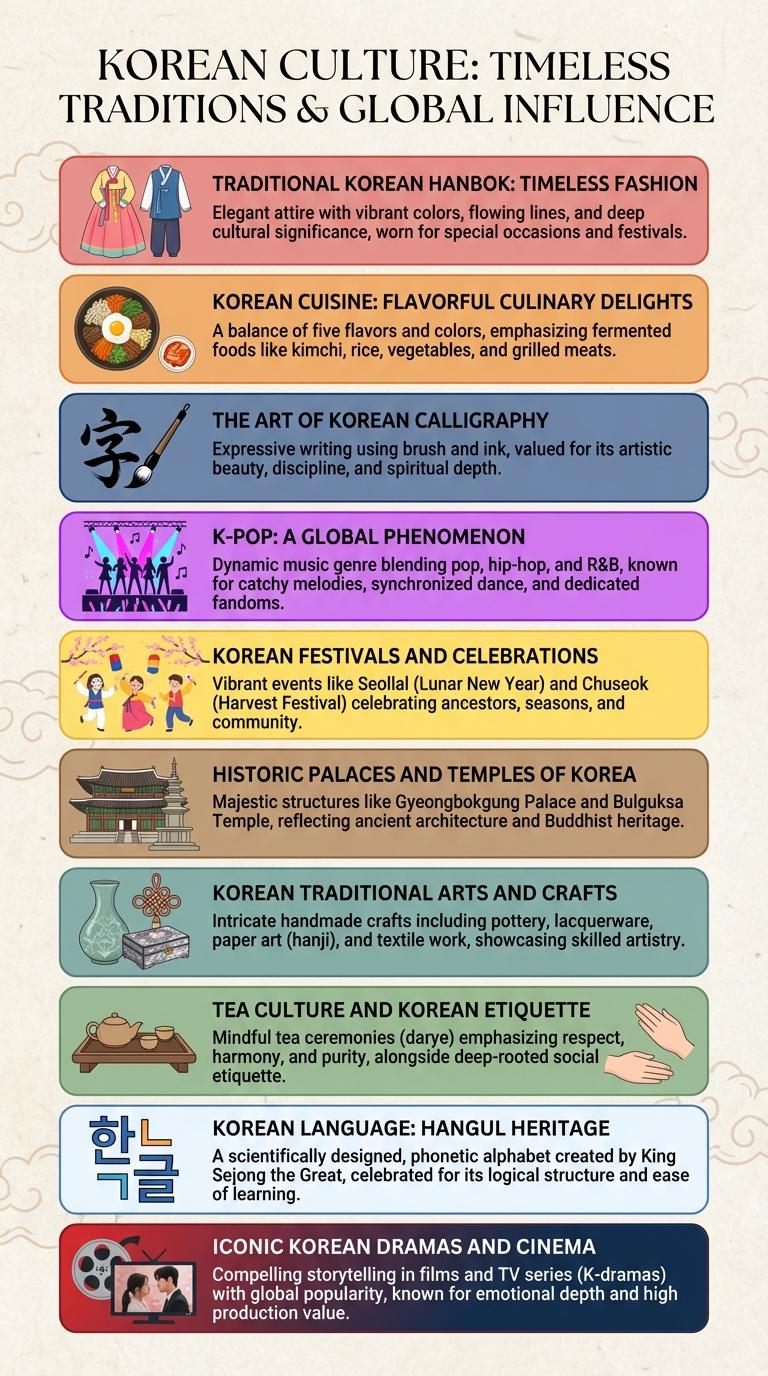
Korean culture showcases a vibrant blend of ancient traditions and modern innovations, reflecting its rich heritage and dynamic society. From traditional hanbok clothing and Korean cuisine to K-pop music and cutting-edge technology, the culture is diverse and influential worldwide. This infographic highlights key elements that define Korea's unique cultural identity and global impact.
Traditional Korean Hanbok: Timeless Fashion
The traditional Korean hanbok represents timeless fashion, characterized by vibrant colors and elegant lines. This attire has been an essential part of Korean culture for centuries, worn during celebrations and important ceremonies.
The hanbok consists of a jeogori (jacket) and chima (skirt) for women, while men wear jeogori paired with baji (pants). Its design emphasizes harmony and natural beauty, reflecting Korea's rich heritage and values.
Korean Cuisine: Flavorful Culinary Delights
Korean cuisine is renowned for its bold flavors, featuring a harmonious balance of spicy, sweet, sour, and savory tastes. Signature dishes such as kimchi, bulgogi, and bibimbap showcase the use of fermented vegetables, grilled meats, and diverse rice preparations. Traditional cooking methods emphasize fresh ingredients, vibrant colors, and nutritious meals that reflect Korea's rich culinary heritage.
The Art of Korean Calligraphy
Korean calligraphy, known as "Seoye," is a revered traditional art form that blends language and visual expression. It reflects Korean history, philosophy, and aesthetics through elegant brush strokes on paper.
- Historical Roots - Korean calligraphy dates back to the Three Kingdoms period, influenced by Chinese calligraphy yet evolved uniquely with Hangul script.
- Brush Techniques - Mastery involves precise control of brush pressure, speed, and ink flow to create balanced and dynamic characters.
- Cultural Significance - Calligraphy symbolizes discipline, spirituality, and artistic beauty, often displayed in temples, palaces, and modern galleries.
K-Pop: A Global Phenomenon
| Aspect | Details |
|---|---|
| K-Pop Origin | Emerging in the early 1990s, Korean pop music blends Western styles with traditional Korean elements |
| Global Reach | Fans in over 100 countries, with significant followings in the US, Japan, and Southeast Asia |
| Top Groups | BTS, BLACKPINK, EXO, TWICE, and Stray Kids dominate international charts and streaming platforms |
| Economic Impact | Contributes more than $5 billion annually to South Korea's economy, boosting tourism and exports |
| Cultural Influence | Popularizes Korean language, fashion, beauty trends, and values worldwide |
Korean Festivals and Celebrations
Korean culture is rich with vibrant festivals and celebrations that showcase the country's unique traditions and history. These events often blend ancient customs with modern entertainment, drawing locals and tourists alike.
One of the most significant Korean festivals is Chuseok, a harvest celebration where families honor their ancestors with food and rituals. Another popular event is the Lantern Festival, which lights up cities with colorful lantern displays symbolizing hope and peace.
Historic Palaces and Temples of Korea
Korean culture boasts a rich heritage showcased through its historic palaces and temples. These sites reveal the artistry, spirituality, and history woven into Korea's identity.
- Gyeongbokgung Palace - The largest of the Five Grand Palaces built during the Joseon Dynasty, known for its majestic architecture and serene gardens.
- Bulguksa Temple - A UNESCO World Heritage site representing the pinnacle of Silla architecture and Buddhist art in Korea.
- Changdeokgung Palace - Renowned for its harmony with the natural landscape, it served as the main royal residence for many Joseon kings.
Korean Traditional Arts and Crafts
What are the key elements of Korean Traditional Arts and Crafts?
Korean Traditional Arts and Crafts showcase a rich heritage of intricate designs and skilled craftsmanship. These arts include ceramics, hanbok textiles, paper art (hanji), and lacquerware that embody Korea's cultural identity.
How is hanbok significant in Korean Traditional Arts?
Hanbok is Korea's traditional clothing known for its vibrant colors and graceful lines. It reflects social status, age, and occasion, making it an important symbol in Korean culture and customs.
What role does pottery play in Korean cultural heritage?
Celadon pottery is a distinguished Korean craft celebrated for its delicate jade-green glaze. This pottery style, dating back to the Goryeo Dynasty, represents Korean artistic innovation and craftsmanship.
Why is hanji paper important in Korean arts?
Hanji, traditional Korean handmade paper, is valued for its durability and texture. Used in calligraphy, painting, and paper crafts, hanji preserves Korea's artistic traditions and techniques.
What distinguishes Korean lacquerware as a traditional craft?
Korean lacquerware features multiple layers of lacquer applied to wooden objects, often decorated with mother-of-pearl inlay. This craft combines beauty with functionality and reflects Korea's natural materials and aesthetic values.
Tea Culture and Korean Etiquette
Korean tea culture is deeply rooted in tradition, emphasizing harmony, respect, and tranquility. Green tea, barley tea, and herbal blends are commonly enjoyed during daily life and special ceremonies. The tea ceremony reflects Korean values of mindfulness, hospitality, and connection to nature.
Korean etiquette prioritizes respect, hierarchy, and politeness, especially in social and family settings. Bowing, using both hands to offer or receive items, and addressing elders with formal titles are key practices. Table manners include waiting for elders to start eating and avoiding loud chewing or speaking while eating.
Korean Language: Hangul Heritage
Hangul, the Korean alphabet, was created in 1443 by King Sejong the Great to promote literacy among common people. It consists of 14 consonants and 10 vowels, forming syllabic blocks that are easy to learn and use.
Recognized for its scientific design, Hangul enables efficient reading and writing, contributing significantly to Korean cultural identity. Its unique structure allows for combining characters into meaningful syllables, reflecting the sounds of the Korean language accurately. Hangul Day is celebrated annually in South Korea on October 9th, honoring this vital cultural heritage.