
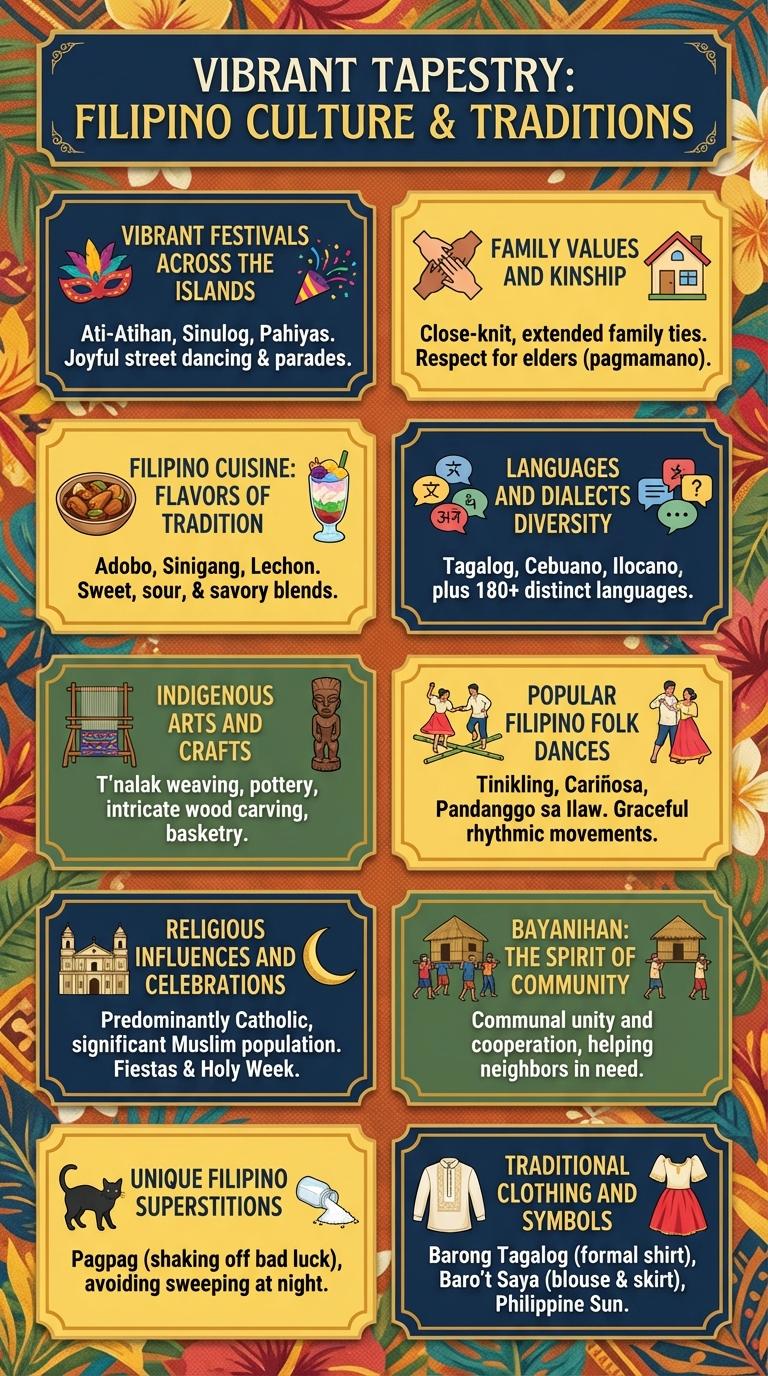
Filipino culture bursts with vibrant traditions, rich history, and diverse customs that reflect the unique identity of the Philippines. This infographic highlights essential aspects such as language, cuisine, festivals, and family values that define the Filipino way of life. Exploring these elements reveals the warmth, resilience, and creativity deeply embedded in the Filipino spirit.
Vibrant Festivals Across the Islands
| Festival Name | Location & Highlights |
|---|---|
| Sinulog Festival | Cebu City - Colorful street dancing, religious procession honoring Santo Nino |
| Ati-Atihan Festival | Aklan, Kalibo - Tribal costumes, rhythmic drumbeats, and communal street parties |
| Pahiyas Festival | Lucban, Quezon - Houses decorated with colorful kiping (rice wafers) and produce |
| Panagbenga Festival | Baguio City - Grand flower floats parade and street dancing celebrating the blooming season |
| Kadayawan Festival | Davao City - Shows indigenous culture, thanksgiving for bountiful harvests with tribal music and dances |
Family Values and Kinship
Filipino culture places a strong emphasis on family values and kinship, where close-knit relationships shape daily life and social interactions. Extended families often live together or maintain close ties, fostering a support system based on respect, loyalty, and mutual care.
Respect for elders, known as "paggalang," is a core value, often shown through gestures like "mano," a traditional hand gesture of respect. Celebrations, rituals, and everyday activities highlight the importance of family bonding and collective decision-making in Filipino society.
Filipino Cuisine: Flavors of Tradition
What makes Filipino cuisine a unique blend of flavors? Filipino cuisine combines indigenous ingredients with influences from Spanish, Chinese, and Malay cultures. This fusion creates a rich, diverse culinary tradition that highlights sweet, sour, and savory tastes in every dish.
How do traditional cooking methods shape Filipino flavors? Techniques such as grilling, steaming, and slow-cooking intensify the natural flavors of local ingredients. These methods preserve the authenticity and depth found in popular dishes like adobo and sinigang.
Which ingredients are essential in Filipino cooking? Common staples include garlic, vinegar, soy sauce, and coconut milk. Local produce like mangoes, rice, and seafood contribute to the vibrant and fresh taste profile.
What role do festive foods play in Filipino culture? Special occasions feature dishes like lechon, pancit, and halo-halo that symbolize prosperity and unity. These shared meals strengthen community bonds and celebrate cultural heritage.
How has Filipino cuisine evolved in modern times? Chefs incorporate global techniques while respecting traditional recipes. This evolution ensures that Filipino flavors remain relevant and appreciated worldwide.
Languages and Dialects Diversity
The Philippines is home to a rich tapestry of languages and dialects, reflecting its diverse cultural heritage. Over 170 languages are spoken across the archipelago, showcasing unique linguistic traditions in each region.
- Over 170 Languages Spoken - The Philippine archipelago hosts more than 170 distinct languages, highlighting its multicultural identity.
- Filipino and English as Official Languages - Filipino, based on Tagalog, and English are the country's official languages used in government, education, and media.
- Regional Dialects and Indigenous Languages - Major regions speak languages such as Cebuano, Ilocano, Hiligaynon, and Waray, preserving local histories and customs.
Indigenous Arts and Crafts
Filipino indigenous arts and crafts showcase a rich heritage of skill and creativity passed down through generations. Traditional weaving, pottery, and woodcarving are prominent, reflecting the diverse cultural identities of various ethnic groups across the archipelago. These crafts not only serve functional purposes but also symbolize the cultural stories and spirituality of the Filipino people.
Popular Filipino Folk Dances
Filipino culture boasts a rich heritage showcased through vibrant folk dances. These dances reveal the traditions, history, and social values of the Filipino people.
- Tinikling - This dance features dancers skillfully hopping between bamboo poles in rhythm, mimicking the movements of the tikling bird.
- Singkil - Originating from the Maranao people, Singkil tells a royal story using intricate footwork and bamboo clapping.
- Itik-Itik - Inspired by the movements of a duck, this lively dance is characterized by graceful hand and body gestures.
Popular Filipino folk dances continue to be performed and celebrated, preserving the country's cultural identity.
Religious Influences and Celebrations
Filipino culture is deeply shaped by religious influences, with Catholicism playing a central role due to centuries of Spanish colonization. Religious practices and celebrations are integral to community life and identity.
Major religious festivals like Sinulog, Ati-Atihan, and Pahiyas reflect a fusion of indigenous traditions and Catholic faith. These celebrations draw millions of participants and tourists annually, showcasing vibrant rituals and colorful parades. Church activities, including masses and processions, serve as both spiritual and social gatherings for Filipino communities.
Bayanihan: The Spirit of Community
Bayanihan represents the Filipino spirit of communal unity and cooperation. It embodies the tradition of helping one another without expecting anything in return.
- Origin - Bayanihan comes from the word "bayan," meaning nation or community, highlighting collective effort.
- Traditional Practice - It often involves neighbors physically moving a house using bamboo poles, symbolizing teamwork.
- Modern Relevance - Bayanihan continues in modern times through community-driven projects and disaster response efforts.
Unique Filipino Superstitions
Filipino culture is rich with unique superstitions passed down through generations, reflecting deep beliefs in luck, spirits, and the unseen world. These practices influence daily life, celebrations, and social interactions across the Philippines.
Common superstitions include avoiding sweeping the floor at night to prevent bad luck and not cutting nails after sunset to avoid attracting evil spirits. Many Filipinos also believe that a sudden itch on the palm means they will receive money soon.