
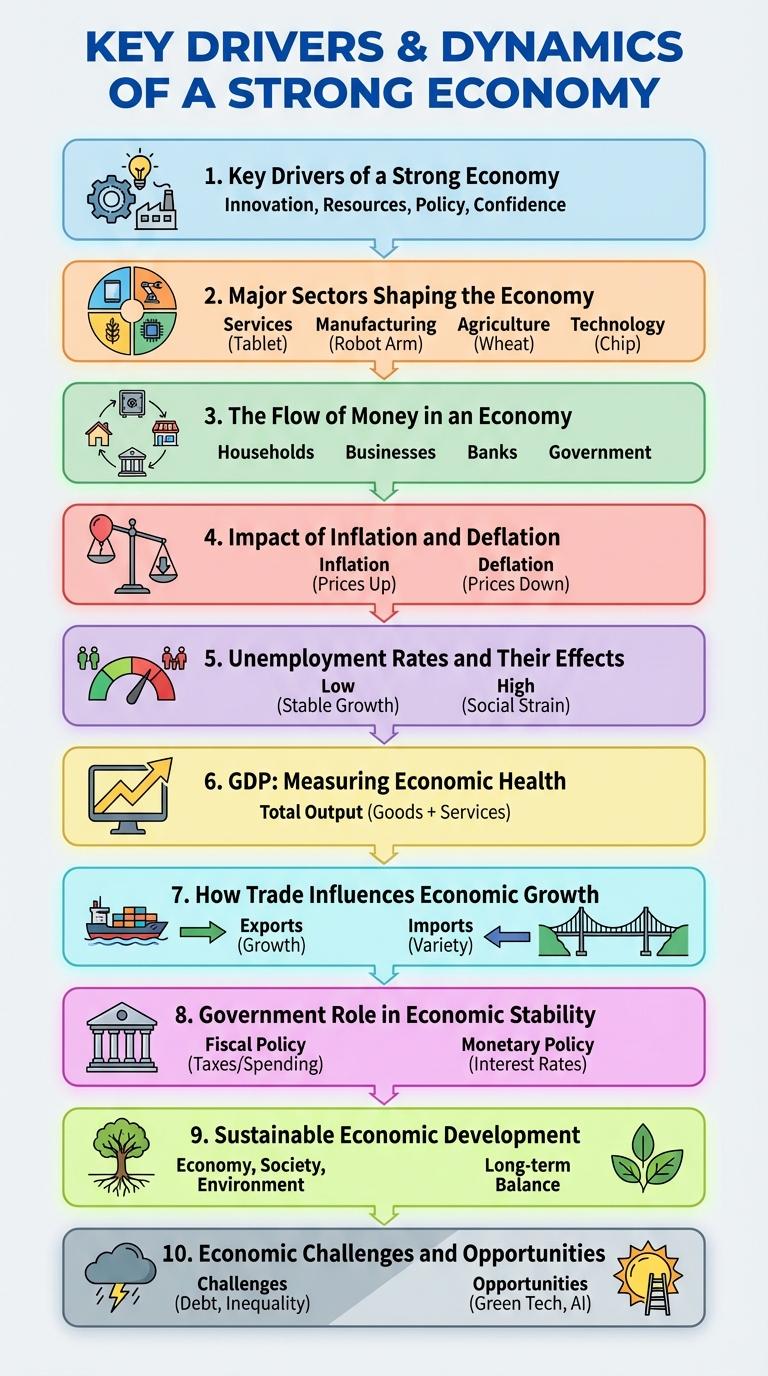
Ekonomiya visualizes complex economic data through engaging and easy-to-understand graphics that highlight key trends and statistics. Infographics simplify concepts like market growth, inflation rates, and consumer behavior, making economic information accessible to a broader audience. These visuals enhance the comprehension of financial insights, supporting informed decision-making and strategic planning.
Key Drivers of a Strong Economy
The strength of an economy relies on multiple key drivers that promote growth and stability. Understanding these drivers helps identify opportunities for sustainable development.
- Labor Productivity - Efficient worker output increases overall economic performance and competitiveness.
- Capital Investment - Investment in infrastructure and technology fuels innovation and business expansion.
- Consumer Spending - High consumer demand stimulates production and drives market growth.
- Government Policy - Effective regulations and fiscal policies create a stable environment for economic activity.
- Trade Balance - Maintaining a positive trade balance supports national income and foreign exchange reserves.
These drivers collectively shape the foundation of a robust and resilient economy.
Major Sectors Shaping the Economy
The economy is primarily shaped by three major sectors: agriculture, industry, and services. Agriculture involves farming, fishing, and forestry, forming the foundation of food production and raw materials. Industry includes manufacturing, construction, and mining, driving economic growth through production and infrastructure development. The services sector, encompassing finance, healthcare, education, and tourism, contributes the largest share to GDP in most modern economies.
The Flow of Money in an Economy
The flow of money in an economy illustrates how funds circulate between different sectors, including households, businesses, government, and foreign markets. This continuous movement drives production, consumption, and investment activities, sustaining economic growth.
Households provide labor and receive income, which they use to purchase goods and services from businesses. Businesses invest in resources and pay wages, while the government collects taxes to fund public services, completing the cycle of money circulation.
Impact of Inflation and Deflation
Inflation and deflation significantly influence economic stability and growth. Understanding their impact helps policymakers and businesses make informed decisions.
- Inflation reduces purchasing power - Rising prices mean consumers can buy less with the same amount of money.
- Deflation increases real debt burden - Falling prices make existing debts harder to repay in real terms.
- Inflation encourages spending - Expectations of higher prices in the future motivate consumers to buy now.
- Deflation discourages investment - Lower prices reduce business revenues, leading to cuts in investment and hiring.
- Inflation complicates wage adjustments - Businesses face challenges in setting fair wages amid changing price levels.
Unemployment Rates and Their Effects
Unemployment rates measure the percentage of the labor force that is without work but actively seeking employment. High unemployment rates indicate economic distress and reduced consumer spending power.
Rising unemployment leads to lower household incomes and increased government spending on social safety nets. Prolonged joblessness can also result in skill erosion and long-term economic decline.
GDP: Measuring Economic Health
What is GDP and why does it matter in understanding ekonomik health? GDP, or Gross Domestic Product, measures the total value of all goods and services produced within a country's borders over a specific time period. This indicator helps assess the economic performance and living standards of a nation.
How is GDP calculated and what are its main components? GDP can be calculated using production, income, or expenditure approaches, with key components including consumption, investment, government spending, and net exports. These elements reflect the economic activities driving growth or contraction.
What does a rising GDP indicate about an economy? An increasing GDP often signals economic expansion, improved business conditions, and higher employment levels. It generally corresponds with better income and consumer confidence in the country.
Why can GDP alone be insufficient in measuring economic well-being? GDP does not capture income inequality, environmental impact, or informal economic activities. Evaluating additional factors offers a more comprehensive picture of overall economic health and societal progress.
How Trade Influences Economic Growth
Trade plays a crucial role in driving economic growth by expanding markets and increasing access to resources. Countries that engage in international trade tend to experience higher GDP growth rates compared to those that rely solely on domestic markets.
Trade facilitates specialization and improves productivity by allowing countries to focus on producing goods and services in which they have a comparative advantage. Increased competition from global markets encourages innovation and efficiency among businesses. Access to a wider variety of goods and services also boosts consumer welfare and expands investment opportunities.
Government Role in Economic Stability
The government's involvement is crucial in maintaining economic stability and fostering sustainable growth. Effective policies help regulate financial markets and control inflation.
- Monetary Policy - Governments use interest rates and money supply controls to stabilize the economy.
- Fiscal Policy - Budgeting and taxation influence demand and investment in the market.
- Regulatory Framework - Laws and regulations ensure market fairness and protect consumers.
Sustainable Economic Development
| Aspect | Description |
|---|---|
| Sustainable Economic Development | Economic growth that meets present needs without compromising future generations' ability to meet theirs, balancing economic, social, and environmental goals. |
| Key Principles | Resource efficiency, social equity, environmental protection, long-term economic health. |
| Benefits | Job creation, poverty reduction, climate resilience, improved quality of life. |
| Challenges | Resource depletion, economic inequality, environmental degradation. |
| Strategies | Renewable energy adoption, sustainable agriculture, green technologies, circular economy practices. |