
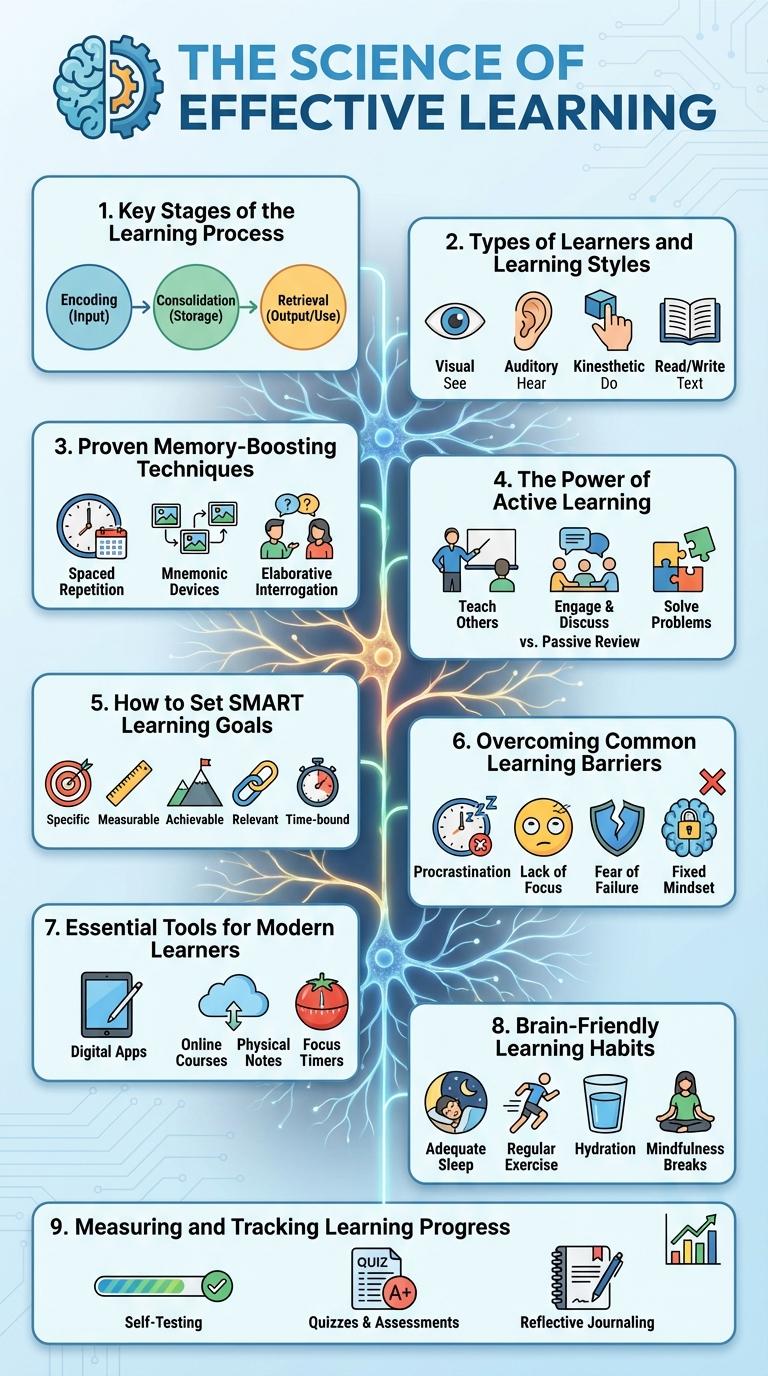
Learning transforms information into knowledge through engaging visual aids like infographics that simplify complex concepts. Infographics enhance memory retention by presenting data with clear graphics and concise text, making it easier for learners to grasp key ideas quickly. This visual approach supports diverse learning styles and boosts overall comprehension and motivation.
The Science of Effective Learning
Effective learning is grounded in cognitive science, emphasizing spaced repetition, active recall, and multimodal engagement to enhance memory retention. Understanding the brain's plasticity reveals that consistent practice and meaningful connections improve neural pathways for long-term learning. Applying these principles accelerates skill acquisition and deepens comprehension across diverse subjects.
Key Stages of the Learning Process
What are the key stages of the learning process? The learning process typically involves several essential stages that help individuals acquire and retain knowledge effectively. Understanding these stages can enhance educational outcomes and personal development.
| Stage | Description |
|---|---|
| 1. Exposure | Initial encounter with new information or skills through observation or instruction. |
| 2. Comprehension | Processing and understanding the new material to make meaning of it. |
| 3. Practice | Repeated application or rehearsal to reinforce learning and improve proficiency. |
| 4. Feedback | Receiving input on performance to identify strengths and areas for improvement. |
| 5. Mastery | Achieving confident and efficient use of the learned skills or knowledge. |
Types of Learners and Learning Styles
Understanding different types of learners and learning styles enhances educational effectiveness. Tailoring learning approaches to individual needs improves retention and engagement.
Visual learners absorb information best through images, diagrams, and videos. Auditory learners prefer listening to lectures, discussions, and audio materials. Kinesthetic learners learn effectively by doing, using hands-on activities and movement to grasp concepts.
Proven Memory-Boosting Techniques
Learning efficiency improves significantly when memory-boosting techniques are applied. Proven methods enhance retention and recall by engaging multiple cognitive processes.
Techniques such as spaced repetition and mnemonic devices activate long-term memory storage. Applying these strategies consistently leads to measurable improvements in information recall.
The Power of Active Learning
Active learning transforms passive education into an engaging experience that enhances retention and understanding. Emphasizing participation, it strengthens critical thinking and practical skills.
- Improves Memory - Engaging with material actively helps embed information deeper in the brain.
- Enhances Problem-Solving - Hands-on activities encourage learners to apply concepts creatively.
- Boosts Motivation - Interactive learning keeps students interested and invested in their progress.
Integrating active learning strategies leads to more effective and lasting educational outcomes.
How to Set SMART Learning Goals
| Step | Description |
|---|---|
| Specific | Define clear, precise learning objectives to focus efforts and avoid ambiguity. |
| Measurable | Set criteria to track progress and quantify success using metrics like test scores or completed projects. |
| Achievable | Choose realistic goals that challenge you but remain attainable with effort and resources available. |
| Relevant | Align learning goals with personal or professional ambitions for maximum motivation and impact. |
| Time-bound | Set deadlines or time frames to encourage consistent progress and timely completion. |
Overcoming Common Learning Barriers
Learning often encounters obstacles like lack of motivation and distractions. Identifying these barriers is the first step to overcoming them.
Effective strategies such as setting clear goals and creating a dedicated study environment enhance focus. Regular breaks and positive reinforcement help sustain motivation during the learning process.
Essential Tools for Modern Learners
Modern learners rely on a variety of digital and traditional tools to enhance their educational experience. These essential tools support effective information retention, collaboration, and skill development.
- Interactive E-Learning Platforms - These platforms provide engaging multimedia content and real-time assessments to facilitate active learning.
- Digital Note-Taking Apps - Apps like Evernote and OneNote help organize and access notes efficiently across devices.
- Collaboration Tools - Tools such as Google Workspace and Microsoft Teams enable seamless communication and group projects among learners.
Brain-Friendly Learning Habits
Brain-friendly learning habits enhance memory retention and improve cognitive function. Techniques like spaced repetition, active recall, and multitensory engagement stimulate neural pathways. Regular breaks, adequate sleep, and healthy nutrition support optimal brain performance during study sessions.