
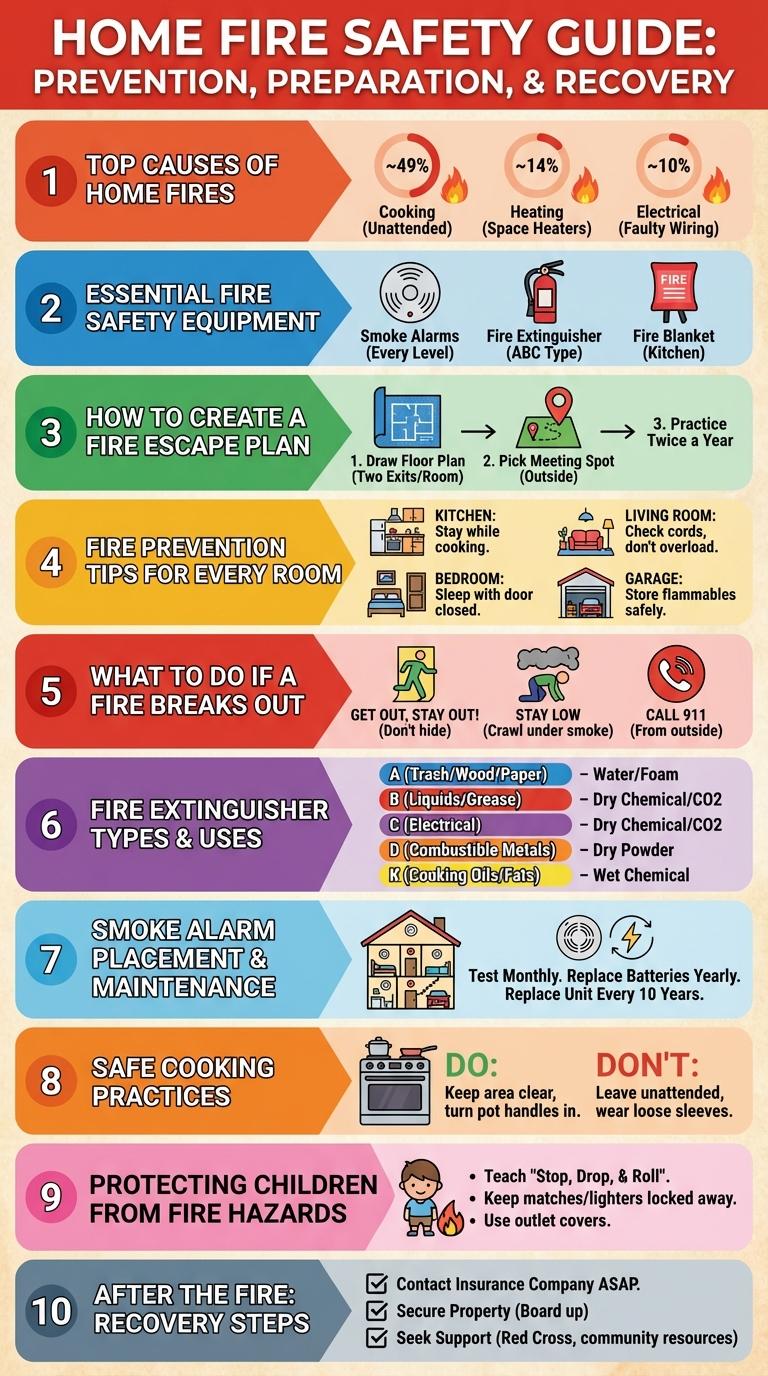
Fire safety infographics present essential information visually to help individuals prevent and respond to fire emergencies effectively. These graphics highlight key practices such as installing smoke detectors, creating escape plans, and knowing how to use fire extinguishers. Clear visual cues and concise instructions increase awareness and promote safer behaviors in homes and workplaces.
Top Causes of Home Fires
Home fires pose significant risks, often starting from common household hazards. Understanding the top causes helps prevent accidents and protects lives and property.
- Cooking Equipment - Unattended cooking is the leading cause of home fires, often igniting grease or food debris.
- Heating Devices - Space heaters and fireplaces can cause fires if placed too close to flammable materials.
- Electrical Malfunctions - Faulty wiring, overloaded outlets, and outdated electrical systems frequently trigger fires.
Essential Fire Safety Equipment
Fire safety equipment is crucial for preventing injuries and minimizing property damage during fire emergencies. Knowing the essential tools helps ensure preparedness and swift response.
- Smoke Detectors - Detect smoke early to alert occupants of potential fire hazards.
- Fire Extinguishers - Allow immediate action to suppress small fires before they spread.
- Fire Blankets - Smother flames on a person or small fire source safely and effectively.
Proper maintenance and regular checks of fire safety equipment guarantee optimal performance in emergencies.
How to Create a Fire Escape Plan
Creating a fire escape plan is essential for ensuring safety during a fire emergency. A well-designed plan helps every household member know how to exit quickly and safely.
Start by identifying all possible exits from each room, including windows and doors. Designate a safe meeting spot outside the home where everyone can gather after escaping. Practice the escape plan regularly to ensure everyone remembers the steps and can act quickly in an emergency.
Fire Prevention Tips for Every Room
Fire prevention starts with awareness and practical steps in every room. Keep flammable materials away from heat sources and ensure smoke detectors are installed and functioning. Regularly inspect electrical outlets and avoid overloading circuits to reduce fire risks.
What To Do If a Fire Breaks Out
Knowing how to respond during a fire emergency can save lives and reduce injury. Follow these essential steps immediately if a fire breaks out in your home or workplace.
- Alert Everyone - Sound the fire alarm or shout to ensure all occupants know there is a fire.
- Evacuate Safely - Use the nearest safe exit and avoid elevators when leaving the building.
- Call Emergency Services - Dial 911 or your local fire department once you are in a safe location.
- Stay Low to the Ground - Smoke rises, so crawling helps you avoid inhaling dangerous fumes.
- Do Not Re-Enter - Do not go back inside the building until firefighters declare it safe.
Fire Extinguisher Types & Uses
Fire extinguishers are essential safety tools designed to combat different types of fires. Understanding the types and uses of fire extinguishers can help prevent fire damage and ensure personal safety.
There are four main types of fire extinguishers: Water, Foam, Dry Powder, and CO2. Each type targets specific fire classes, making it critical to choose the right extinguisher for the situation.
Smoke Alarm Placement & Maintenance
Proper smoke alarm placement is critical for optimal fire safety, with units installed inside every bedroom, outside each sleeping area, and on every level of the home. Regular maintenance, such as monthly testing, battery replacement at least once a year, and cleaning to remove dust, ensures reliable performance. Smoke alarms with a lifespan of 10 years should be replaced promptly to maintain effective fire detection and early warning.
Safe Cooking Practices
| Safe Cooking Practice | Key Tip |
|---|---|
| Stay Present | Never leave cooking unattended to prevent kitchen fires. |
| Keep Flammable Items Away | Remove towels, paper, and curtains from the cooking area. |
| Use Proper Equipment | Use pots and pans with sturdy handles and lids for quick fire control. |
| Control Heat Levels | Cook at medium or low heat to reduce risk of oil splatter and flames. |
| Have Fire Extinguisher Nearby | Keep an accessible fire extinguisher rated for kitchen fires (Class K). |
Protecting Children from Fire Hazards
How can parents effectively protect children from fire hazards at home?
Identifying common fire hazards such as matches and lighters is crucial for child safety. Keeping these items out of reach and teaching children about fire dangers helps prevent accidents.
What safety measures should be taken in children's bedrooms to reduce fire risks?
Install smoke detectors in every child's bedroom and test them monthly to ensure functionality. Avoid using space heaters or electric blankets unattended in these rooms.
Why is creating a fire escape plan important for protecting children?
A clear fire escape plan practiced regularly ensures children know how to respond in emergencies. Assigning specific meeting points outside the home enhances family safety and accountability.
How does supervising children near cooking areas prevent fire accidents?
Close supervision around kitchens keeps children away from hot surfaces and flammable materials. Using stove knob covers and teaching "stay away" zones reduces the risk of burns and fires.
What role does fire safety education play in safeguarding children?
Teaching children about fire risks and prevention builds awareness and responsible behavior. Interactive lessons and drills reinforce safe responses and reduce fear during real incidents.