
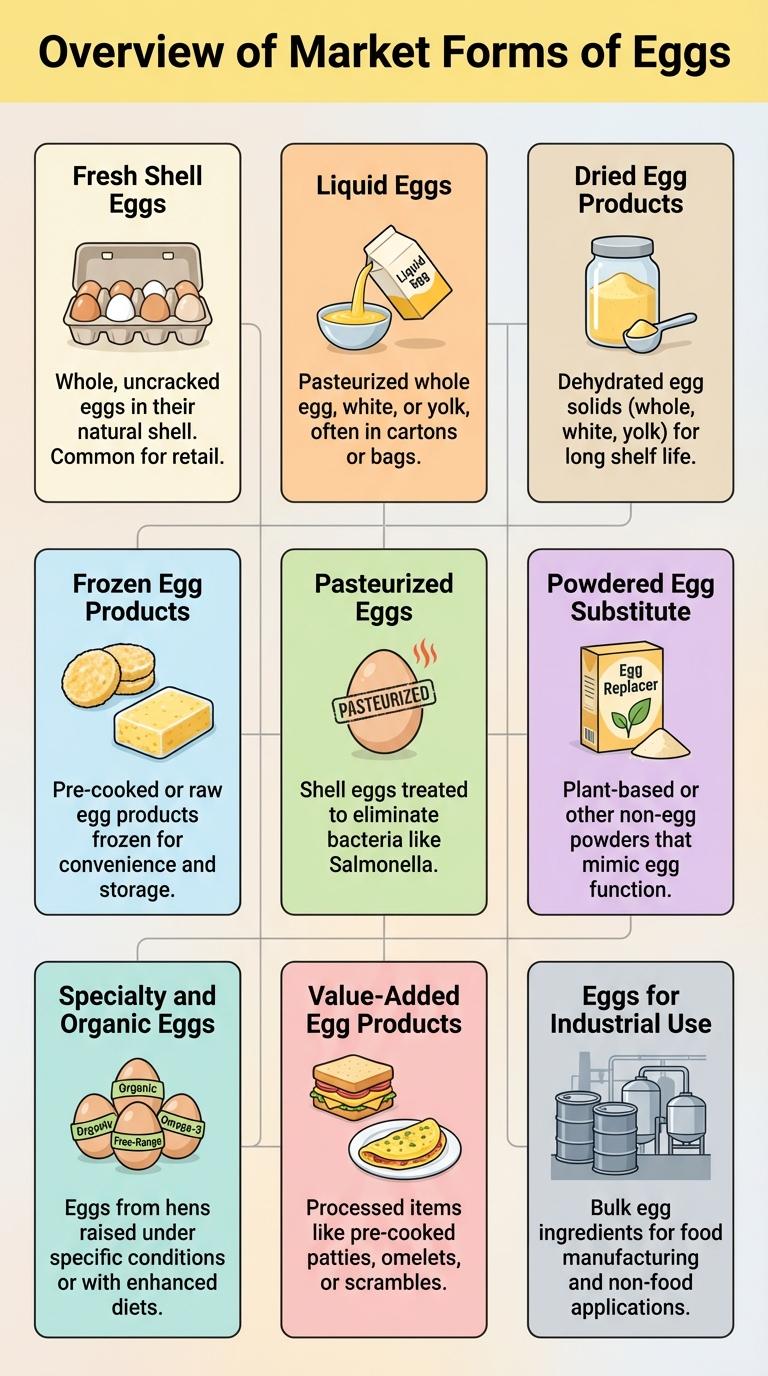
Egg market forms include fresh, frozen, powdered, and processed products, each catering to diverse consumer and industrial needs. Fresh eggs dominate retail sales, while powdered and frozen forms offer extended shelf life and convenience for food manufacturers. Understanding these market forms helps stakeholders optimize distribution and meet varied demand across sectors.
Overview of Market Forms of Eggs
What are the main market forms of eggs available to consumers? Eggs are sold in various forms to meet different consumer needs and preferences. These forms range from fresh, whole eggs to processed and specialty options.
| Market Form | Description |
|---|---|
| Shell Eggs | Fresh eggs sold in their natural shell, typically graded by size and quality. |
| Liquid Eggs | Eggs removed from their shells and pasteurized, available as whole, whites, or yolks for convenience. |
| Powdered Eggs | Dried eggs that provide a long shelf life and are used for baking or emergency food supplies. |
| Specialty Eggs | Includes organic, free-range, or fortified eggs, often marketed for health or ethical reasons. |
| Processed Egg Products | Products such as frozen eggs or pre-cooked egg items designed for quick preparation. |
Fresh Shell Eggs
Fresh shell eggs represent the most traditional and widely available market form of eggs. They are valued for their natural freshness and intact protective shell.
- Packaging Variety - Eggs are commonly sold in cartons ranging from 6 to 24 eggs to suit different consumer needs.
- Quality Standards - Fresh shell eggs must meet strict grading criteria based on size, shell quality, and internal freshness.
- Storage Requirements - These eggs require refrigeration to maintain freshness and prevent bacterial contamination.
Consumers prefer fresh shell eggs for their versatility in cooking and natural presentation.
Liquid Eggs
Liquid eggs represent a convenient and versatile form of egg products, widely used in food service and commercial kitchens. These eggs are pasteurized and sold in cartons, providing a safe and ready-to-use option that eliminates the need for shelling.
Available as whole, white, or yolk-only varieties, liquid eggs streamline food preparation and improve portion control. Their extended shelf life compared to shell eggs reduces waste and simplifies inventory management. Liquid eggs are popular in bakeries, restaurants, and food manufacturing due to their consistent quality and ease of use.
Dried Egg Products
Dried egg products are a versatile form of eggs processed to remove moisture, enhancing shelf life and portability. They are widely used in the food industry for bakery, confectionery, and ready-to-eat meals.
Common dried egg types include powdered whole eggs, egg whites, and yolks, each serving specific culinary and industrial roles. The global market for dried egg products is driven by demand for convenient, long-lasting ingredients in food manufacturing.
Frozen Egg Products
Frozen egg products include liquid eggs, frozen whole eggs, egg whites, and egg yolks, catering to both commercial and household uses. These products offer extended shelf life, convenience, and consistent quality compared to fresh eggs. Key markets for frozen egg products encompass bakeries, food manufacturers, and institutional food service sectors.
Pasteurized Eggs
Pasteurized eggs undergo a heating process that reduces harmful bacteria while preserving quality. These eggs are ideal for safe consumption in recipes requiring raw or lightly cooked eggs.
- Safety Enhancement - Pasteurization eliminates pathogens like Salmonella without cooking the egg.
- Extended Shelf Life - Pasteurized eggs remain fresh longer due to reduced bacterial growth.
- Versatile Usage - Suitable for sauces, dressings, and desserts that use raw eggs.
Powdered Egg Substitute
Powdered egg substitute is a shelf-stable product designed to mimic the taste and functionality of fresh eggs. It offers convenience, extended shelf life, and ease of storage for both consumers and food industries.
This form is commonly used in baking, cooking, and food manufacturing due to its consistent quality and long-term usability.
- Ingredients - Typically made from plant proteins like mung bean or soy, providing an egg-free alternative.
- Storage Benefits - Requires no refrigeration and can be stored for months without spoiling.
- Usage - Easily rehydrated with water and used as a direct replacement for whole eggs in recipes.
Specialty and Organic Eggs
Specialty and organic eggs represent a growing segment in the egg market, appealing to health-conscious and environmentally aware consumers. Specialty eggs include types like free-range, cage-free, and omega-3 enriched eggs, each offering distinct production methods and nutritional benefits. Organic eggs come from hens raised without synthetic pesticides or antibiotics, meeting USDA organic certification standards.
Value-Added Egg Products
Value-added egg products enhance the versatility and convenience of eggs by incorporating them into ready-to-use forms. These products include liquid eggs, powdered eggs, and pre-cooked egg items designed for foodservice and retail markets.
Liquid egg products offer easy blending and cooking, making them popular in commercial kitchens. Powdered eggs provide long shelf life and lightweight storage, ideal for emergency supplies and industrial use.