
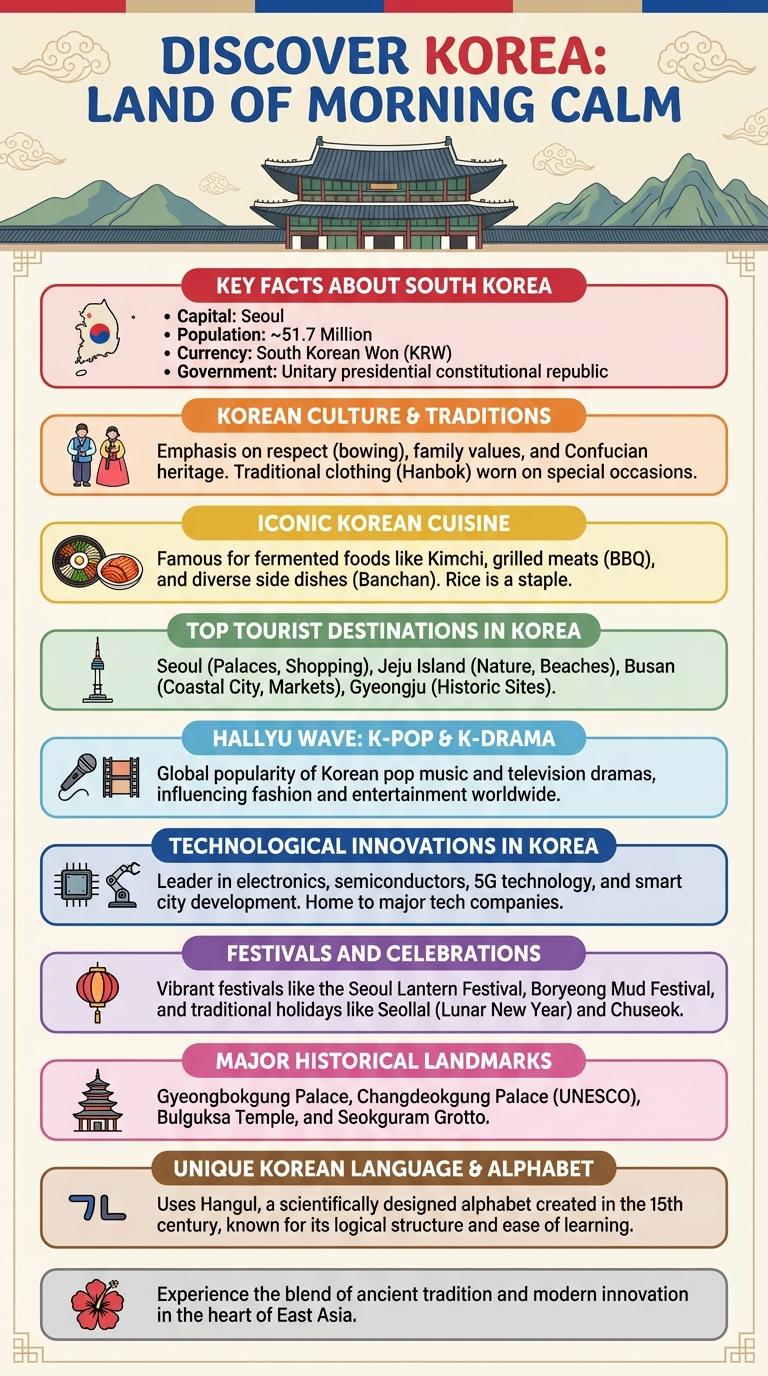
Korea's rich history and vibrant culture come alive through stunning visuals and key data points in this infographic. Showcasing traditional landmarks, modern technology, and cultural highlights, it captures the essence of both North and South Korea. Explore the unique blend of ancient heritage and rapid innovation shaping the Korean Peninsula today.
Discover Korea: Land of Morning Calm
What makes Korea known as the Land of Morning Calm? Korea is renowned for its serene landscapes and rich cultural heritage. The country's peaceful mornings reflect its deep connection to nature and tradition.
Key Facts About South Korea
South Korea, officially known as the Republic of Korea, is located on the southern half of the Korean Peninsula in East Asia. It has a population of approximately 52 million people and is one of the world's leading economies, known for its advanced technology and automotive industries. Seoul, the capital city, is a global metropolis recognized for its blend of modern skyscrapers and historic temples.
Korean Culture & Traditions
Korea boasts a rich cultural heritage that blends ancient traditions with modern innovation. Its customs reflect deep respect for family, community, and nature.
Traditional Korean culture centers around Confucian values, emphasizing harmony, respect, and social hierarchy. Festivals like Chuseok and Seollal celebrate family reunion and ancestral worship. Hanbok, the traditional clothing, remains a strong symbol of Korean identity and elegance.
Iconic Korean Cuisine
Korean cuisine offers a rich and diverse array of flavors that reflect the country's history and culture. Traditional dishes emphasize balance, fermentation, and bold seasoning techniques.
- Kimchi - Fermented vegetables, primarily napa cabbage, seasoned with chili, garlic, and ginger, a staple in Korean meals.
- Bibimbap - A mixed rice dish topped with vegetables, meat, egg, and gochujang (red chili paste), known for its vibrant flavors and nutritional balance.
- Bulgogi - Thinly sliced marinated beef grilled or stir-fried, celebrated for its sweet and savory taste.
Korean cuisine's unique combination of fermented and fresh ingredients offers both health benefits and rich culinary experiences.
Top Tourist Destinations in Korea
Korea boasts a rich blend of modern attractions and cultural heritage sites, drawing millions of tourists each year. Visitors can explore diverse landscapes, historic landmarks, and vibrant cities.
- Seoul - Korea's capital offers iconic sites like Gyeongbokgung Palace and modern districts such as Gangnam, combining tradition and innovation.
- Jeju Island - Known for its volcanic landscapes, waterfalls, and unique lava tubes, Jeju is a popular destination for nature lovers and honeymooners.
- Busan - This coastal city features beautiful beaches, the famous Jagalchi Fish Market, and cultural festivals attracting diverse visitors.
Hallyu Wave: K-Pop & K-Drama
The Hallyu Wave, also known as the Korean Wave, dramatically increased global interest in South Korean culture, especially through K-Pop and K-Drama. K-Pop groups like BTS and BLACKPINK have millions of passionate fans worldwide, transforming the music industry.
K-Dramas such as "Crash Landing on You" and "Squid Game" gained international acclaim for their unique storytelling and production quality. This cultural phenomenon boosts South Korea's tourism and economy by attracting global audiences to Korean entertainment and lifestyle.
Technological Innovations in Korea
South Korea is a global leader in technological innovations, particularly in the fields of electronics, robotics, and telecommunications. Companies like Samsung and LG have revolutionized the smartphone and consumer electronics markets with cutting-edge technologies. The country's investment in research and development drives advancements in AI, 5G networks, and smart manufacturing, positioning Korea as a key player in the global tech landscape.
Festivals and Celebrations
Korea hosts vibrant festivals and celebrations that reflect its rich cultural heritage and modern creativity. These events attract millions of visitors annually, showcasing traditional customs and contemporary entertainment.
- Boryeong Mud Festival - A summer event where participants enjoy mud-themed activities to promote Boryeong's mineral-rich mud's health benefits.
- Chuseok - Known as Korean Thanksgiving, this harvest festival involves family reunions, ancestral rites, and traditional games.
- Seollal - The Lunar New Year celebration features rituals, traditional food, and wearing hanbok to honor ancestors and welcome a prosperous year.
Major Historical Landmarks
| Landmark | Description |
|---|---|
| Gyeongbokgung Palace | Main royal palace of the Joseon Dynasty, located in Seoul, built in 1395. |
| Bulguksa Temple | Ancient Buddhist temple in Gyeongju, famous for its architecture and cultural significance; UNESCO World Heritage Site. |
| Hwaseong Fortress | 18th-century fortress in Suwon, designed for defense and urban planning, showcasing Korean military architecture. |
| Jongmyo Shrine | Royal Confucian shrine in Seoul honoring Joseon Dynasty kings; designated UNESCO World Heritage Site. |
| Seokguram Grotto | Stone Buddhist grotto near Bulguksa, known for its intricate statues and spiritual significance; UNESCO World Heritage Site. |