
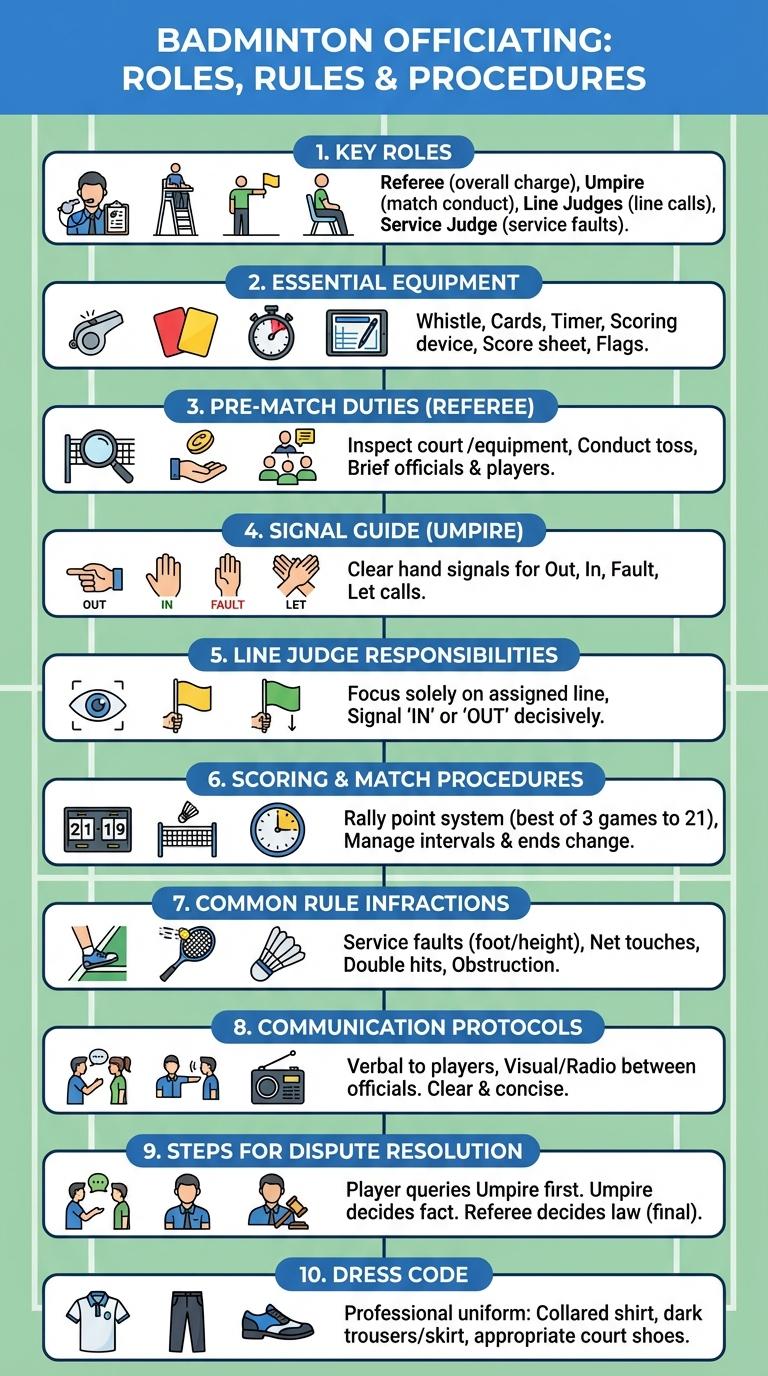
Officiating a badminton event requires precision, fairness, and a deep understanding of the rules. Accurate line calls, scorekeeping, and player conduct monitoring are essential to ensure a smooth and competitive match. This infographic highlights the key responsibilities and best practices for badminton officials to maintain the integrity of the game.
Key Roles in Badminton Officiating
Officiating a badminton event involves several key roles that ensure fair play and accurate scoring. Each official has specific responsibilities that contribute to the smooth running of the match.
The umpire oversees the match, makes final decisions, and manages player conduct. The service judge monitors service faults and ensures players serve within the rules. Line judges are responsible for calling shuttlecock landings in or out, assisting the umpire in maintaining accurate play judgments.
Essential Equipment for Officials
Officiating a badminton event requires specific equipment to ensure fair and accurate gameplay. Proper tools aid officials in maintaining control and verifying game details effectively.
- Whistle - Used by referees to signal the start, faults, and pauses during the match.
- Scoreboard - Displays the current score clearly for players, officials, and spectators.
- Line Judge Flags - Help line judges indicate whether shuttlecocks land in or out of boundaries.
- Umpire Chair - Elevates the umpire for better visibility of the entire court.
- Penalty Cards - Used to warn or penalize players for rule violations during the match.
These essential items support officials in delivering precise and unbiased decisions throughout badminton events.
Pre-Match Duties for Referees
| Pre-Match Duties | Description |
|---|---|
| Venue Inspection | Check the court surface, net height, lighting, and seating arrangements to ensure compliance with BWF standards. |
| Equipment Verification | Inspect shuttlecocks, rackets, and scoring devices to confirm quality and readiness for play. |
| Briefing Officials | Conduct a meeting with line judges, service judges, and umpire to clarify roles, signals, and match procedures. |
| Player Verification | Confirm player identities, uniforms, and adherence to competition rules before the match begins. |
| Match Schedule Confirmation | Verify match timing and order with event organizers to maintain smooth tournament flow. |
Signal Guide for Umpires
Officiating a badminton event requires precise and clear communication with players and spectators. This infographic provides a comprehensive Signal Guide for Umpires, illustrating the standard hand gestures used to indicate calls such as faults, lets, and scoring decisions. Mastery of these signals ensures smooth game flow and upholds the integrity of the match.
Line Judge Responsibilities
What are the key responsibilities of a line judge in a badminton event? Line judges focus on accurately signaling whether the shuttle is in or out to ensure fair play. They must maintain concentration throughout the match and coordinate closely with other officials.
Scoring and Match Procedures
Officiating a badminton event requires precise knowledge of scoring rules and match procedures to ensure fair play. Proper regulation adherence maintains the flow and integrity of the game.
- Scoring System - Matches are played best of three games, each reaching 21 points with at least a 2-point lead for victory.
- Rally Point Rule - Points are awarded on every serve regardless of which side serves, speeding up the game.
- Match Officials - Umpires enforce rules, line judges monitor in/out calls, and the referee oversees the overall match conduct.
Common Rule Infractions
Officiating a badminton event requires a thorough understanding of common rule infractions to ensure fair play and maintain game integrity. Frequent violations include serving faults, such as hitting the shuttle above the waist or stepping into the service court prematurely. Other common infractions involve shuttlecock landing out of bounds and incorrect scoring procedures, all of which umpires must carefully monitor.
Communication Protocols on Court
Effective communication protocols are essential for smooth officiating in badminton events. Clear signals and verbal exchanges ensure all decisions are accurately conveyed to players and officials.
On court, referees and line judges use hand signals and whistles to maintain order and fairness. Consistent communication minimizes disputes and enhances the overall flow of the match.
Steps for Dispute Resolution
Officiating badminton events requires clear protocols for resolving disputes efficiently. Proper dispute resolution ensures fair play and maintains the integrity of the competition.
- Identify the Issue - The umpire or referee listens carefully to the players' concerns and clarifies the nature of the dispute.
- Consult Rules and Officials - The official refers to the official Badminton World Federation (BWF) rulebook and may consult line judges or technical officials for verification.
- Deliver a Final Decision - After reviewing all information, the umpire issues a final ruling to resolve the dispute, ensuring that players accept and continue the match.