
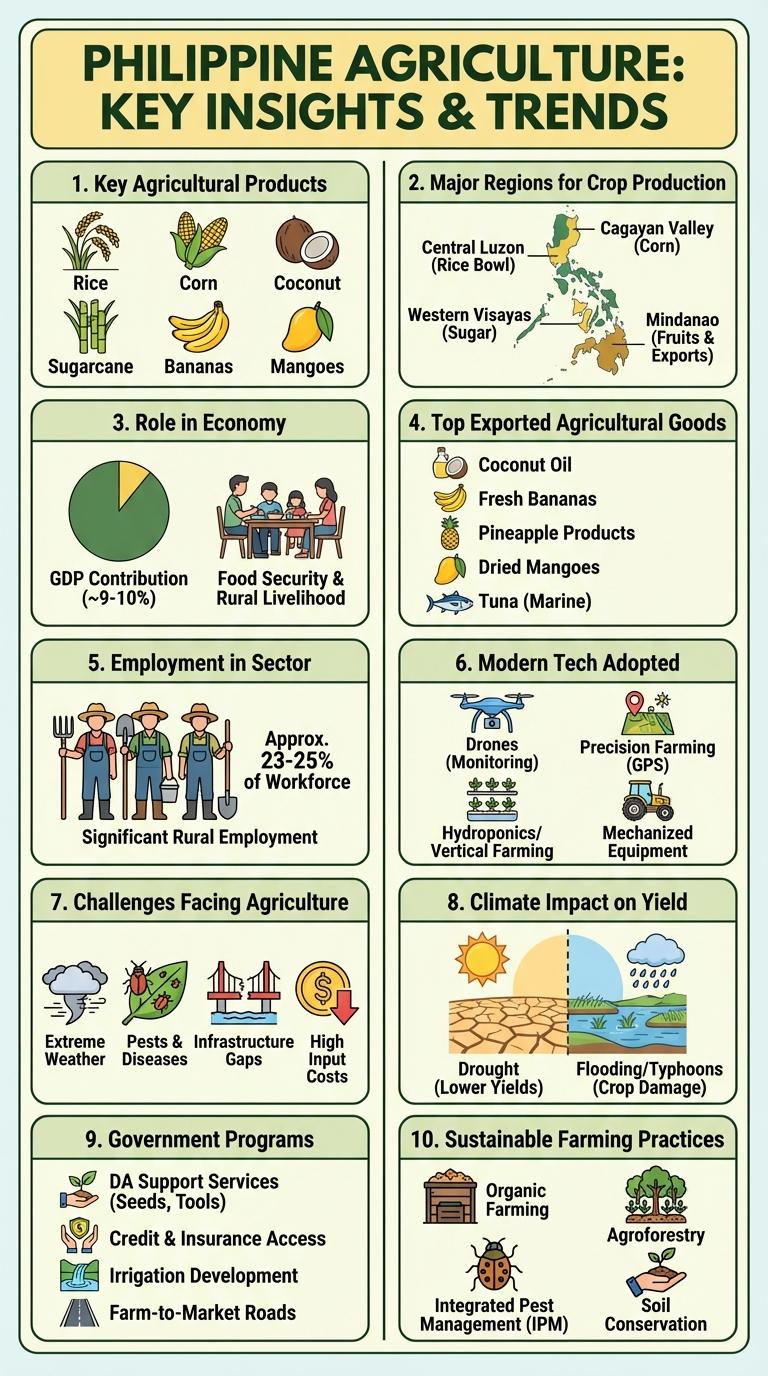
The infographic highlights key statistics and trends shaping agriculture in the Philippines, showcasing crop production, export data, and labor involvement. It reveals the sector's pivotal role in food security and economic growth while identifying challenges such as climate change and resource management. Visualizing this data provides valuable insights for policymakers, farmers, and stakeholders aiming to enhance agricultural productivity and sustainability in the country.
Key Agricultural Products of the Philippines
The agriculture sector in the Philippines plays a vital role in the country's economy, employing a large portion of the population. Key agricultural products contribute significantly to both local consumption and export earnings.
Major crops include rice, coconut, sugarcane, bananas, and corn, each supporting diverse industries and rural livelihoods.
- Rice - The staple food crop, essential for national food security and a primary source of income for many Filipino farmers.
- Coconut - The Philippines is one of the world's top coconut producers, supplying raw materials for oil, copra, and fiber products.
- Sugarcane - Grown mainly in Luzon and the Visayas, sugarcane supports the country's sugar industry and biofuel production.
- Bananas - A leading export fruit, with the Philippines being a top supplier to global markets, especially in Asia and the Middle East.
- Corn - Used for food, feed, and industrial purposes, corn is a key crop for both subsistence farmers and commercial agriculture.
Major Regions for Crop Production
| Region | Major Crops |
|---|---|
| Cagayan Valley | Rice, Corn, Tobacco |
| Central Luzon | Rice, Corn, Sugarcane |
| Ilocos Region | Rice, Tobacco, Garlic |
| Central Visayas | Coconut, Corn, Rice |
| Davao Region | Banana, Pineapple, Coffee |
The Role of Agriculture in the Philippine Economy
Agriculture plays a vital role in the Philippine economy by providing employment to nearly 25% of the labor force. It contributes approximately 10% to the country's Gross Domestic Product (GDP), reflecting its importance in food security and rural development.
The sector supports millions of smallholder farmers and drives export revenue through products like coconut, rice, sugarcane, and bananas. Government initiatives focus on modernizing agriculture to increase productivity and ensure sustainable growth in rural communities.
Top Exported Agricultural Goods
The Philippines is a major player in the global agriculture market with a diverse range of exported goods. The country's tropical climate and fertile soil support the production of high-value crops.
Top exported agricultural products include coconut products, bananas, pineapples, mangoes, and sugar. These goods contribute significantly to the nation's export revenue and rural employment.
Employment in the Agriculture Sector
Employment in the agriculture sector remains a significant contributor to the Philippine economy. A large portion of the labor force is engaged in farming, fishing, and forestry activities.
- Percentage of Workforce - Approximately 25% of the Philippines' labor force is employed in agriculture, making it a key source of employment.
- Rural Employment - Most agricultural workers reside in rural areas, supporting local economies and communities.
- Seasonal Employment - Many agricultural jobs are seasonal, leading to fluctuating employment rates throughout the year.
Efforts to modernize agriculture aim to increase productivity and create more stable employment opportunities.
Modern Agricultural Technologies Adopted
The Philippines has embraced various modern agricultural technologies to enhance productivity and sustainability. These innovations support farmers in addressing climate challenges and optimizing crop yields.
- Precision Farming - Uses GPS and data analytics to optimize field-level management and resource use.
- Drought-Resistant Crops - Development and adoption of crop varieties that thrive under limited water conditions improve resilience.
- Automated Irrigation Systems - Systems control water delivery efficiently, reducing waste and increasing crop health.
Challenges Facing Philippine Agriculture
What are the major challenges facing agriculture in the Philippines?
Philippine agriculture struggles with limited access to modern technology and insufficient infrastructure. Climate change and natural disasters further threaten crop production and food security.
How does land fragmentation impact agricultural productivity?
Small and fragmented landholdings reduce economies of scale, making farming less efficient. This limits the ability of farmers to invest in advanced farming methods.
What role does financing play in agricultural development?
Many farmers lack access to affordable credit and insurance options. This financial constraint prevents investment in quality inputs and equipment.
How does labor availability affect the agricultural sector?
Youth migration to urban areas results in a shortage of skilled agricultural labor. Aging farmers find it challenging to maintain productivity without younger support.
What environmental factors challenge Philippine agriculture?
Frequent typhoons, droughts, and flooding cause crop damage and soil degradation. These environmental conditions increase production risks and reduce yields.
Climate Impact on Crop Yield
The agriculture sector in the Philippines is highly vulnerable to climate change, with increasing temperatures and erratic rainfall patterns affecting crop yields. Key crops such as rice, corn, and coconut experience reduced productivity due to prolonged droughts and typhoons. Adaptation strategies like climate-resilient crop varieties and improved irrigation systems are essential to sustain agricultural output and ensure food security.
Government Programs for Farmers
The Philippine government implements various programs to support farmers and enhance agricultural productivity. These initiatives aim to improve farmers' access to resources, technology, and financial assistance.
Key programs include the Rice Competitiveness Enhancement Fund (RCEF), providing fertilizers and machinery to rice farmers. The Agricultural Credit Policy Council offers low-interest loans through the Agricultural Guarantee Fund Pool. The Department of Agriculture also runs the National Irrigation Program to expand water access for farming communities.