
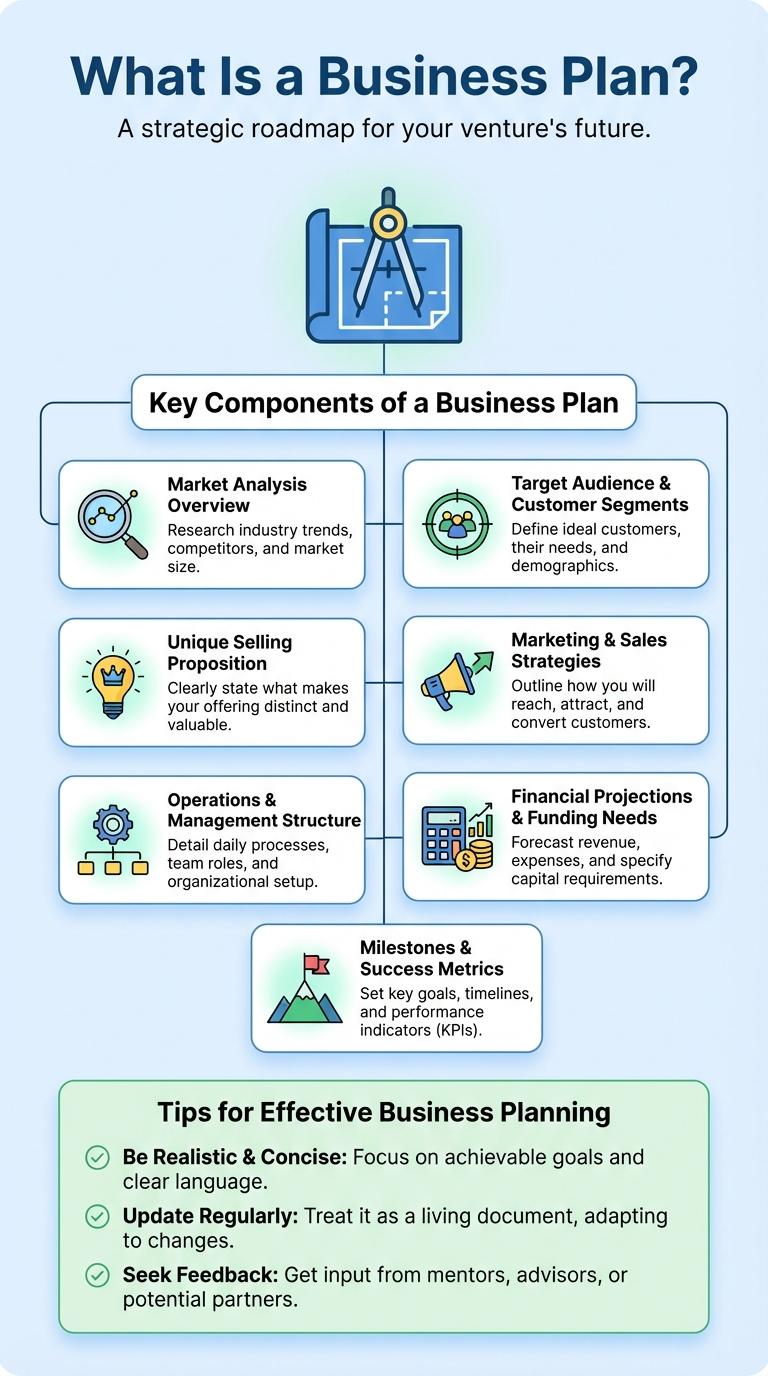
A well-crafted business plan infographic visually simplifies complex strategies and key data, making it easier for stakeholders to quickly grasp the core objectives. This approach highlights essential components such as market analysis, financial projections, and operational plans in an engaging, concise format. Clear visuals enhance communication, ensuring that business goals and strategies are effectively conveyed.
What Is a Business Plan?
A business plan is a formal document outlining a company's goals, strategies, target market, and financial forecasts. It serves as a roadmap for business growth and decision-making.
This plan includes an executive summary, market analysis, organizational structure, product or service details, marketing strategies, and funding requirements. Investors and stakeholders use business plans to assess the viability and potential profitability of a business. Creating a clear, concise business plan increases a company's chance of securing investment and achieving long-term success.
Key Components of a Business Plan
What are the key components of a business plan? A well-structured business plan includes essential elements that define the strategy and operations of a business. These components guide decision-making and attract investors.
What sections should a business plan contain? Core sections often include the executive summary, market analysis, organizational structure, product or service details, marketing strategy, and financial projections. Each section provides critical insights to stakeholders about the business's potential and viability.
Market Analysis Overview
Market analysis is a critical component of a business plan that evaluates the dynamics of the target market to identify opportunities and threats. It helps businesses understand customer needs, competitive landscape, and market trends to make informed decisions.
- Target Market Identification - Defines the specific group of consumers a business aims to serve based on demographics, behaviors, and needs.
- Competitive Analysis - Examines competitors' strengths, weaknesses, market share, and strategies to uncover competitive advantages.
- Market Trends - Analyzes current and future industry patterns, consumer preferences, and economic factors influencing the market environment.
Target Audience & Customer Segments
Understanding the target audience and customer segments is vital for an effective business plan. Defining these elements helps tailor marketing strategies and product development to meet specific needs.
- Target Audience Identification - Recognize the specific group of consumers most likely to purchase your product or service.
- Customer Segmentation - Divide the broader market into smaller groups based on characteristics like demographics, behavior, or preferences.
- Market Research Utilization - Use data analysis to refine customer profiles and enhance engagement strategies.
Unique Selling Proposition
An effective business plan highlights the Unique Selling Proposition (USP) to distinguish the brand from competitors. The USP focuses on specific benefits or features that solve customer problems uniquely. Clear articulation of the USP attracts target audiences and drives market success.
Marketing & Sales Strategies
An effective business plan highlights focused marketing and sales strategies to drive growth. Target audience analysis and tailored campaigns enhance customer engagement and conversion rates. Utilizing digital tools and data analytics optimizes sales performance and market reach.
Operations & Management Structure
Operations and Management Structure are essential elements of a successful business plan. They define how a business functions daily and who is responsible for key activities.
- Organizational Chart - Visualizes the hierarchy and reporting relationships among team members.
- Key Roles & Responsibilities - Outlines duties assigned to management and operational staff.
- Workflow Processes - Describes the sequence of tasks required to deliver products or services efficiently.
A clear operations and management framework ensures accountability and streamlines business activities for optimal performance.
Financial Projections & Funding Needs
Financial projections provide an estimate of a business's future revenue, expenses, and profitability. Accurate forecasts help attract investors by demonstrating potential growth and financial stability.
Funding needs specify the capital required to start or expand operations, covering costs such as equipment, marketing, and staffing. Clear funding requirements guide investors on the amount and purpose of their investment.
Milestones & Success Metrics
| Milestones | Success Metrics |
|---|---|
| Product Development Completion | Percentage of Features Developed |
| Market Launch | Customer Acquisition Rate |
| Revenue Targets Achieved | Monthly Recurring Revenue (MRR) |
| Partnership Agreements Signed | Number of Strategic Partnerships |
| Customer Retention Milestone | Customer Retention Rate |