
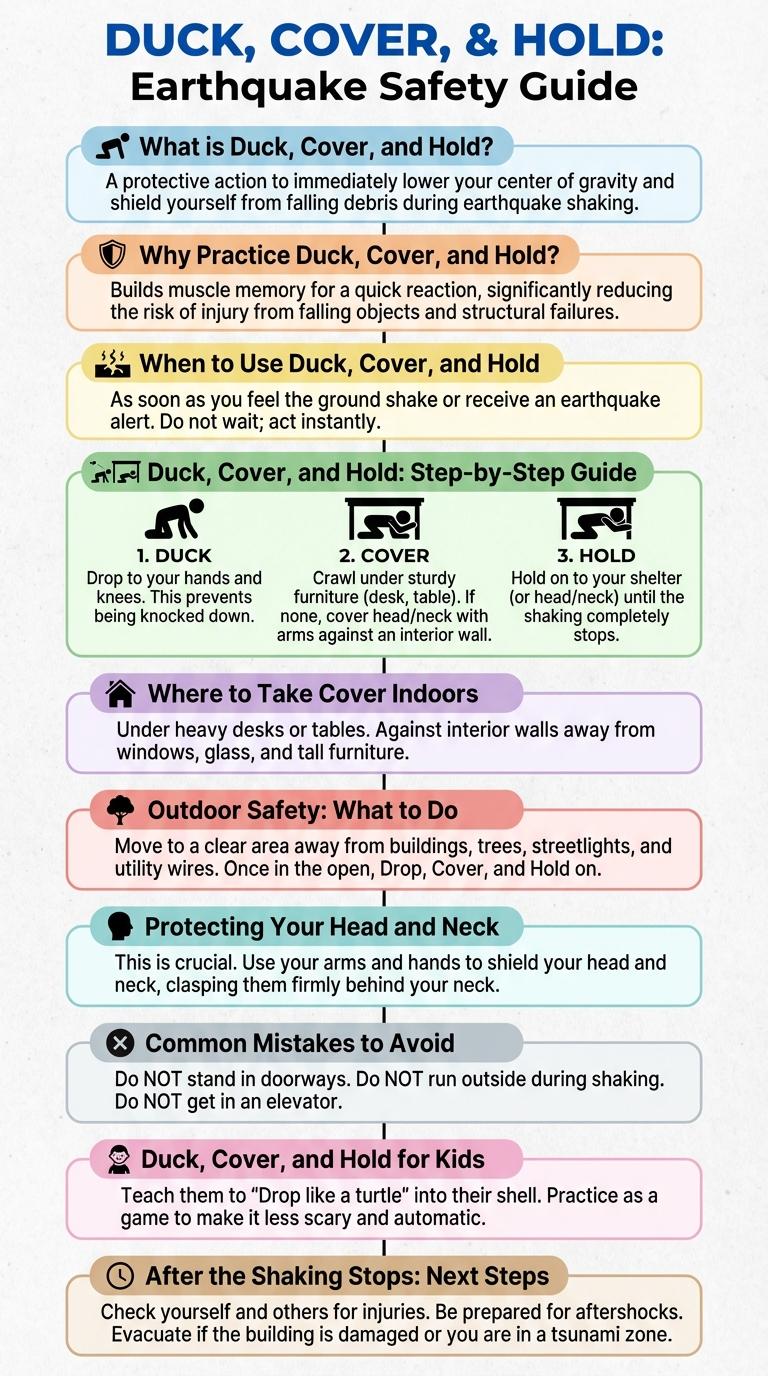
Duck cover and hold techniques are essential survival skills that help protect individuals during emergencies such as earthquakes or explosions. By quickly dropping to the ground, taking cover under sturdy furniture, and holding on securely, people can minimize injury from falling debris and sudden impacts. Mastering these actions increases safety and enhances preparedness in crisis situations.
What is Duck, Cover, and Hold?
Duck, Cover, and Hold is a safety technique designed to protect individuals during sudden emergencies like earthquakes and explosions. It involves quickly dropping to the ground, covering vital areas, and holding position until the danger passes.
This method reduces the risk of injury caused by falling debris or sudden impact. Practicing Duck, Cover, and Hold improves response time and enhances personal safety in hazardous situations.
Why Practice Duck, Cover, and Hold?
Practicing Duck, Cover, and Hold prepares individuals to respond quickly and effectively during earthquakes, reducing injury risks. This safety technique is crucial for protecting lives when sudden shaking occurs.
- Minimizes Injury - Reduces the chance of harm by shielding the head and body from falling debris.
- Enhances Readiness - Builds muscle memory for swift action during unexpected seismic events.
- Supports Safety - Encourages staying low and protected instead of running, which can cause accidents.
When to Use Duck, Cover, and Hold
| Action | When to Use |
|---|---|
| Duck | Immediately lower your body to reduce exposure to flying debris or falling objects during earthquakes or explosions. |
| Cover | Use your arms and hands to shield your head and neck. Take cover under sturdy furniture or against an interior wall to protect from falling and flying objects. |
| Hold | Maintain your position by holding onto a stable object, such as a table leg, to stay protected during shaking or movement. |
| When to Use Duck, Cover, and Hold | Apply this technique during sudden natural disasters like earthquakes or man-made emergencies such as explosions to protect yourself quickly and effectively. |
| Do Not Use | Avoid running or standing during the event as it increases injury risk. Duck, Cover, and Hold ensures maximum protection in high-risk situations. |
Duck, Cover, and Hold: Step-by-Step Guide
The Duck, Cover, and Hold method is a safety technique designed to protect individuals during an earthquake. This guide outlines the essential steps to minimize injury and stay safe.
- Duck - Quickly get down onto your hands and knees to prevent falling and to prepare for cover.
- Cover - Use your arms to shield your head and neck, and if possible, take shelter under a sturdy piece of furniture.
- Hold - Grip the shelter firmly and maintain your position until the shaking stops to avoid being tossed around.
Where to Take Cover Indoors
Taking cover indoors during emergencies is crucial for safety. Identify sturdy furniture or interior rooms without windows as primary shelter spots.
Basements and windowless bathrooms provide added protection from debris and impact. Avoid exterior walls and large glass windows to reduce injury risks.
Outdoor Safety: What to Do
Duck, cover, and hold is a crucial outdoor safety technique during earthquakes. Knowing how to perform these actions can significantly reduce injury risks in open environments.
- Duck - Quickly lower yourself to the ground to prevent falling during tremors.
- Cover - Protect your head and neck using your arms or find shelter under sturdy structures.
- Hold - Maintain your position until shaking stops to avoid being thrown around.
Practicing duck, cover, and hold outdoors increases your preparedness for unexpected seismic events and ensures better personal safety.
Protecting Your Head and Neck
Duck cover and hold techniques are essential for protecting your head and neck during emergencies. These methods minimize injury by shielding vital areas from impact or debris.
Proper duck cover involves lowering your body quickly while protecting the back of your neck with your hands. Holding this position increases stability and reduces exposure to falling objects. Consistent practice of these techniques improves response time and safety.
Common Mistakes to Avoid
Duck cover and hold techniques are essential for safety during emergencies, but many people make common mistakes that reduce their effectiveness. Avoid covering only your head without protecting your neck and body, as this leaves vital areas exposed. Holding the position incorrectly or moving prematurely can increase risk instead of providing shelter.
Duck, Cover, and Hold for Kids
Duck, Cover, and Hold is a safety technique taught to kids to protect themselves during earthquakes. The method involves quickly getting down (duck), taking cover under sturdy furniture (cover), and holding on until shaking stops (hold). This simple action reduces injuries by keeping children away from falling objects and debris.