
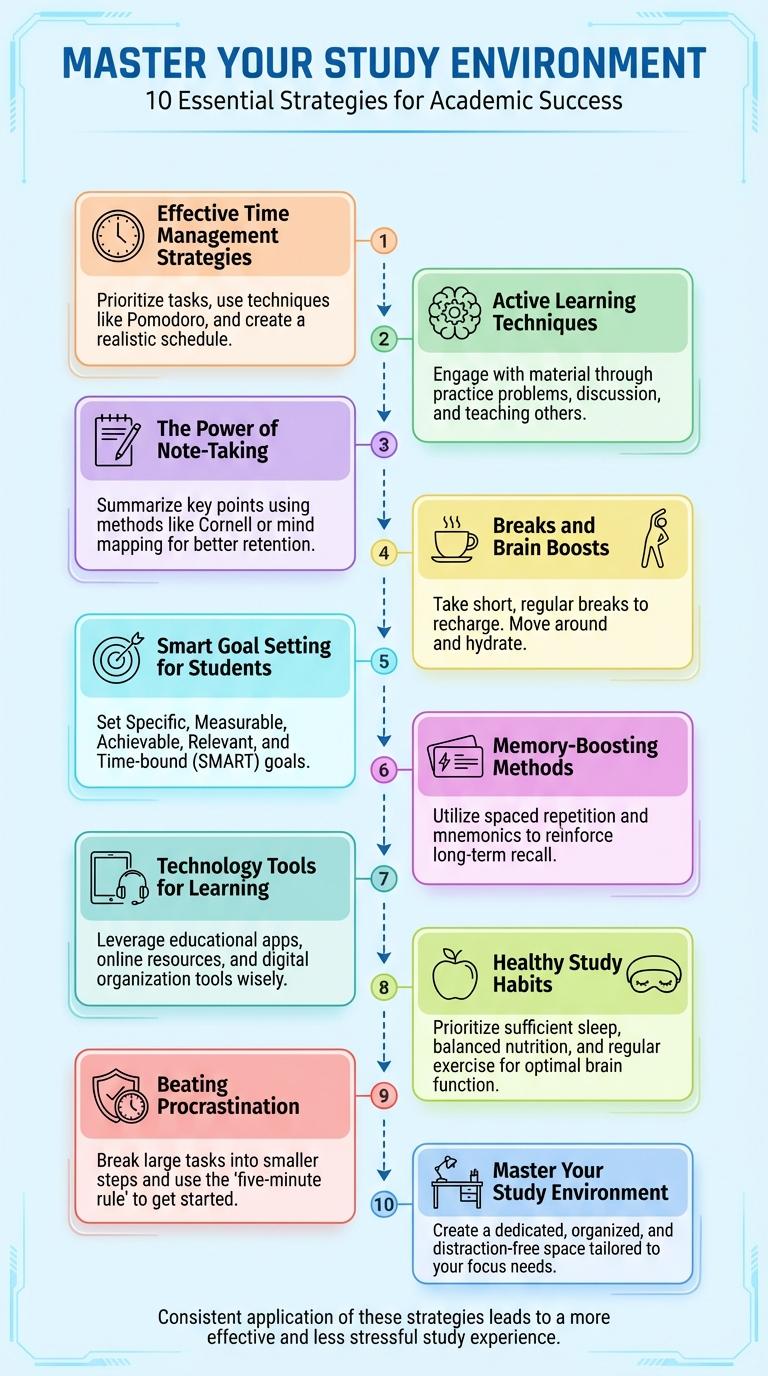
Effective study tips can significantly enhance learning efficiency and retention. Utilizing proven strategies such as active recall, time management, and organized note-taking helps students maximize their academic performance. This infographic visually presents essential techniques designed to optimize study habits and improve exam results.
Master Your Study Environment
Mastering your study environment enhances focus and retention. Choose a quiet, well-lit space free from distractions to maximize productivity.
Organize your study materials for easy access and maintain a comfortable seating arrangement. Consistent environments condition your brain for effective learning sessions.
Effective Time Management Strategies
How can effective time management improve your study habits? Efficient planning allows for more focused study sessions and reduces stress. Prioritizing tasks ensures essential topics receive the most attention.
What are the best techniques for managing study time effectively? Using tools like calendars and timers helps maintain a consistent schedule. Breaking study periods into shorter intervals enhances concentration and retention.
Why is setting specific goals important in time management? Clear goals provide direction and motivation during study sessions. Measuring progress against these goals boosts confidence and productivity.
How does eliminating distractions influence study outcomes? Minimizing interruptions leads to deeper focus and better understanding. Creating a dedicated, quiet study space supports sustained attention.
Which role does regular review play in managing study time? Frequent revisions reinforce knowledge and identify weak areas early. Scheduling consistent review sessions helps retain information long-term.
Active Learning Techniques
| Active Learning Technique | Description |
|---|---|
| Self-Explanation | Articulate the material in your own words to deepen understanding and identify knowledge gaps. |
| Practice Testing | Use flashcards, quizzes, or practice exams to reinforce memory and assess comprehension. |
| Teaching Others | Explain concepts to peers or study groups to improve retention and clarify thoughts. |
| Summarizing | Create concise summaries of key points to highlight essential information and improve recall. |
| Interleaved Practice | Mix different topics or problem types in one study session to enhance cognitive flexibility and learning. |
The Power of Note-Taking
Note-taking enhances memory retention by actively engaging the brain in processing information. Effective note-taking methods, such as the Cornell system or mind mapping, organize information clearly for easier review. Consistent practice of note-taking boosts comprehension and exam performance through structured revision.
Breaks and Brain Boosts
Taking regular breaks during study sessions improves focus and prevents burnout. Short breaks allow the brain to process information more effectively.
Brain boosts like hydration, healthy snacks, and light exercise enhance cognitive function. Incorporating these habits helps maintain energy levels and sharpens concentration.
Smart Goal Setting for Students
Setting smart goals enhances student productivity and focus. Clear, measurable objectives lead to more effective study sessions.
- Specific Goals - Define precise targets to eliminate ambiguity and increase motivation.
- Measurable Progress - Track achievements to maintain momentum and adjust strategies.
- Achievable Milestones - Set realistic steps that build confidence and prevent burnout.
- Relevant Objectives - Align goals with academic priorities for meaningful outcomes.
- Time-bound Deadlines - Establish firm timelines to foster discipline and timely completion.
Memory-Boosting Methods
Effective study strategies can significantly enhance memory retention. Incorporating memory-boosting methods helps students recall information more efficiently.
- Spaced Repetition - Revisiting information at increasing intervals strengthens long-term memory.
- Visualization Techniques - Creating mental images aids in easier recall of complex concepts.
- Mnemonic Devices - Using acronyms or rhymes simplifies memorization of data and lists.
Applying these methods consistently improves academic performance and knowledge retention.
Technology Tools for Learning
Technology tools have transformed the way students approach studying, making learning more interactive and efficient. Digital resources offer personalized experiences that cater to various learning styles.
Apps like Quizlet and Anki use spaced repetition to improve memory retention. Online platforms such as Khan Academy provide comprehensive tutorials across subjects. Collaboration tools like Google Docs enable real-time group study and project management.
Healthy Study Habits
Maintaining healthy study habits enhances focus and retention. Incorporate regular breaks, proper hydration, and balanced nutrition to boost cognitive function. A consistent sleep schedule reinforces memory and reduces stress during study sessions.