
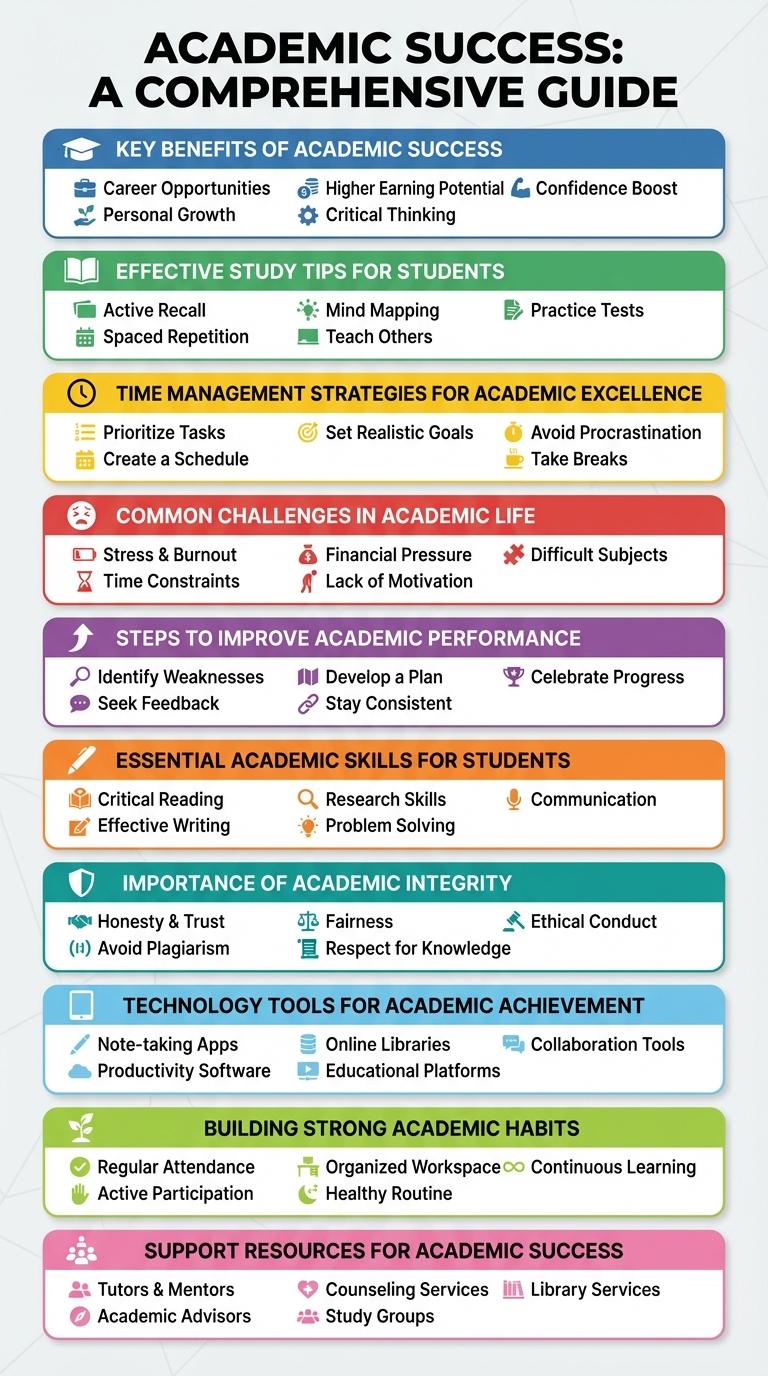
An infographic about academic achievements visually presents key data on student performance, learning trends, and educational outcomes. It highlights statistics that emphasize the importance of effective study habits, graduation rates, and subject-specific success. Such visual tools enhance comprehension and provide educators, students, and policymakers with actionable insights.
Key Benefits of Academic Success
Academic success lays the foundation for personal growth and career opportunities. It enhances knowledge, skills, and lifelong learning habits essential for future achievements.
- Improved Career Prospects - Higher academic achievement opens doors to better job opportunities and higher earning potential.
- Critical Thinking Development - Academic success fosters analytical skills and problem-solving abilities vital in various life contexts.
- Enhanced Self-Discipline - Consistent academic performance builds time management and organizational skills crucial for personal and professional life.
Effective Study Tips for Students
Effective study tips for students enhance learning efficiency and academic performance. Prioritizing time management, active note-taking, and regular breaks boosts retention and focus. Consistent review and a distraction-free environment contribute to long-term success.
Time Management Strategies for Academic Excellence
Effective time management is essential for achieving academic excellence. Students who plan their study schedules tend to perform better and reduce stress.
Prioritize tasks by deadlines and importance to maximize productivity. Break study sessions into focused intervals using techniques like the Pomodoro method. Avoid multitasking to enhance concentration and retention of information.
Common Challenges in Academic Life
Academic life presents various challenges that affect students and educators alike. Understanding these common obstacles helps in developing effective strategies for success.
- Time Management - Balancing coursework, research, and personal life requires effective scheduling and prioritization skills.
- Stress and Mental Health - High expectations and workload often lead to anxiety, burnout, and other mental health issues.
- Financial Pressure - Tuition fees, living expenses, and resource costs create significant financial burdens for many students.
- Academic Integrity - Maintaining honesty in assignments and research is a critical yet challenging aspect of academic life.
- Access to Resources - Limited availability of academic materials and support services can hinder learning progress and research quality.
Steps to Improve Academic Performance
How can students effectively improve their academic performance? Implementing structured study schedules and engaging in active learning techniques significantly enhance retention and understanding. Consistent review and seeking feedback help identify weaknesses and track progress for continuous improvement.
Essential Academic Skills for Students
Academic success relies on mastering a set of essential skills that enable effective learning and performance. These skills help students adapt to various educational challenges and enhance their overall knowledge retention.
- Critical Thinking - The ability to analyze information objectively and make reasoned judgments supports problem-solving and decision-making.
- Time Management - Organizing study schedules and prioritizing tasks ensures consistent progress and reduces academic stress.
- Effective Communication - Clear writing and speaking skills facilitate better expression of ideas and collaboration in academic settings.
Developing these essential academic skills empowers students to achieve higher grades and build a strong foundation for lifelong learning.
Importance of Academic Integrity
Academic integrity ensures the credibility and trustworthiness of educational achievements. Upholding honesty in research and exams supports a fair learning environment.
Violations of academic integrity can lead to severe consequences, including loss of reputation and academic penalties. Promoting ethical behavior encourages personal growth and professional success.
Technology Tools for Academic Achievement
Technology tools have revolutionized academic achievement by enhancing learning efficiency and accessibility. Digital platforms, educational apps, and interactive software enable personalized learning experiences tailored to individual needs.
Key technology tools include online research databases, virtual classrooms, and collaboration applications that streamline study processes. Implementing these tools promotes engagement, improves knowledge retention, and supports academic success across various educational levels.
Building Strong Academic Habits
Building strong academic habits is essential for achieving consistent success in education. Developing routines such as setting specific study times, organizing materials, and actively engaging with content enhances retention and understanding. These habits foster discipline, reduce procrastination, and create a foundation for lifelong learning.