
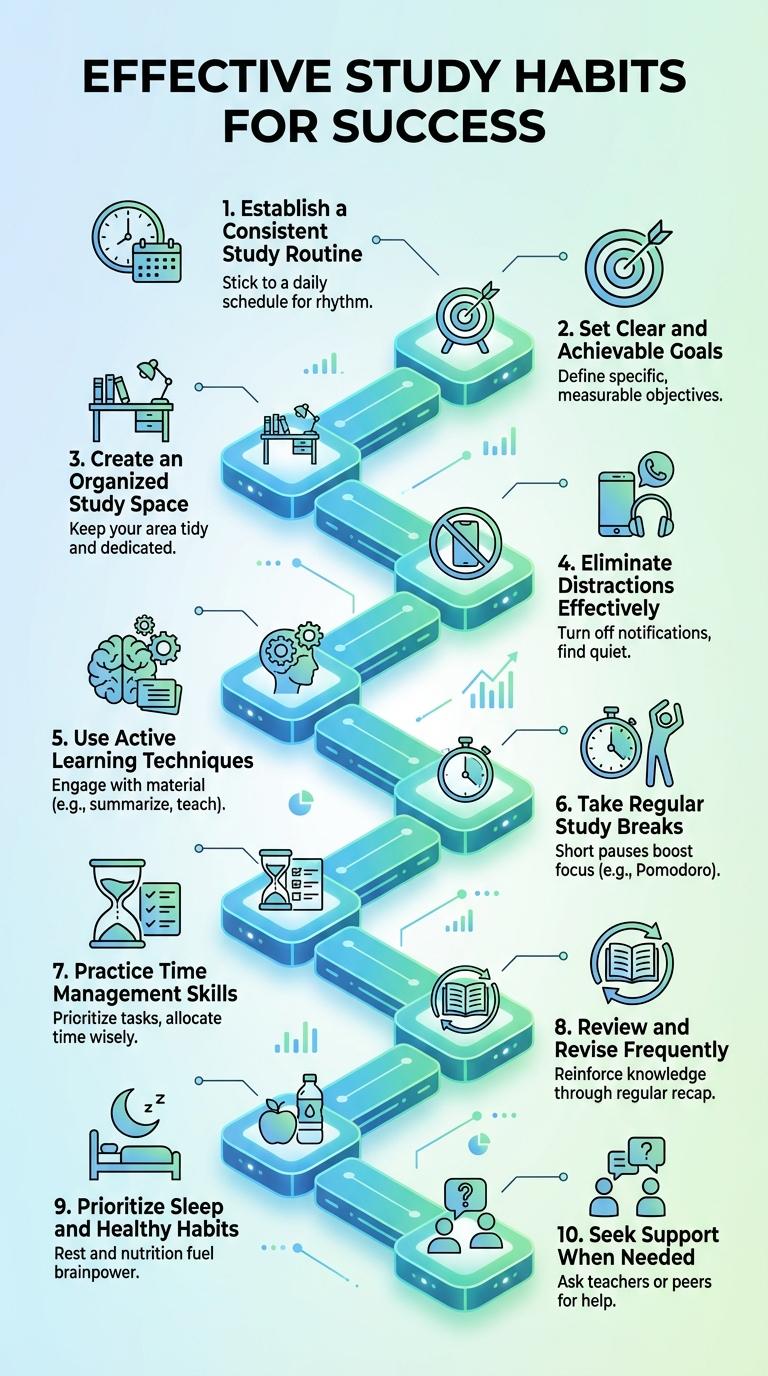
Effective study habits significantly boost learning efficiency and retention. Visualizing these habits through an infographic makes complex strategies easy to understand and apply. This guide highlights key techniques such as time management, active recall, and minimizing distractions for optimal academic performance.
Establish a Consistent Study Routine
Establishing a consistent study routine enhances focus and improves information retention. Allocating specific times daily for study creates a productive habit that reduces procrastination.
Consistency signals to the brain when to switch into learning mode, making it easier to absorb and recall material. A well-structured routine supports balanced time management and reduces stress during exam preparation.
Set Clear and Achievable Goals
Setting clear and achievable goals improves focus and motivation during study sessions. Well-defined objectives help track progress and maintain consistency.
Break large tasks into smaller, manageable milestones to avoid feeling overwhelmed. Use specific, measurable, attainable, relevant, and time-bound (SMART) criteria to shape your goals. Regularly review and adjust goals based on progress and challenges experienced.
Create an Organized Study Space
Creating an organized study space enhances focus and productivity. A clutter-free environment minimizes distractions and promotes effective learning.
- Designate a Specific Area - Choose a quiet, comfortable spot solely for studying to build consistent habits.
- Keep Supplies Handy - Store pens, notebooks, and textbooks within reach to reduce interruptions.
- Maintain Cleanliness - Regularly tidy the study space to foster a calm and inviting atmosphere.
An organized study space supports better concentration and academic success.
Eliminate Distractions Effectively
Eliminating distractions is crucial for maintaining focus during study sessions. A distraction-free environment enhances information retention and reduces study time.
- Create a Dedicated Study Space - Designate a quiet, clutter-free area specifically for studying to minimize interruptions and distractions.
- Turn Off Electronic Notifications - Silence or disable phone and computer alerts to prevent digital distractions that break concentration.
- Set Specific Study Times - Establish consistent study blocks to train your brain to focus without multitasking or external interference.
Use Active Learning Techniques
How can active learning techniques improve your study habits? Active learning engages your brain more deeply than passive reading or listening. Techniques like summarizing, questioning, and teaching others help reinforce understanding and retention.
What are some effective active learning methods to use? Practice retrieving information through flashcards or self-quizzing to enhance memory. Explaining concepts out loud or to a peer encourages critical thinking and clarity.
Why is interaction with the material important? Interaction strengthens neural connections and helps transfer knowledge to long-term memory. Writing notes in your own words and applying concepts to real-world examples makes learning more meaningful.
How can active learning reduce study time while increasing results? Focusing on active techniques targets weak areas and deepens comprehension faster than rereading or highlighting. This approach leads to efficient study sessions with better exam performance.
Which habits support consistent active learning? Setting specific goals, taking regular breaks, and reflecting on progress maintain motivation. Using varied methods like group discussions, quizzes, and practice problems keeps the mind engaged and adaptability high.
Take Regular Study Breaks
Taking regular study breaks enhances concentration and prevents burnout. Short pauses during study sessions help refresh the mind and improve overall productivity.
- Improves Focus - Brief breaks reduce mental fatigue, allowing you to return to studying with renewed attention.
- Boosts Memory Retention - Pausing helps your brain consolidate information, making recall easier during exams.
- Prevents Burnout - Regular breaks balance study time and relaxation, reducing stress and maintaining motivation.
Practice Time Management Skills
Effective study habits begin with mastering time management skills, which helps allocate specific slots for each subject. Breaking study sessions into focused intervals with scheduled breaks enhances concentration and retention. Consistent use of planners or digital calendars ensures deadlines are met and reduces last-minute stress.
Review and Revise Frequently
Review and revise frequently to reinforce knowledge and improve retention. Regularly revisiting material helps identify gaps and strengthens understanding. Consistent revision transforms short-term learning into long-lasting expertise.
Prioritize Sleep and Healthy Habits
| Good Study Habit | Key Benefits |
|---|---|
| Prioritize Sleep | Improves memory retention, enhances concentration, boosts problem-solving skills |
| Consistent Sleep Schedule | Regulates body clock, increases alertness during study sessions |
| Balanced Diet | Supplies essential nutrients for brain function, maintains energy levels |
| Regular Physical Activity | Reduces stress, improves mood, enhances cognitive performance |
| Hydration | Prevents fatigue, supports clear thinking and focus |