
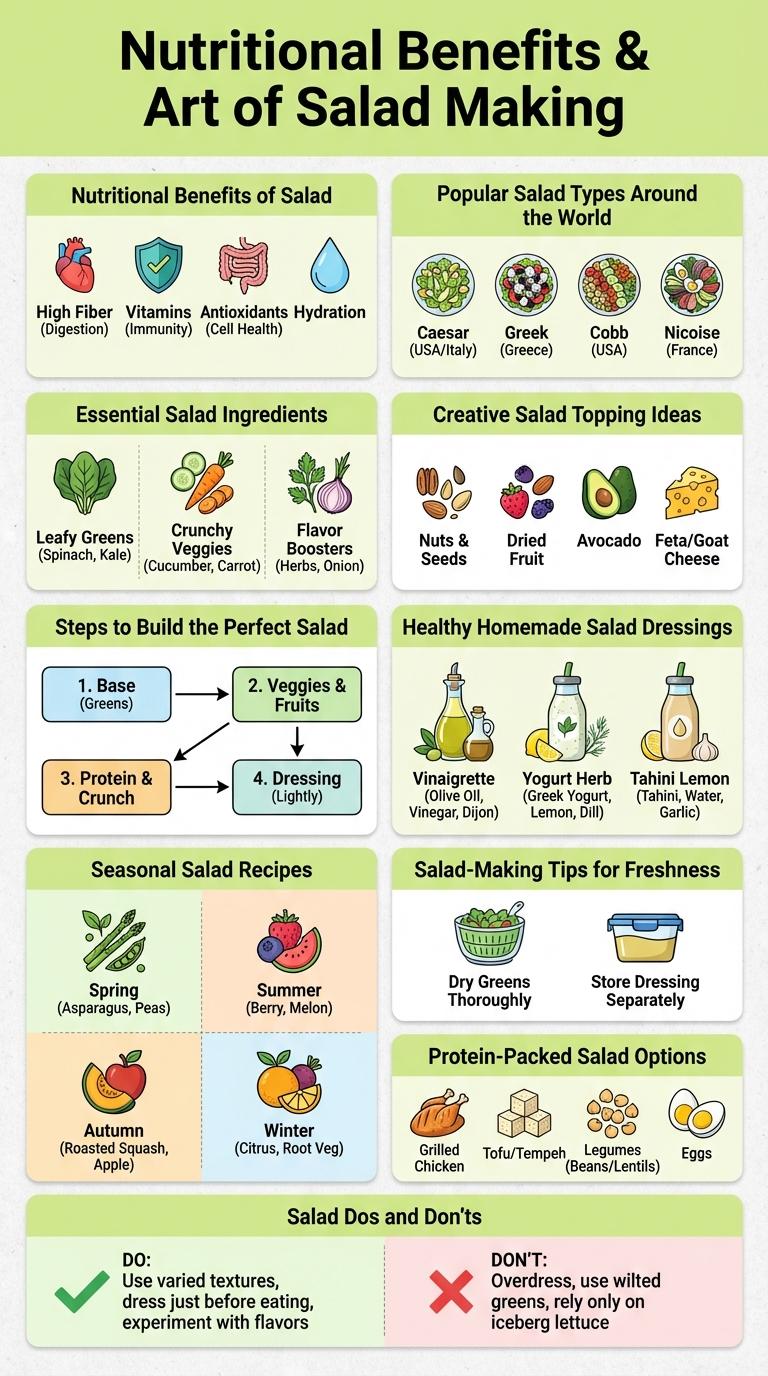
Fresh, vibrant salads combine a variety of colorful vegetables, fruits, and greens to create nutritious and visually appealing meals. Infographics about salads highlight key ingredients, health benefits, and simple preparation tips to inspire healthier eating habits. Visual representations make it easy to understand the nutritional value and creative possibilities of incorporating salads into daily diets.
Nutritional Benefits of Salad
Salads are rich in essential vitamins and minerals such as vitamin A, vitamin C, potassium, and folate. These nutrients support immune function, skin health, and cellular repair.
High in dietary fiber, salads promote digestive health and aid in maintaining healthy cholesterol levels. The antioxidants found in leafy greens help reduce inflammation and protect against chronic diseases.
Popular Salad Types Around the World
Salads are a versatile dish enjoyed worldwide, featuring fresh vegetables, fruits, nuts, and proteins. Popular salad types vary by region, each offering unique flavors and ingredients that highlight local culinary traditions. Exploring these salads provides insight into global food culture and diverse dietary preferences.
| Salad Type | Origin |
|---|---|
| Caesar Salad | Mexico / United States |
| Greek Salad | Greece |
| Tabbouleh | Middle East |
| Nicoise Salad | France |
| Waldorf Salad | United States |
Essential Salad Ingredients
Salads are versatile dishes that can be customized with a variety of fresh ingredients. Essential salad components include leafy greens, vegetables, proteins, and dressings.
Leafy greens like spinach, kale, and romaine provide a nutritious base rich in vitamins. Adding colorful vegetables such as tomatoes, cucumbers, and carrots enhances both flavor and texture.
Creative Salad Topping Ideas
Salads offer endless opportunities to explore fresh, unique topping combinations. Creative toppings can elevate flavor, texture, and nutrition, making every bite exciting.
- Toasted Nuts - Add crunch and a nutty flavor with almonds, walnuts, or pecans toasted lightly.
- Fresh Fruits - Incorporate sweet notes with sliced strawberries, citrus segments, or pomegranate seeds.
- Roasted Vegetables - Enhance depth by tossing in roasted beets, sweet potatoes, or Brussels sprouts.
Experimenting with diverse toppings transforms ordinary salads into vibrant, satisfying meals.
Steps to Build the Perfect Salad
What are the essential steps to build the perfect salad? Building a perfect salad involves selecting fresh ingredients and combining flavors thoughtfully. Following a structured approach ensures a balanced, nutritious, and tasty meal.
| Step | Description |
|---|---|
| 1. Choose a Base | Start with fresh greens like spinach, kale, or mixed lettuces to provide a crunchy and nutritious foundation. |
| 2. Add Vegetables | Incorporate a variety of colorful vegetables such as tomatoes, cucumbers, carrots, and bell peppers for texture and vitamins. |
| 3. Include a Protein | Add lean proteins like grilled chicken, chickpeas, or tofu to make the salad more filling and balanced. |
| 4. Select Toppings | Enhance flavor and texture with nuts, seeds, cheese, or dried fruits tailored to your taste. |
| 5. Dress It Well | Choose a dressing that complements all ingredients, balancing acidity and sweetness, such as vinaigrettes or yogurt-based dressings. |
Healthy Homemade Salad Dressings
| Healthy Homemade Salad Dressing | Key Ingredients |
|---|---|
| Lemon Vinaigrette | Fresh lemon juice, extra virgin olive oil, Dijon mustard, garlic, honey |
| Greek Yogurt Dressing | Plain Greek yogurt, olive oil, lemon juice, fresh dill, garlic |
| Avocado Cilantro Dressing | Ripe avocado, cilantro, lime juice, olive oil, jalapeno |
| Balsamic Vinaigrette | Balsamic vinegar, extra virgin olive oil, Dijon mustard, honey, black pepper |
| Honey Mustard Dressing | Honey, Dijon mustard, apple cider vinegar, olive oil, garlic powder |
Seasonal Salad Recipes
Seasonal salad recipes highlight fresh, nutrient-rich ingredients that vary throughout the year, offering vibrant flavors and optimal health benefits. These salads incorporate local produce like spring asparagus, summer tomatoes, autumn squash, and winter citrus, ensuring peak freshness and taste. Embracing seasonal ingredients supports sustainability while adding variety to your meals.
Salad-Making Tips for Freshness
Creating a fresh salad requires careful selection and preparation of ingredients. Proper storage and handling extend the crispness and flavor of your greens.
- Choose Crisp Greens - Select lettuces like romaine or kale that maintain texture longer for a fresher salad.
- Wash and Dry Thoroughly - Use a salad spinner to remove excess water, preventing sogginess and wilting.
- Store Greens Properly - Keep salad leaves in a sealed container with a paper towel to absorb moisture and retain freshness.
Protein-Packed Salad Options
Protein-packed salads offer a nutritious and delicious way to meet daily protein needs. Incorporating diverse protein sources enhances flavor and boosts satiety.
Popular protein options include grilled chicken, chickpeas, tofu, boiled eggs, and quinoa. These ingredients provide essential amino acids and support muscle repair. Combining vegetables with protein creates balanced meals ideal for health-conscious individuals.