
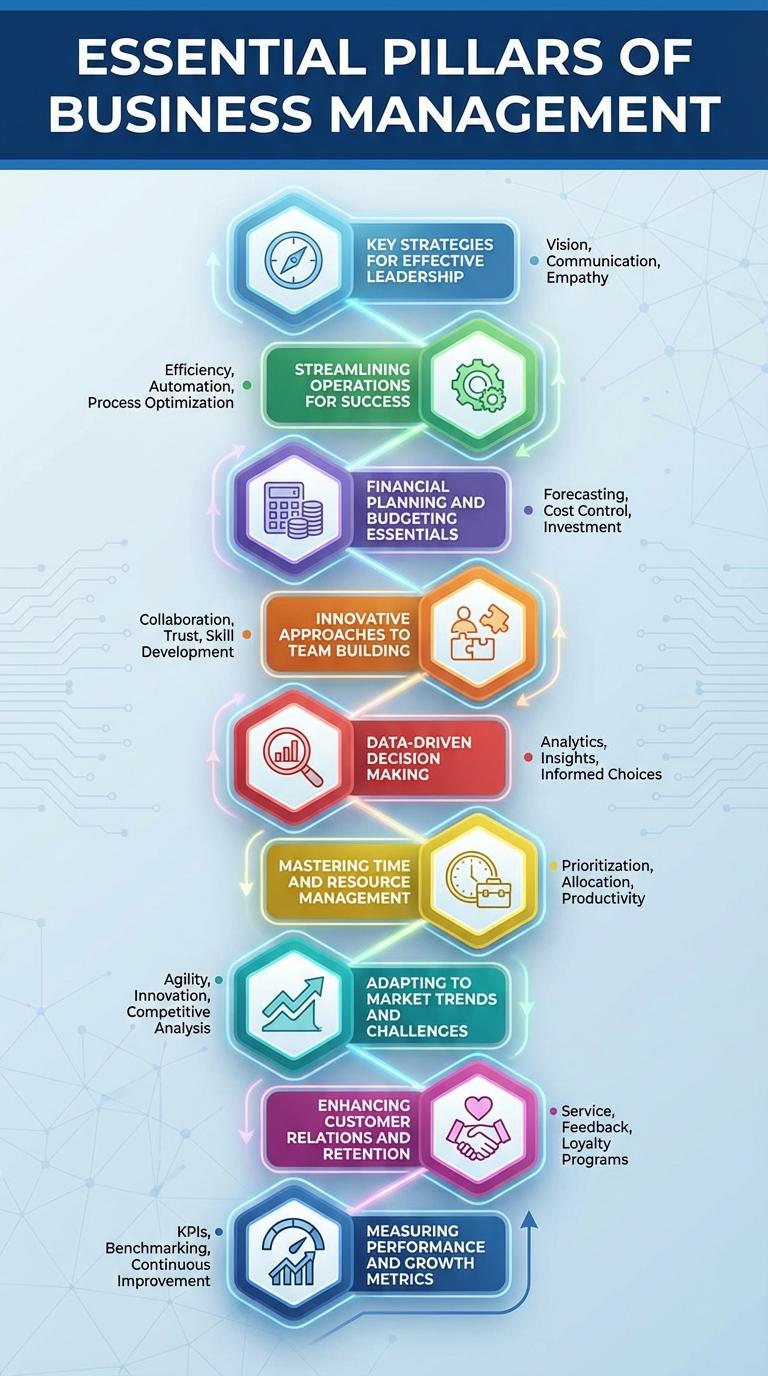
Effective business management relies on clear visualization of data to drive informed decisions. Infographics offer a powerful way to simplify complex information, highlighting key metrics and processes. By integrating visual elements, businesses can enhance communication, streamline workflows, and boost overall productivity.
Essential Pillars of Business Management
Effective business management relies on several essential pillars that ensure organizational success and sustainability. These pillars provide a structured approach to decision-making, resource allocation, and goal achievement.
Key pillars include strategic planning, which sets the vision and long-term goals, and financial management, which oversees budgeting and financial health. Operations management ensures efficient processes, while human resource management focuses on recruiting and retaining talent, and marketing management drives customer engagement and growth.
Key Strategies for Effective Leadership
Effective leadership in business management hinges on clear communication, strategic vision, and employee empowerment. Leaders who articulate goals and foster collaboration inspire higher productivity and innovation. Prioritizing continuous learning and adaptability ensures sustained success in dynamic markets.
Streamlining Operations for Success
How can businesses streamline operations to achieve greater success? Streamlining operations involves optimizing processes to reduce waste and improve efficiency. This approach helps companies allocate resources effectively and enhance overall productivity.
Financial Planning and Budgeting Essentials
Financial planning and budgeting are critical components of successful business management. They help organizations allocate resources efficiently and prepare for future financial challenges.
Effective financial planning involves setting clear goals and forecasting revenues and expenses over a specific period. Budgeting ensures that spending aligns with business priorities and helps monitor financial performance. Accurate budgets support informed decision-making and improve overall financial stability.
Innovative Approaches to Team Building
Innovative approaches to team building transform traditional group dynamics by fostering creativity and collaboration. These methods drive enhanced productivity and employee satisfaction through engaging, forward-thinking practices.
- Gamification Techniques - Incorporating game elements into team activities boosts motivation and encourages healthy competition among members.
- Virtual Reality Experiences - Using VR simulations for team exercises creates immersive environments that improve communication and problem-solving skills.
- Cross-Department Projects - Encouraging collaboration between different departments promotes diverse perspectives and strengthens organizational cohesion.
Data-Driven Decision Making
Data-driven decision making empowers businesses to leverage analytics and real-time data for strategic planning and operational improvements. Integrating tools like CRM systems and BI software enables accurate forecasting, risk assessment, and performance tracking. Companies adopting this approach experience increased efficiency, customer satisfaction, and competitive advantage.
Mastering Time and Resource Management
Effective business management hinges on mastering time and resource allocation to boost productivity and achieve strategic goals. Prioritizing tasks and optimizing resources lead to sustained organizational success.
- Time Blocking - Allocating specific time slots to tasks minimizes distractions and enhances focus for key activities.
- Resource Allocation - Distributing assets according to project priorities ensures maximum efficiency and cost-effectiveness.
- Performance Tracking - Monitoring progress through key performance indicators aids timely decision-making and continuous improvement.
Implementing structured time and resource management techniques drives better outcomes and competitive advantage in business management.
Adapting to Market Trends and Challenges
| Key Aspect | Description |
|---|---|
| Market Analysis | Continuous research to identify emerging trends and potential disruptions in the industry landscape. |
| Agile Strategy | Implement flexible business models that allow rapid pivoting in response to market demands and challenges. |
| Customer Feedback | Leverage direct consumer insights to tailor products and services according to evolving preferences. |
| Technology Integration | Adopt innovative tools and platforms to automate processes and enhance decision-making capabilities. |
| Risk Management | Develop contingency plans and monitor key performance indicators to mitigate potential impacts of market fluctuations. |
Enhancing Customer Relations and Retention
Enhancing customer relations and retention is vital for sustainable business growth. Building strong, trust-based relationships increases customer loyalty and lifetime value.
Personalized communication and responsive support improve customer satisfaction. Retention strategies reduce acquisition costs and boost revenue through repeat business.