
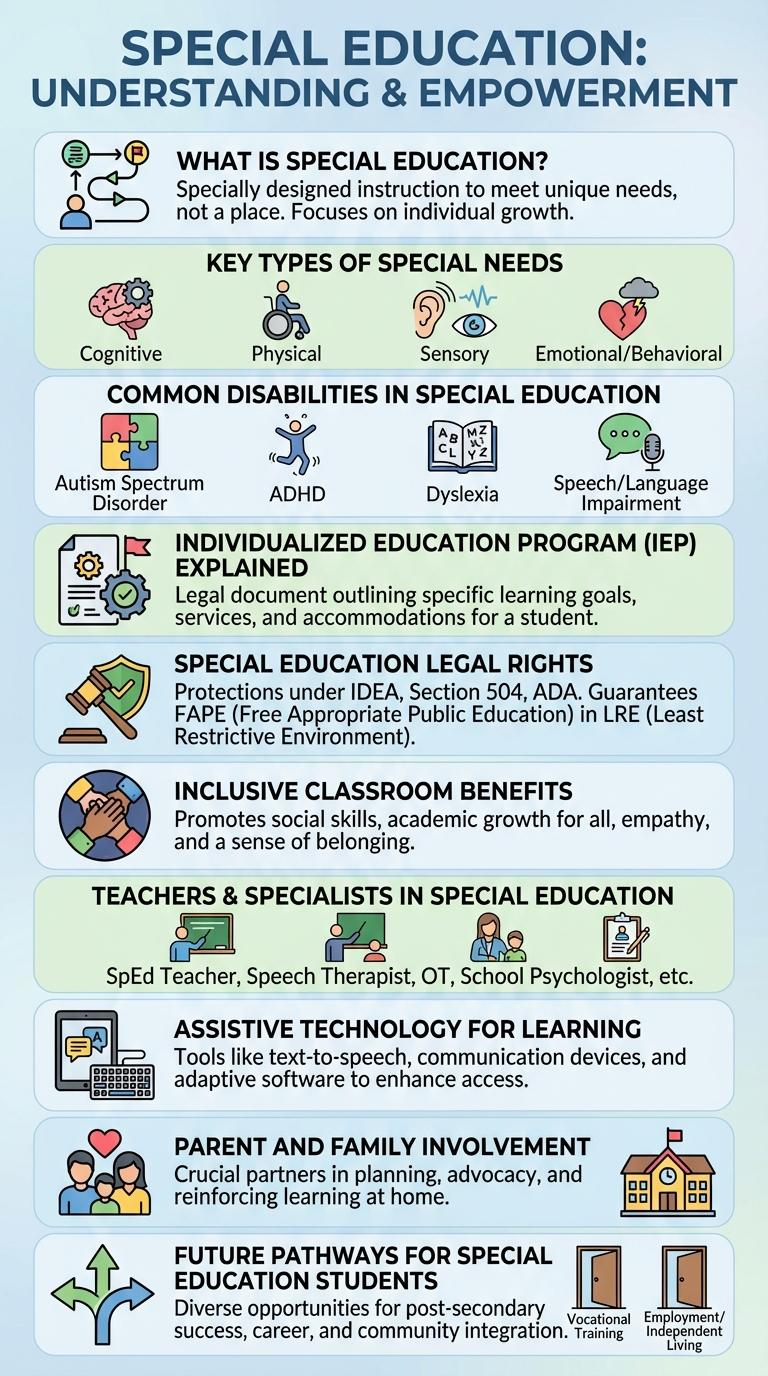
Special education infographics visually represent key data and strategies tailored to support students with diverse learning needs. They highlight important aspects such as individualized education programs (IEPs), teaching methods, and assistive technologies. These graphics help educators, parents, and policymakers better understand and implement effective special education practices.
What is Special Education?
| What is Special Education? | Key Details |
|---|---|
| Definition | Special Education provides tailored instruction and support to students with disabilities to meet their unique learning needs. |
| Purpose | To enable equitable access to education, promote independence, and improve academic and social outcomes for students with disabilities. |
| Target Group | Students with disabilities including intellectual, physical, sensory, emotional, and learning disabilities. |
| Instruction Types | Includes individualized instruction, modified curriculum, assistive technology, and specialized support services. |
| Legal Framework | Guided by laws such as the Individuals with Disabilities Education Act (IDEA) in the United States ensuring rights and services. |
Key Types of Special Needs
Special education addresses diverse learning needs to ensure equitable access to education for all students. Understanding key types of special needs helps tailor effective support and teaching strategies.
- Learning Disabilities - Challenges in reading, writing, or math that affect academic performance despite normal intelligence.
- Autism Spectrum Disorder (ASD) - A developmental condition impacting social skills, communication, and behavior patterns.
- Speech and Language Impairments - Difficulties in communication that may affect speaking, understanding, or fluency.
- Emotional and Behavioral Disorders - Conditions causing difficulties in managing emotions, resulting in behavioral challenges.
- Physical Disabilities - Motor impairments or health conditions that limit physical functioning and mobility.
Common Disabilities in Special Education
Special education supports students with diverse disabilities, ensuring access to tailored learning environments. Understanding common disabilities helps educators create effective strategies for student success.
Common disabilities in special education include autism spectrum disorder, learning disabilities, intellectual disabilities, emotional disturbances, and speech or language impairments. These conditions affect communication, behavior, social skills, and academic performance.
Individualized Education Program (IEP) Explained
What is an Individualized Education Program (IEP)? An IEP is a customized educational plan designed to meet the unique needs of students with disabilities. It outlines specific goals, services, and supports to help each student succeed academically and socially.
Who develops the IEP? A team of educators, specialists, parents, and the student collaborates to create and review the IEP. This team ensures the program addresses the student's abilities and challenges effectively.
What key components are included in an IEP? The IEP contains present levels of academic achievement, measurable goals, accommodations, and the type of special education services provided. It also includes criteria for evaluating the student's progress.
How often is an IEP reviewed? The IEP must be reviewed at least once every 12 months to update goals and services. Reviews ensure the educational plan remains aligned with the student's evolving needs.
Why is parental involvement important in the IEP process? Parents provide valuable insights about their child's strengths and needs. Their participation helps create a comprehensive and effective educational plan.
Special Education Legal Rights
Special education legal rights ensure students with disabilities receive tailored support and equal access to education. The Individuals with Disabilities Education Act (IDEA) mandates an Individualized Education Program (IEP) to address each student's unique needs. Section 504 of the Rehabilitation Act protects students from discrimination, providing necessary accommodations for academic success.
Inclusive Classroom Benefits
Inclusive classrooms create a supportive learning environment where students with and without disabilities collaborate, fostering mutual respect and understanding. Research shows that inclusive education improves academic performance and social skills for all students by promoting diversity and empathy. Teachers in inclusive settings use differentiated instruction techniques, ensuring personalized learning that addresses varied needs and abilities.
Teachers & Specialists in Special Education
Teachers and specialists in special education play a crucial role in supporting students with diverse learning needs. They use tailored strategies to enhance educational outcomes and promote inclusive learning environments.
- Special Education Teachers - They develop individualized education plans (IEPs) to address each student's unique learning challenges and strengths.
- Speech-Language Pathologists - These specialists assess and treat communication disorders, helping students improve speech and language skills.
- Occupational Therapists - They assist students in developing fine motor skills and adapting classroom activities to enhance participation and independence.
Assistive Technology for Learning
Assistive Technology (AT) plays a crucial role in special education by supporting students with disabilities in overcoming learning challenges. These tools enhance communication, reading, writing, and organization skills, fostering greater independence and academic success.
Examples of AT include speech-to-text software, screen readers, and electronic organizers tailored to individual needs. Implementing assistive technology creates inclusive learning environments that accommodate diverse abilities and promote equal educational opportunities.
Parent and Family Involvement
Parent and family involvement is crucial in special education to support student success and well-being. Engaged families contribute to better educational outcomes and stronger school communities.
- Improved Communication - Regular updates between educators and families enhance understanding of student needs and progress.
- Empowerment through Training - Providing families with resources and workshops equips them to advocate effectively for their children.
- Collaborative Goal Setting - Joint development of Individualized Education Programs (IEPs) ensures goals align with student strengths and family priorities.
Active family participation fosters an inclusive environment that benefits students with special needs.