
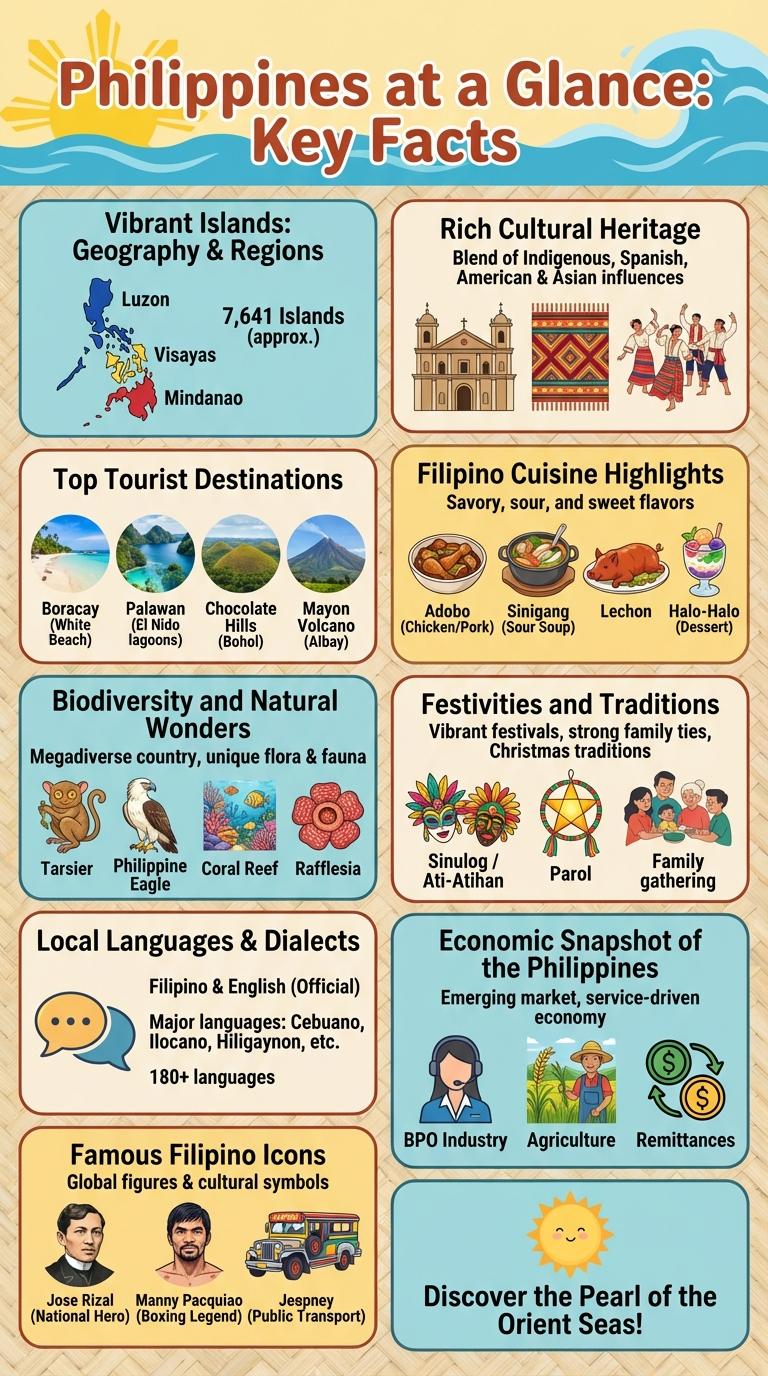
The Philippines, an archipelago of over 7,000 islands, boasts a rich cultural heritage and diverse natural landscapes. This infographic highlights key statistics, including population demographics, economic sectors, and tourist attractions. Visual representations offer a clear snapshot of the country's vibrant history and dynamic growth.
Philippines at a Glance: Key Facts
The Philippines is an archipelago in Southeast Asia known for its rich cultural heritage and diverse landscapes. It consists of over 7,600 islands with a population exceeding 110 million people.
- Geographical Location - Situated in the western Pacific Ocean, the Philippines lies southeast of China and north of Indonesia.
- Population - The country has a population of approximately 113 million, making it the 13th most populous nation globally.
- Official Languages - Filipino and English are the official languages used in government, education, and business.
- Capital City - Manila, a bustling metropolitan area, serves as the political, economic, and cultural center of the Philippines.
- Economy - The Philippines has a mixed economy driven by services, manufacturing, agriculture, and a growing remittance sector.
Vibrant Islands: Geography & Regions
What makes the Philippines a unique archipelago? The Philippines comprises over 7,600 islands located in Southeast Asia, making it one of the largest archipelagos in the world. Its diverse geography includes mountains, beaches, and tropical rainforests.
How are the regions of the Philippines organized? The country is divided into three main island groups: Luzon, Visayas, and Mindanao, each with distinct cultural and geographical features. These groups are further segmented into 17 administrative regions.
Which island group is the most populated? Luzon is the largest and most populous island group, home to the nation's capital, Manila, and major urban centers. It serves as the political, economic, and cultural hub of the Philippines.
What geographical features characterize the Visayas? The Visayas consist of several small islands known for white-sand beaches, coral reefs, and vibrant marine biodiversity. Popular tourist destinations include Cebu, Bohol, and Boracay.
How does Mindanao differ geographically from other regions? Mindanao is the second largest island group, featuring fertile plains, mountain ranges, and rich natural resources. It plays a crucial role in agriculture and industry within the country.
Rich Cultural Heritage
The Philippines boasts a rich cultural heritage shaped by indigenous traditions, colonial influences, and diverse regional customs. This cultural mosaic is reflected in its vibrant festivals, historic landmarks, and unique artistic expressions.
- Diverse Ethnic Groups - Over 175 ethnolinguistic groups contribute to the Philippines' varied cultural landscape and languages.
- Festivals and Celebrations - Events like Sinulog, Ati-Atihan, and Panagbenga highlight the country's lively traditions and communal spirit.
- Historic Spanish Influence - Spanish colonization introduced Catholicism, architecture, and culinary elements that remain integral to Filipino culture.
- Indigenous Art and Craftsmanship - Traditional weaving, pottery, and carving continue to thrive among indigenous communities across the archipelago.
- UNESCO World Heritage Sites - Locations such as the Baroque Churches and the Ifugao Rice Terraces preserve tangible links to the nation's cultural past.
Top Tourist Destinations
The Philippines is renowned for its stunning natural beauty and rich cultural heritage. It attracts millions of tourists annually, drawn to its diverse landscapes and vibrant traditions.
Top tourist destinations include Boracay, Palawan, Cebu, Bohol, and Manila. Each location offers unique experiences, from pristine beaches to historic landmarks and lively urban scenes.
Filipino Cuisine Highlights
The Philippines offers a vibrant culinary landscape rich in flavors and traditions. Filipino cuisine combines indigenous, Spanish, Chinese, and American influences, creating unique and diverse dishes cherished nationwide.
Popular Filipino dishes include adobo, a savory stew made with pork or chicken marinated in vinegar, soy sauce, and garlic. Sinigang is a sour tamarind-based soup featuring meat and fresh vegetables, while lechon is a roasted whole pig celebrated for its crispy skin. Desserts such as halo-halo, a mix of crushed ice, sweet beans, fruits, and flan, reflect the country's love for sweet treats. Street food like isaw (grilled chicken intestines) and balut (fertilized duck embryo) showcase adventurous flavors popular among locals and tourists alike.
Biodiversity and Natural Wonders
The Philippines is a global biodiversity hotspot, home to over 52,000 species, with more than half found nowhere else on Earth. Its unique ecosystems include tropical rainforests, coral reefs, and mangroves, supporting rich flora and fauna.
Natural wonders like the Taal Volcano, Banaue Rice Terraces, and the Underground River in Palawan showcase the country's geological and cultural heritage. These sites attract millions of tourists annually, contributing to conservation awareness and economic development.
Festivities and Traditions
The Philippines is renowned for its vibrant festivities that celebrate a rich blend of indigenous, Spanish, and modern influences. Iconic events such as the Sinulog Festival in Cebu, Ati-Atihan in Aklan, and Pahiyas Festival in Quezon showcase colorful costumes, traditional dances, and religious devotion. These traditions reflect the Filipino people's deep sense of community, faith, and cultural pride, making the country's celebrations unique and unforgettable.
Local Languages & Dialects
The Philippines is home to over 170 local languages and dialects, reflecting its rich cultural diversity. These languages belong to the Austronesian language family and vary significantly across regions.
- Filipino - The national language based primarily on Tagalog, widely spoken and understood throughout the country.
- Cebuano - The second most spoken language, predominant in the Visayas and parts of Mindanao.
- Ilocano - Commonly used in Northern Luzon, known for its distinct phonetic and lexical features.
- Hiligaynon - Mainly spoken in Western Visayas, with a melodic intonation and rich vocabulary.
- Bikol - Used in the Bicol Region, featuring several dialects within its linguistic group.
The preservation and promotion of these local languages are vital for maintaining the Philippines' cultural heritage and identity.
Economic Snapshot of the Philippines
The Philippines boasts a dynamic economy with a GDP of approximately $420 billion as of 2023, driven by robust services, remittances from Overseas Filipino Workers (OFWs), and a growing manufacturing sector. The country maintains a steady GDP growth rate averaging around 6% per year, positioning it as one of Southeast Asia's fastest-growing economies. Key industries include electronics, agriculture, tourism, and business process outsourcing, contributing significantly to employment and foreign exchange earnings.