
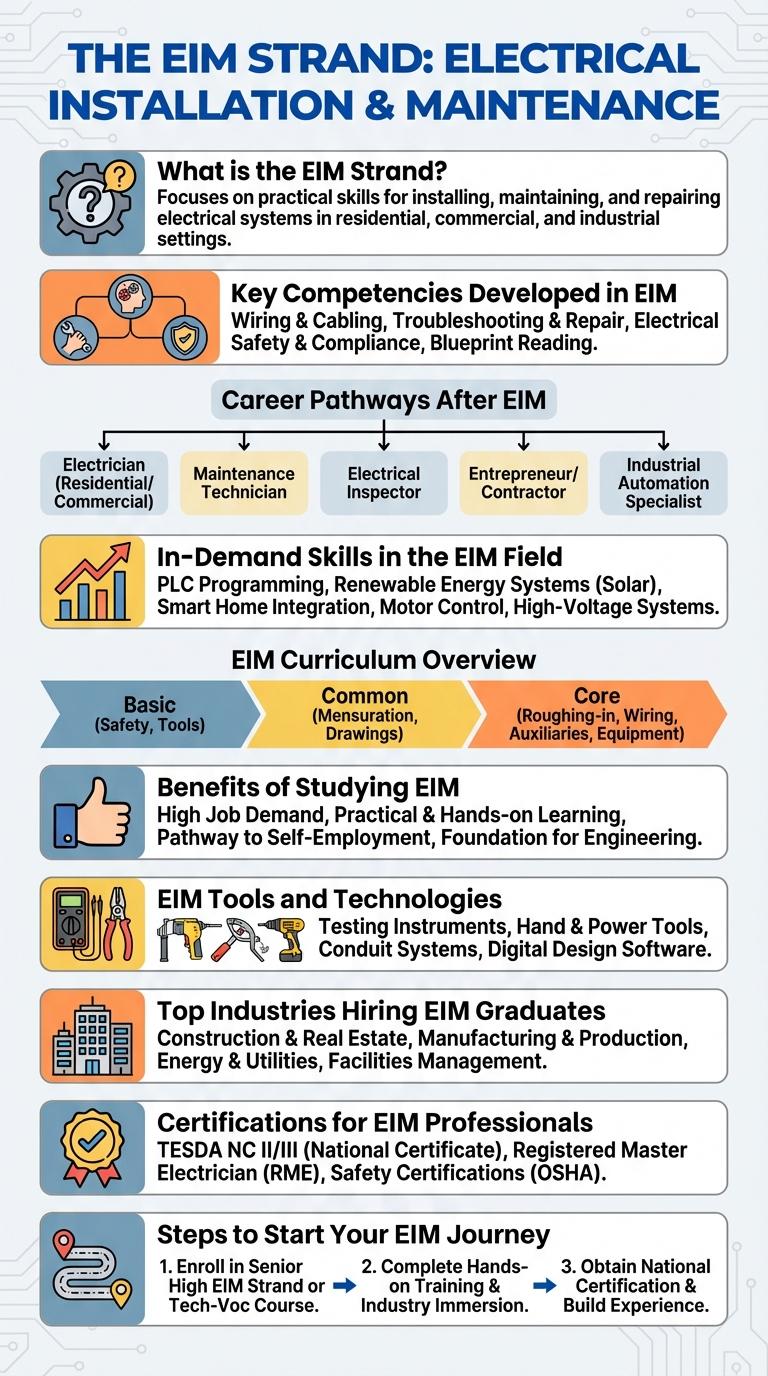
EIM Strand infographic presents a clear visualization of Enterprise Information Management principles, showcasing key components like data governance, integration, and quality control. It highlights strategic approaches to streamline data flow, enhance decision-making, and ensure compliance across organizations. The graphic simplifies complex EIM frameworks, making it easier for stakeholders to understand and implement effective information management strategies.
What is the EIM Strand?
The EIM Strand, or Entrepreneurship, Innovation, and Marketing Strand, is a specialized track in senior high school education. It focuses on developing students' skills in business management, creative thinking, and marketing strategies.
This strand prepares learners to become competitive entrepreneurs by equipping them with practical knowledge in product development, market research, and financial literacy. Students gain hands-on experience through real-world projects and case studies related to business innovation.
Key Competencies Developed in EIM
What key competencies are developed in the EIM strand? The EIM (Entrepreneurship, Innovation, and Marketing) strand equips students with essential skills for modern business environments. It focuses on creativity, strategic thinking, and market analysis.
| Competency | Description |
|---|---|
| Entrepreneurial Mindset | Ability to identify opportunities and take initiative in business ventures. |
| Innovative Thinking | Developing creative solutions and adapting to market changes. |
| Marketing Strategy | Understanding consumer behavior and designing effective campaigns. |
| Financial Literacy | Managing budgets, costs, and investment decisions efficiently. |
| Communication Skills | Presenting ideas clearly and collaborating with teams and clients. |
Career Pathways After EIM
Exploring career pathways after completing the Entertainment and Interactive Media (EIM) strand reveals diverse opportunities in the creative and digital industries. Graduates develop skills applicable to multiple roles in game design, animation, and multimedia production.
Career options include game developer, multimedia artist, digital animator, and interactive media designer. Professionals in this field work with cutting-edge technology to create engaging content across various platforms. The demand for EIM graduates continues to grow as digital entertainment expands globally.
In-Demand Skills in the EIM Field
| In-Demand Skill | Description |
|---|---|
| Data Analytics | Ability to interpret and analyze complex data sets to improve information management strategies. |
| Digital Asset Management | Expertise in organizing, storing, and retrieving digital assets efficiently within EIM systems. |
| Information Governance | Knowledge of policies and compliance standards to manage enterprise information legally and securely. |
| Cloud Computing | Skill in leveraging cloud platforms for scalable and flexible enterprise information management solutions. |
| Automation & AI | Proficiency in implementing automation tools and artificial intelligence to optimize data workflows. |
EIM Curriculum Overview
The EIM strand curriculum is designed to equip students with essential skills in Entrepreneurship, Information Technology, and Marketing. Core subjects include Business Management, Digital Literacy, and Market Research, fostering practical knowledge for modern industry demands. This comprehensive program emphasizes hands-on learning and real-world applications to prepare students for successful careers.
Benefits of Studying EIM
Studying the EIM strand equips students with essential skills in entrepreneurship, marketing, and management. These skills prepare learners for dynamic careers in business and innovation.
- Career Readiness - Provides practical knowledge that enhances employability in various business sectors.
- Entrepreneurial Skills - Encourages creativity and self-reliance through training in business planning and development.
- Business Acumen - Develops understanding of market trends, consumer behavior, and effective management strategies.
EIM Tools and Technologies
Enterprise Information Management (EIM) leverages a variety of tools and technologies designed to capture, manage, and deliver data across organizations efficiently. Key EIM tools include data integration platforms, content management systems, and analytics software that ensure data quality and accessibility. Technologies such as cloud computing, artificial intelligence, and blockchain enhance the scalability, security, and accuracy of EIM solutions.
Top Industries Hiring EIM Graduates
Enterprise Information Management (EIM) graduates possess skills in managing data, optimizing business processes, and implementing information systems. These capabilities position them strongly within various high-demand sectors.
Top industries hiring EIM graduates include Information Technology, Finance, Healthcare, Manufacturing, and Consulting services. These industries seek professionals who can streamline data management and support digital transformation initiatives effectively.
Certifications for EIM Professionals
Enterprise Information Management (EIM) professionals require specialized certifications to validate their skills in managing organizational data effectively. These certifications enhance career opportunities and ensure adherence to industry standards.
- AIIM Certified Information Professional (CIP) - Recognizes expertise in managing and leveraging information assets within organizations.
- ECM Practitioner Certification - Focuses on electronic content management tools and strategies for efficient data handling.
- Information Governance Professional (IGP) - Validates knowledge of policies, compliance, and information governance best practices.
- Certified Records Manager (CRM) - Demonstrates proficiency in records management and lifecycle administration.
- Microsoft Certified: Azure Data Engineer Associate - Certifies skills in designing and implementing data management solutions on Azure cloud services.
Obtaining these certifications empowers EIM professionals to drive organizational data strategies effectively.