
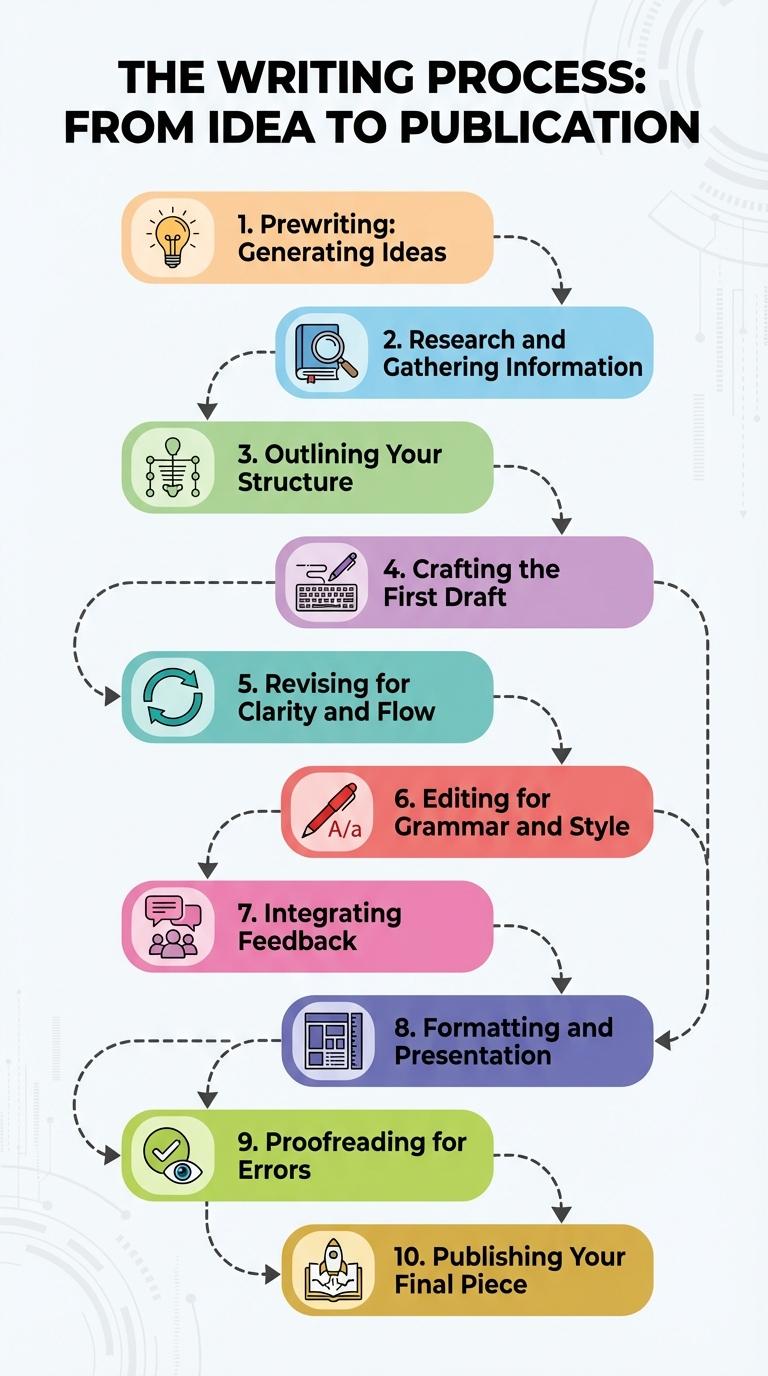
The writing process transforms ideas into clear, compelling content by guiding each stage from brainstorming to final revision. Understanding this step-by-step workflow enhances creativity and efficiency, ensuring polished and effective communication. Visualizing the process through an infographic helps writers easily grasp and implement each phase.
Prewriting: Generating Ideas
Prewriting is the crucial first step in the writing process where ideas are generated and organized. Techniques such as brainstorming, freewriting, and mind mapping help stimulate creativity and uncover unique perspectives. This stage sets a strong foundation for developing clear and focused content in subsequent writing phases.
Research and Gathering Information
Research and gathering information form the foundation of any successful writing project. This stage involves collecting relevant data to support ideas clearly and accurately.
- Identify credible sources - Use academic journals, books, and reputable websites to ensure reliable information.
- Take organized notes - Record key points, quotes, and references systematically for easy access during writing.
- Evaluate information quality - Assess accuracy, bias, and relevance to maintain integrity in your work.
Effective research enhances the writing process by providing a solid evidence base and improving overall content quality.
Outlining Your Structure
Outlining your structure is a critical step in the writing process that organizes your ideas clearly and logically. It serves as a roadmap that guides the flow and coherence of your content.
- Establish Core Sections - Identify main topics or arguments to create a foundation for your writing.
- Arrange Ideas Hierarchically - Prioritize information from general to specific to enhance clarity.
- Use Bullet Points or Numbered Lists - Break down complex concepts into manageable parts for easier development.
Crafting the First Draft
Crafting the first draft is a critical step in the writing process, transforming ideas into coherent content. This phase focuses on getting thoughts down without worrying about perfection.
- Start with an Outline - Organize main points and supporting details to guide the flow of the draft.
- Write Freely - Prioritize expressing ideas over grammar or syntax to maintain momentum.
- Embrace Imperfection - Understand the first draft is a foundation that can be refined in later revisions.
Revising for Clarity and Flow
Revising for clarity and flow is a crucial step in the writing process that ensures your message is easily understood. Focus on eliminating ambiguous language, organizing ideas logically, and varying sentence structure for better readability. Effective revision helps create a smooth narrative that engages readers and strengthens overall communication.
Editing for Grammar and Style
| Stage | Description |
|---|---|
| Review Sentence Structure | Check for clarity, sentence flow, and varied syntax to enhance readability. |
| Correct Grammar | Identify and fix errors in subject-verb agreement, tense consistency, and punctuation. |
| Improve Style | Refine word choice, eliminate redundancy, and ensure tone matches the intended audience. |
| Check Consistency | Maintain uniformity in spelling, capitalization, and formatting throughout the text. |
| Final Proofread | Conduct a meticulous read-through to catch overlooked errors and verify polished content. |
Integrating Feedback
How can integrating feedback improve your writing process? Embracing constructive criticism helps identify areas needing improvement, enhancing clarity and effectiveness. Incorporating diverse perspectives refines your work and strengthens your overall message.
Formatting and Presentation
Effective formatting and presentation significantly enhance the readability and impact of your writing. Clear headings, consistent font styles, and appropriate spacing guide the reader seamlessly through the content.
Utilizing bullet points, numbered lists, and visuals in your document creates organized and engaging information delivery. Proper alignment and margin settings contribute to a polished, professional appearance that captures attention.
Proofreading for Errors
Proofreading for errors is a vital step in the writing process that ensures clarity and professionalism. This stage involves carefully reviewing the text to identify and correct spelling, grammar, and punctuation mistakes.
Effective proofreading enhances the overall quality of the document, making it more readable and credible. Tools like spell checkers and style guides aid writers in catching common errors missed during initial drafts.