
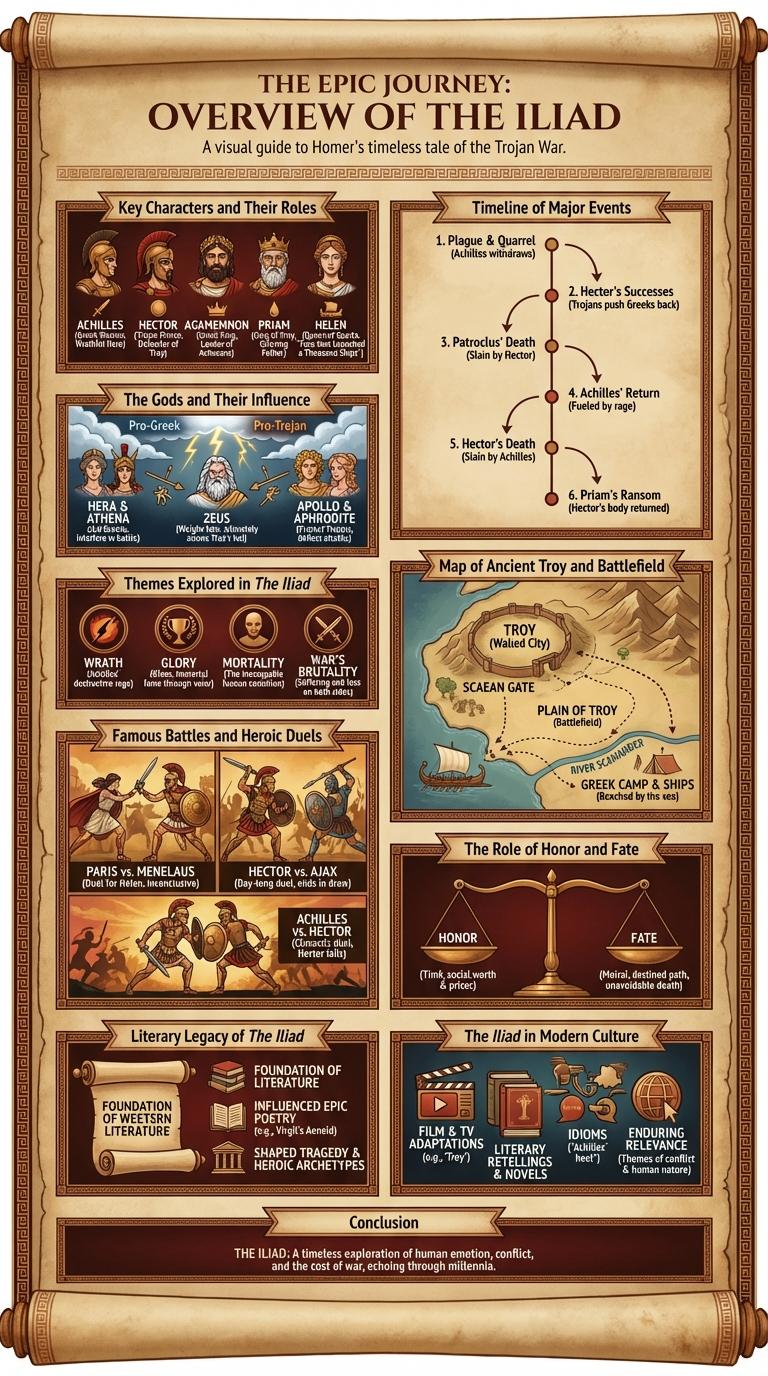
The Iliad, an ancient Greek epic poem attributed to Homer, unfolds the intense events of the Trojan War, highlighting themes of heroism, honor, and wrath. This infographic explores key characters, major battles, and significant moments that shape the narrative of this timeless literary masterpiece. Visualizing these elements enhances understanding of the poem's enduring impact on literature and culture.
The Epic Journey: Overview of The Iliad
The Iliad, an ancient Greek epic poem attributed to Homer, chronicles the intense events of the Trojan War, focusing on the hero Achilles. The narrative explores themes of heroism, wrath, fate, and the gods' influence on mortal lives. Its rich storytelling and vivid characters provide timeless insights into human nature and warfare.
Key Characters and Their Roles
The Iliad, an ancient Greek epic poem attributed to Homer, centers around the events of the Trojan War. Its narrative revolves around a cast of key characters, each playing crucial roles in the unfolding conflict.
Achilles, the greatest Greek warrior, exhibits unmatched combat skills and intense emotions of rage and honor. Hector, the Trojan prince and defender of Troy, symbolizes bravery and loyalty in the face of Greek attacks.
Agamemnon, leader of the Greek forces, struggles with pride and authority that influence the war's progression. Helen, whose abduction sparks the war, represents beauty and the human cost of the conflict.
Patroclus, Achilles' close companion, motivates pivotal battle events through his courage and sacrifice. Priam, king of Troy, embodies nobility and the tragic consequences of the prolonged siege.
Timeline of Major Events
The Iliad, attributed to Homer, is an ancient Greek epic poem that captures a critical segment of the Trojan War. Its narrative focuses on key events that define heroism, conflict, and fate within the war's final year.
The timeline highlights pivotal moments that shape the story and its protagonists.
- The Quarrel Between Achilles and Agamemnon - Achilles withdraws from battle after a dispute, affecting Greek morale.
- The Duel of Paris and Menelaus - A fight intended to end the conflict but interrupted, prolonging the war.
- The Death of Patroclus - Achilles' close friend Patroclus is killed, prompting Achilles' return to battle.
- The Slaying of Hector - Achilles kills Trojan prince Hector, shifting the war's momentum.
- The Ransom of Hector's Body - King Priam's plea for his son's remains, showcasing themes of humanity amidst war.
The Gods and Their Influence
The Iliad showcases the powerful influence of the Greek gods on the events of the Trojan War, with deities like Zeus, Athena, and Apollo playing crucial roles in guiding and intervening in human affairs. Each god represents different aspects of life and warfare, shaping the fates of both Greek and Trojan heroes. Their divine actions highlight themes of fate, honor, and the struggle between fate and free will throughout the epic.
Themes Explored in The Iliad
The Iliad explores enduring themes such as the glory and horror of war, highlighting both the valor and the suffering of warriors. It delves into the nature of heroism, the wrath of Achilles, and the consequences of pride and rage in human conflict.
Fate and free will play crucial roles, as characters face destinies shaped by the gods yet strive to assert their own choices. The epic also examines honor, loyalty, and the bonds between friends, family, and foes amid the chaos of the Trojan War.
Map of Ancient Troy and Battlefield
The Iliad centers around the legendary city of Troy, the site of the Trojan War. The battlefield stretches across the plains surrounding ancient Troy, where key confrontations shaped the epic tale.
The map of Ancient Troy highlights strategic locations such as the city walls, gates, and nearby rivers critical for defense and attack. The battlefield terrain influenced Greek and Trojan tactics, including the placement of chariots and infantry.
- Ancient Troy Location - Situated in northwest Anatolia, near the Dardanelles strait, controlling vital trade routes.
- City Walls - Massive fortifications protected Troy and played a pivotal role in thwarting Greek assaults.
- Battlefield Features - Open plains and river valleys enabled large-scale troop movements and complex battle strategies.
Famous Battles and Heroic Duels
What are the most famous battles and heroic duels in the Iliad?
The Iliad highlights legendary battles that shaped the Trojan War, showcasing heroism and strategic warfare. Key duels between warriors epitomize personal valor and pivotal moments in the epic narrative.
| Famous Battle | Description |
|---|---|
| Battle of Troy | The central conflict where Greek and Trojan forces clashed over ten years, defining the epic's scope. |
| Siege of the Greek Ships | Trojans nearly destroy the Greek fleet, marking a crucial turning point in the war's momentum. |
| Heroic Duel | Significance |
| Achilles vs. Hector | The defining duel ending with Hector's death, symbolizing fate and warrior honor. |
| Paris vs. Menelaus | A battle for Helen's return that emphasizes honor and the war's romantic origins. |
The Role of Honor and Fate
| Concept | Explanation |
|---|---|
| Honor (Time) | Central to the identity and motivation of heroes; warriors seek glory to achieve lasting fame and social standing. |
| Fate (Moira) | Unavoidable destiny that governs the lives of mortals and even gods; events unfold according to predetermined outcomes. |
| Heroic Code | Warriors act to protect their honor and that of their comrades; honor is gained through bravery, skill, and reputation in battle. |
| Interaction Between Honor and Fate | Characters struggle to reconcile their desire for honor with the limits imposed by fate; heroic actions affirm individual agency despite destiny. |
| Examples in The Iliad | Achilles' rage stems from wounded honor, while his fate defines his inevitable death; Hector's defense of Troy symbolizes duty bound by honor and fate. |
Literary Legacy of The Iliad
The Iliad, attributed to the ancient Greek poet Homer, stands as one of the most influential epic poems in Western literature. Its narrative centers on the Trojan War, exploring themes of heroism, fate, and wrath.
The epic's rich storytelling and complex characters have inspired countless works across various art forms, including literature, theater, and visual arts. The Iliad's language and structure set the foundation for epic poetry traditions that followed. Modern adaptations continue to reinterpret its timeless themes, ensuring its presence in cultural and academic discussions worldwide.