
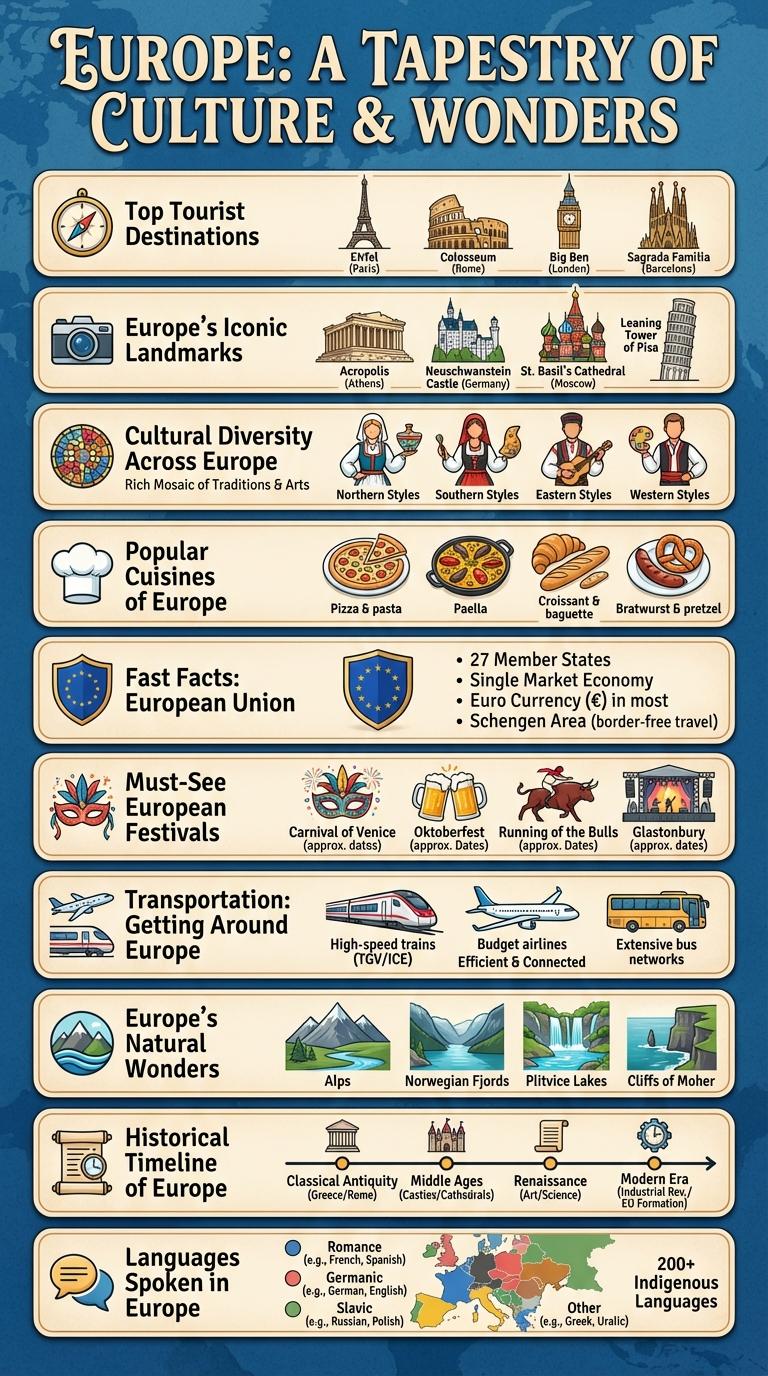
Europe showcases a diverse tapestry of cultures, landscapes, and histories that attract millions of visitors annually. This infographic visualizes key facts about its countries, languages, population, and economic indicators. Explore the distinct features that define this vibrant continent.
Top Tourist Destinations in Europe
Europe boasts some of the world's most captivating tourist destinations, attracting millions of visitors each year. From historic cities to breathtaking natural wonders, the continent offers diverse experiences.
Paris, Rome, and Barcelona lead as iconic urban destinations known for their rich cultural heritage and stunning architecture. Coastal gems like the Amalfi Coast and the Greek Islands provide unforgettable scenic beauty and leisure opportunities.
Europe's Iconic Landmarks
Europe boasts a rich tapestry of iconic landmarks that attract millions of visitors each year. From the historic Colosseum in Rome to the majestic Eiffel Tower in Paris, these sites embody the continent's diverse cultural heritage and architectural brilliance. Exploring Europe's landmarks offers a captivating journey through history, art, and innovation across various countries.
Cultural Diversity Across Europe
What makes Europe a hub of cultural diversity? Europe is home to over 200 distinct languages and thousands of ethnic groups, creating a rich tapestry of traditions. This diversity influences art, cuisine, festivals, and everyday life across the continent.
Popular Cuisines of Europe
Europe boasts a rich variety of popular cuisines, each reflecting its unique cultural heritage. French cuisine is renowned for its pastries, cheeses, and fine wines, while Italian food captivates with dishes like pasta, pizza, and gelato. Spanish cuisine offers vibrant flavors through tapas, paella, and cured meats, showcasing the diversity across the continent.
Fast Facts: European Union
The European Union (EU) is a unique economic and political union between 27 European countries. It promotes peace, stability, and economic cooperation across the continent.
The EU functions through supranational institutions and intergovernmental-negotiated decisions by its member states.
- Population - The EU has over 447 million inhabitants, making it one of the world's largest economic entities.
- Currency - The Euro (EUR) is used by 20 of the member countries, facilitating easier trade and travel.
- Single Market - The EU's single market allows the free movement of goods, services, people, and capital among member states.
Must-See European Festivals
Europe hosts a variety of vibrant festivals that showcase its rich cultural heritage and traditions. Each festival offers unique experiences, from music and art to food and history.
Oktoberfest in Germany is the world's largest beer festival, attracting millions of visitors annually. La Tomatina in Spain features a massive tomato fight, creating a lively and colorful atmosphere. The Venice Carnival in Italy is famous for its elaborate masks and costumes, celebrating centuries-old customs.
Transportation: Getting Around Europe
Europe boasts a highly efficient and interconnected transportation network. Travelers can access diverse modes of transport to explore cities and countries seamlessly.
- High-Speed Trains - Europe's extensive high-speed rail network connects major cities like Paris, Berlin, and Madrid, offering fast and eco-friendly travel.
- Metro Systems - Major metropolitan areas such as London, Paris, and Rome feature comprehensive metro systems that simplify urban commutes.
- Low-Cost Airlines - Budget airlines provide affordable flights across Europe, enabling quick travel between distant destinations.
Public transportation and ride-sharing options enhance mobility throughout European countries.
Europe's Natural Wonders
Europe is home to diverse natural wonders, from towering mountain ranges to stunning coastlines. These landscapes attract millions of visitors each year, showcasing the continent's rich natural heritage.
Notable sites include the majestic Alps, the dramatic fjords of Norway, and the pristine beaches of the Mediterranean. Protected national parks and UNESCO World Heritage sites preserve these environments for future generations.
Historical Timeline of Europe
Europe has a rich and complex history marked by significant events that shaped the continent and influenced the world. This infographic presents a concise historical timeline highlighting major milestones in European history.
- The Fall of the Western Roman Empire (476 AD) - Marked the end of ancient Rome and the beginning of the Middle Ages in Europe.
- The Renaissance (14th-17th Century) - A cultural and intellectual revival that started in Italy and spread across Europe, revolutionizing art, science, and thought.
- The Industrial Revolution (18th-19th Century) - A period of major industrialization that transformed Europe's economy, society, and technology.