
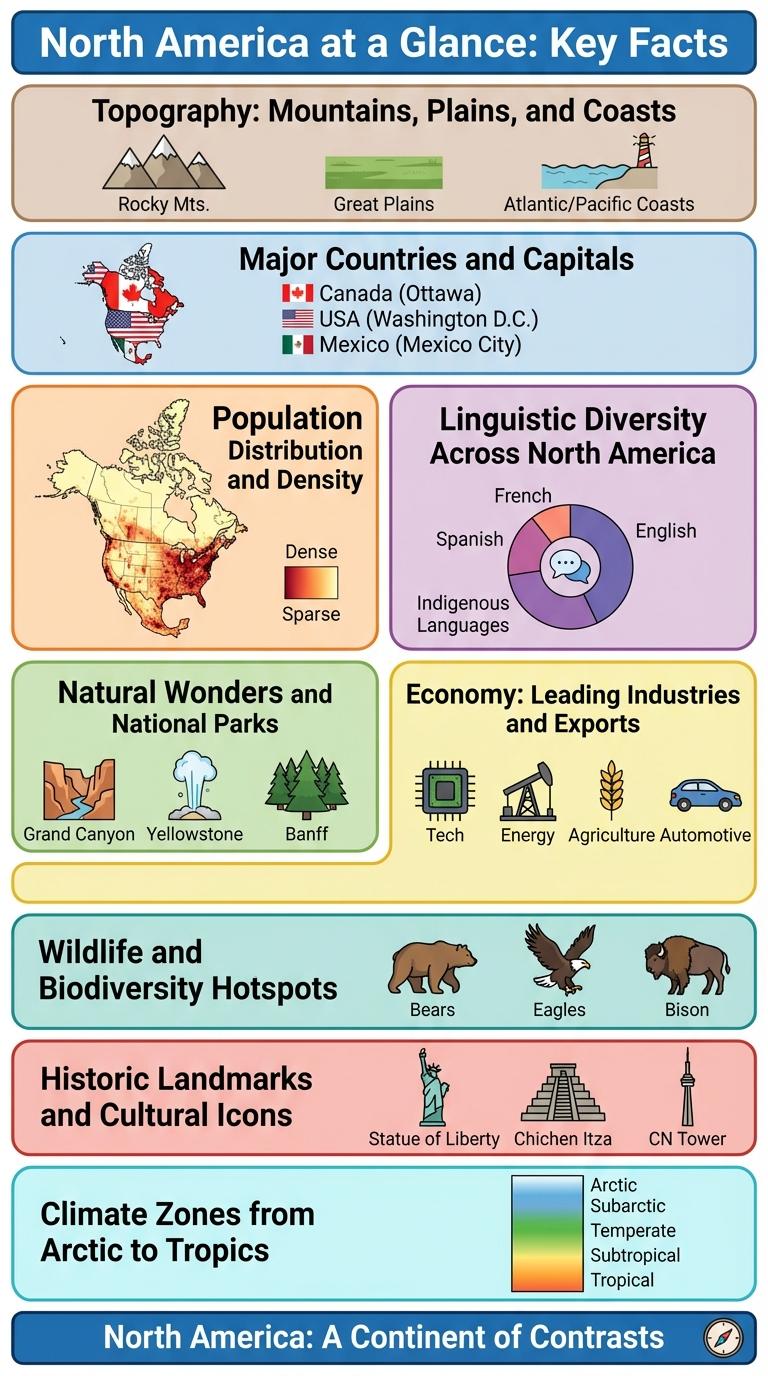
North America showcases a diverse blend of cultures, landscapes, and economies, making it a continent rich in history and innovation. From the bustling cities of the United States and Canada to the vibrant traditions of Mexico and Central America, each region offers unique insights into its development and influence. This infographic highlights key statistics and facts that illustrate the continent's dynamic character and global significance.
North America at a Glance: Key Facts
| Continent | North America |
| Area | 24.71 million km2 |
| Population | Approx. 600 million (2024) |
| Major Countries | USA, Canada, Mexico |
| Languages | English, Spanish, French |
Topography: Mountains, Plains, and Coasts
North America features diverse topography characterized by towering mountains, expansive plains, and extensive coastlines. These landforms shape the continent's climate, biodiversity, and human activities.
- Mountain Ranges - The Rocky Mountains and Appalachian Mountains are two major mountain chains, with peaks rising above 14,000 feet in the Rockies.
- Great Plains - This vast expanse of flatlands stretches from Canada through the central United States, supporting agriculture and grassland ecosystems.
- Coastal Regions - North America's coastline spans from the Arctic Ocean in the north to the Gulf of Mexico, featuring diverse environments such as sandy beaches, cliffs, and estuaries.
Major Countries and Capitals
North America consists of several major countries, each with its unique culture and economy. The largest and most influential countries include the United States, Canada, and Mexico. Their capitals, Washington D.C., Ottawa, and Mexico City, respectively, serve as political and cultural hubs for their nations.
| Country | Capital |
|---|---|
| United States | Washington D.C. |
| Canada | Ottawa |
| Mexico | Mexico City |
| Guatemala | Guatemala City |
| Costa Rica | San Jose |
Population Distribution and Density
North America is home to approximately 600 million people, with a population distribution that varies widely across the continent. The highest population densities are found in urban areas such as New York City, Mexico City, and Toronto.
Large regions like Canada and Alaska experience very low population density due to vast natural landscapes and harsh climates. Urban centers dominate the demographic landscape, concentrating economic activities and cultural hubs.
Linguistic Diversity Across North America
North America is home to over 300 indigenous languages, reflecting a rich tapestry of linguistic diversity. The continent's languages span several major families, including Algic, Na-Dene, and Uto-Aztecan.
English, Spanish, and French dominate as the primary official languages across North America, yet numerous indigenous and immigrant languages thrive in various regions. Efforts to preserve endangered languages contribute to maintaining cultural heritage and identity throughout the continent.
Natural Wonders and National Parks
What are some of the most breathtaking natural wonders and national parks in North America? North America boasts a diverse range of ecosystems, from towering mountains to vast deserts. Its national parks preserve these unique landscapes and offer unparalleled outdoor experiences.
| Natural Wonder | Description |
| Grand Canyon | A massive canyon carved by the Colorado River, known for its layered red rock formations and vast scale. |
| Niagara Falls | A powerful waterfall system on the US-Canada border, famous for its stunning water flow and scenic views. |
| Yellowstone National Park | The first national park in the world, famous for geothermal features like geysers and diverse wildlife. |
| Banff National Park | Canada's oldest national park, renowned for its turquoise lakes, rugged mountains, and alpine forests. |
| Yosemite National Park | Known for its granite cliffs, giant sequoias, and waterfalls, Yosemite is a symbol of natural beauty. |
Economy: Leading Industries and Exports
North America's economy is driven by diverse and robust industries that contribute significantly to global markets. Key sectors include technology, automotive manufacturing, agriculture, and energy production.
The United States leads with advanced technology and financial services, while Canada excels in natural resources such as oil and minerals. Mexico is a major player in automotive manufacturing and electronics exports. Together, these industries fuel trade and economic growth throughout the continent.
Wildlife and Biodiversity Hotspots
North America hosts a remarkable variety of wildlife and biodiversity hotspots essential for global ecological health. These areas support unique species that thrive in diverse ecosystems ranging from forests to deserts.
- Great Smoky Mountains - This region boasts over 19,000 documented species, making it one of the richest temperate biodiversity hotspots in the world.
- California Floristic Province - Known for its vast endemic plant species, this hotspot includes coastal chaparral and oak woodlands vital to native wildlife.
- Florida Everglades - A unique subtropical wetland, home to rare species such as the Florida panther and American crocodile.
Historic Landmarks and Cultural Icons
North America is rich in historic landmarks and cultural icons that reflect its diverse heritage and vibrant history. These sites attract millions of visitors annually, showcasing the continent's unique contributions to art, architecture, and history.
- Statue of Liberty - Symbolizes freedom and democracy, located in New York Harbor, USA.
- Chichen Itza - Ancient Mayan city in Mexico, known for its pyramid Kukulkan.
- CN Tower - Iconic telecommunications and observation tower in Toronto, Canada.
- Mount Rushmore - Monument featuring the carved faces of four U.S. presidents in South Dakota.
- French Quarter - Historic district in New Orleans known for its distinctive Creole architecture and culture.
These landmarks and cultural icons represent the historical depth and diverse cultural fabric of North America.