
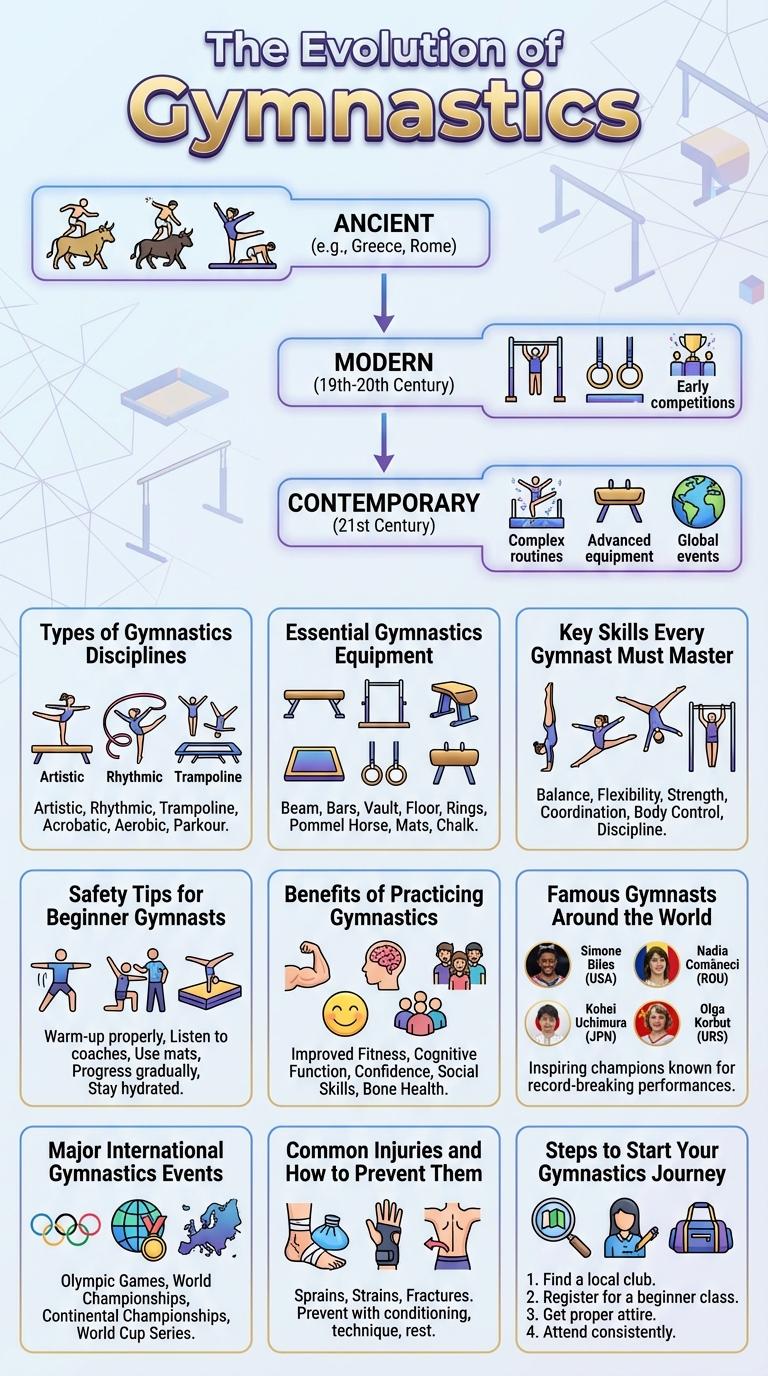
Gymnastics combines strength, flexibility, and balance to create a dynamic display of athleticism and artistry. This infographic highlights key elements such as popular disciplines, essential skills, and training techniques that contribute to peak performance. Visual data illustrates the sport's demands and milestones, offering insight into gymnastics' complexity and appeal.
The Evolution of Gymnastics
Gymnastics has evolved from ancient physical exercises depicted in Greek and Roman civilizations into a modern competitive sport recognized worldwide. The development of standardized rules and equipment during the 19th and 20th centuries shaped artistic, rhythmic, and trampoline gymnastics disciplines. Today, gymnastics combines strength, flexibility, and precision, highlighted in international competitions such as the Olympics.
Types of Gymnastics Disciplines
Gymnastics is a diverse sport with multiple disciplines showcasing strength, flexibility, and coordination. Each discipline has distinct rules and apparatuses that define its unique style and competition format.
- Artistic Gymnastics - Features routines on apparatuses like the vault, bars, beam, and floor incorporating acrobatics and dance elements.
- Rhythmic Gymnastics - Combines ballet, dance, and apparatus manipulation using ribbons, hoops, balls, clubs, and ropes.
- Trampoline Gymnastics - Focuses on high-flying acrobatic skills performed on a trampoline, emphasizing height and complex flips.
- Aerobic Gymnastics - Involves high-intensity movement patterns performed solo or in groups, highlighting strength, flexibility, and endurance.
- Acrobatic Gymnastics - Features partner-based routines with balance, lifts, and dynamic tumbling exercises.
Essential Gymnastics Equipment
Gymnastics requires specialized equipment to ensure safety and enhance performance. Essential gymnastics equipment supports athletes through various disciplines like floor exercises, vault, and balance beam.
Key equipment includes the balance beam, uneven bars, vault, floor mats, and grips. Balance beams provide stability for routines requiring balance and precision. Uneven bars help gymnasts build strength and execute swinging movements. Vaulting tables are designed for explosive power and speed during vaults.
Key Skills Every Gymnast Must Master
Gymnastics demands a combination of strength, flexibility, and balance to perform complex routines successfully. Mastery of key skills such as handstands, cartwheels, and backflips is essential for every gymnast. Developing coordination, body control, and spatial awareness enhances performance and reduces injury risk.
Safety Tips for Beginner Gymnasts
Gymnastics demands discipline and precision to perform safely. Beginners must follow essential safety guidelines to prevent injuries and build confidence.
- Warm-Up Thoroughly - Preparing muscles and joints reduces the risk of strains and sprains during practice.
- Use Proper Equipment - Wearing wrist guards, grips, and appropriate shoes helps protect against falls and abrasions.
- Learn Under Supervision - Coaching from qualified professionals ensures correct technique and immediate correction of unsafe practices.
Benefits of Practicing Gymnastics
Gymnastics enhances physical strength, flexibility, and coordination, promoting overall fitness and body awareness. It also improves balance and agility, essential for daily activities and other sports.
Practicing gymnastics boosts mental focus, discipline, and confidence, contributing to better academic and social performance. The sport encourages goal-setting and perseverance, fostering a resilient and motivated mindset.
Famous Gymnasts Around the World
Gymnastics is a sport that combines strength, flexibility, and agility. Many athletes have become icons worldwide through their exceptional achievements in gymnastics.
- Simone Biles - American gymnast known for her multiple Olympic gold medals and groundbreaking skills.
- Nadia Comaneci - Romanian gymnast who scored the first perfect 10 in Olympic history.
- Kohei Uchimura - Japanese gymnast celebrated for his dominance in all-around competitions globally.
- Larisa Latynina - Soviet gymnast holding one of the highest Olympic medal counts in gymnastics.
- Aly Raisman - American Olympian and captain renowned for leadership and floor routines.
These gymnasts have inspired millions and elevated the sport's popularity worldwide.
Major International Gymnastics Events
What are the major international gymnastics events that showcase the best talents worldwide? Gymnastics features several key competitions that attract top athletes from around the globe. These events serve as platforms for gymnasts to display skill, precision, and artistic excellence.
| Event | Description |
|---|---|
| Olympic Games | Held every four years, the Olympics are the most prestigious gymnastics event, featuring artistic, rhythmic, and trampoline disciplines. |
| World Artistic Gymnastics Championships | Annual event (except Olympic years) focusing exclusively on artistic gymnastics, determining world champions in multiple apparatus. |
| Rhythmic Gymnastics World Championships | Held annually, this event crowns world champions in rhythmic gymnastics routines involving apparatus like ribbon and hoop. |
| FIG World Cup Series | A series of events every year where gymnasts earn points competing across various artistic, rhythmic, and trampoline disciplines. |
| Gymnastics World Games | Includes sports not contested in the Olympics, showcasing diverse gymnastics disciplines and emerging talents internationally. |
Common Injuries and How to Prevent Them
| Common Injury | Prevention Method |
|---|---|
| Wrist Sprains | Use wrist supports, strengthen forearm muscles, proper landing technique |
| Ankle Sprains | Balance training, ankle braces, adequate warm-up |
| Stress Fractures | Gradual increase in training intensity, proper nutrition, rest periods |
| Shoulder Strains | Strengthen shoulder muscles, flexibility exercises, avoid overuse |
| Lower Back Pain | Core strengthening, correct posture, avoid hyperextension |