
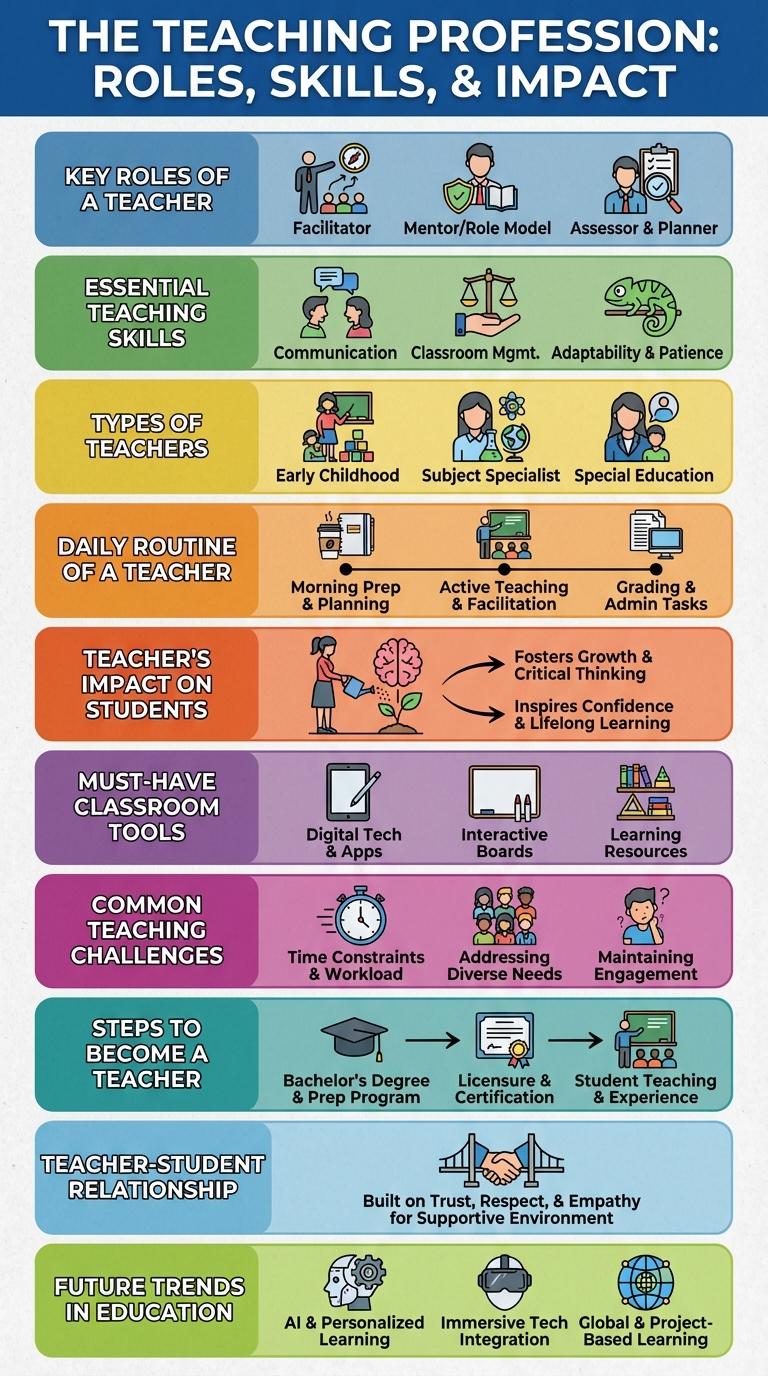
Teachers play a vital role in shaping the future by fostering knowledge, creativity, and critical thinking in students. This infographic highlights key statistics, challenges, and achievements within the teaching profession. Understanding these insights helps appreciate the dedication and impact of educators worldwide.
Key Roles of a Teacher
Teachers play a vital role in shaping the future by imparting knowledge and skills to students. Their responsibilities extend beyond instruction to include mentorship and fostering a positive learning environment.
- Educator - Delivers curriculum content effectively to facilitate student understanding and academic growth.
- Mentor - Provides guidance and support to help students overcome challenges and build confidence.
- Facilitator - Creates an engaging classroom atmosphere that encourages critical thinking and collaboration.
Essential Teaching Skills
Effective teaching requires a blend of essential skills that foster student engagement and learning. These skills include communication, adaptability, and subject expertise.
Strong communication skills enable teachers to convey concepts clearly and interact with students respectfully. Adaptability helps educators modify lessons to meet diverse learning needs. Deep subject knowledge ensures accurate and comprehensive instruction.
Types of Teachers
Teachers play diverse roles in shaping education and fostering student growth. Understanding different types of teachers helps highlight their unique contributions to learning environments.
Each type of teacher specializes in specific methods and areas of focus, enhancing the overall educational experience.
- Subject Specialist - Focuses on delivering deep knowledge in a particular academic area such as math, science, or literature.
- Special Education Teacher - Supports students with learning differences by adapting lessons to meet individual needs.
- Physical Education Teacher - Promotes physical fitness and healthy habits through sports and movement activities.
Daily Routine of a Teacher
Teachers follow a structured daily routine that balances lesson planning, classroom teaching, and student assessments. Their day often starts early with preparing materials, followed by engaging students through interactive lessons and activities. Afternoons are dedicated to grading, one-on-one student support, and administrative tasks, ensuring effective learning outcomes.
| Time | Activity |
|---|---|
| 7:00 AM - 8:00 AM | Lesson Planning and Preparation |
| 8:00 AM - 12:00 PM | Classroom Teaching and Student Engagement |
| 12:00 PM - 1:00 PM | Lunch and Break |
| 1:00 PM - 3:00 PM | Grading and Student Consultations |
| 3:00 PM - 4:00 PM | Administrative Tasks and Professional Development |
Teacher's Impact on Students
Teachers play a crucial role in shaping students' academic success, social development, and future career paths. Effective teaching strategies increase student engagement, improve critical thinking skills, and boost overall learning outcomes. A positive teacher-student relationship fosters motivation, confidence, and lifelong learning habits.
Must-Have Classroom Tools
Effective teaching relies on essential classroom tools that enhance learning and engagement. These must-have items support both educators and students for a productive environment.
Key tools include interactive whiteboards, which facilitate dynamic lesson presentations. High-quality projectors and reliable internet access enable multimedia learning experiences.
Common Teaching Challenges
| Common Teaching Challenge | Impact on Classroom |
|---|---|
| Student Engagement | Difficulty maintaining attention and participation |
| Diverse Learning Needs | Adjusting lessons to accommodate multiple skill levels |
| Time Management | Balancing lesson plans with administrative tasks |
| Classroom Behavior | Managing disruptions to maintain a positive environment |
| Resource Limitations | Insufficient materials impacting effective teaching |
Steps to Become a Teacher
Becoming a teacher involves a clear series of educational and professional steps. This infographic outlines the essential stages to achieve a teaching career.
- Earn a Bachelor's Degree - Obtain a degree in education or a related subject to build foundational knowledge and skills.
- Complete Teacher Preparation Program - Enroll in an accredited program that includes coursework and supervised classroom experience.
- Pass Certification Exams - Successfully complete required exams that assess teaching knowledge and competence.
- Obtain State Licensure - Apply for a teaching license based on state requirements to legally teach in public schools.
- Engage in Continuing Education - Pursue professional development to maintain certification and stay updated on educational practices.
These steps ensure readiness to provide quality education and foster student success.
Teacher-Student Relationship
The teacher-student relationship is fundamental for effective learning and personal growth. Positive interactions build trust, motivation, and engagement in the classroom.
Strong connections between teachers and students improve academic performance and social-emotional development. Respectful communication fosters a supportive and inclusive educational environment.