
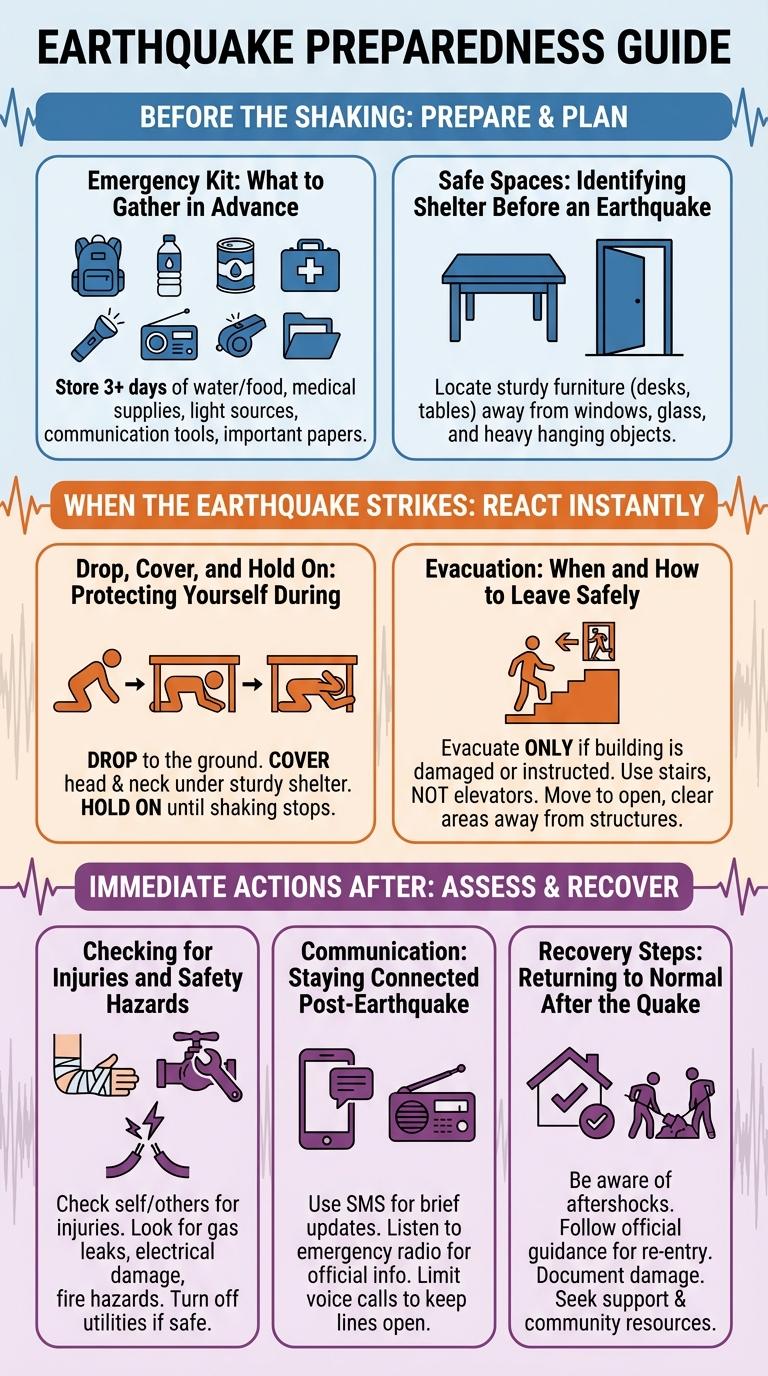
Understanding the key actions to take before, during, and after an earthquake can significantly reduce injury and damage. Preparation includes securing heavy objects and creating emergency kits, while knowing safe spots and protective measures during shaking enhances survival. Post-quake steps focus on assessing injuries, avoiding hazards, and communicating with emergency services to ensure safety and recovery.
Earthquake Preparedness: Before the Shaking
Earthquake preparedness starts with securing heavy furniture and creating a family emergency plan. Stock emergency supplies including water, food, and first aid kits in accessible locations. Regularly practice "Drop, Cover, and Hold On" drills to ensure everyone knows how to stay safe during shaking.
Emergency Kit: What to Gather in Advance
Preparing an emergency kit before an earthquake strikes ensures you have essential supplies readily available. Gather items such as water, non-perishable food, a flashlight, batteries, and a first aid kit.
During an earthquake, having these supplies can help you stay safe and manage immediate needs without leaving your shelter. After the quake, your kit supports survival until help arrives or conditions stabilize.
Safe Spaces: Identifying Shelter Before an Earthquake
Identifying safe spaces before an earthquake is crucial for survival and reducing injury. Knowing where to take shelter can save lives during the shaking.
Safe spaces include sturdy indoor areas away from windows and heavy objects, and open outdoor spaces clear of falling hazards.
- Designate Shelter Zones - Identify rooms with strong structural support such as interior corners or under heavy furniture for protection.
- Avoid Hazardous Areas - Stay away from windows, glass doors, and unsecured objects that may shatter or fall during tremors.
- Locate Open Outdoor Spaces - Find parks or open fields free from trees, power lines, and buildings for safety after the quake.
What to Do When the Earthquake Strikes
Earthquakes can happen without warning, making preparedness essential to minimize injury and damage. Knowing the correct actions to take before, during, and after an earthquake can save lives.
- Drop, Cover, and Hold On - Protect yourself by dropping to the ground, taking cover under sturdy furniture, and holding on until shaking stops.
- Stay Indoors - Remain inside away from windows and exterior walls to avoid falling debris and glass hazards during the quake.
- Check for Injuries and Hazards - After shaking ceases, assess yourself and others for injuries and watch for gas leaks, fires, or structural damage before evacuating.
Drop, Cover, and Hold On: Protecting Yourself During
Earthquake preparedness is essential to minimize injuries and damage. Knowing the right actions before, during, and after an earthquake increases survival chances.
- Drop - Drop to your hands and knees to prevent being knocked over.
- Cover - Take cover under sturdy furniture to protect your head and neck from falling debris.
- Hold On - Hold on to your shelter until shaking stops to maintain protection.
Practicing Drop, Cover, and Hold On during earthquakes significantly reduces physical harm.
Evacuation: When and How to Leave Safely
| Phase | Evacuation: When and How to Leave Safely |
|---|---|
| Before Earthquake | Identify safe evacuation routes and assembly points. Prepare an emergency kit with essentials. Stay informed via reliable alerts and warnings. Practice evacuation drills regularly. |
| During Earthquake | Drop, cover, and hold on. Do not attempt to evacuate while shaking is ongoing unless in immediate danger. Protect yourself from falling debris and stay indoors until shaking stops. |
| Immediately After | Assess surroundings for hazards like gas leaks or structural damage. Evacuate calmly using pre-planned routes if unsafe conditions exist. Assist vulnerable individuals and avoid elevators. |
| Ongoing Post-Earthquake | Follow official evacuation orders and updates via emergency services. Stay clear of damaged buildings and areas prone to aftershocks. Use designated shelters and communicate your location to family or responders. |
| Key Tips | Always carry your emergency kit during evacuation. Wear sturdy shoes and protective clothing. Use a flashlight if power is out. Keep calm to ensure safe and efficient evacuation. |
Immediate Actions After an Earthquake
Immediate actions after an earthquake include checking yourself and others for injuries and providing first aid if necessary. Move to a safe location, avoiding damaged buildings or structures that could collapse. Stay informed through battery-powered radios or mobile devices for emergency updates and instructions.
Checking for Injuries and Safety Hazards
How can you effectively check for injuries and safety hazards after an earthquake?
Immediately assess yourself and others for injuries, providing first aid if necessary. Look for potential dangers like gas leaks, electrical issues, and unstable structures to prevent further harm.
Communication: Staying Connected Post-Earthquake
Effective communication is critical before, during, and after an earthquake to ensure safety and coordinate emergency response. Preparing communication plans and backup devices helps maintain contact when networks are disrupted.
During an earthquake, use text messages or social media to reduce network congestion and relay your status quickly. Avoid voice calls unless necessary, as they can overload phone lines and hinder emergency communication.
After an earthquake, check on family and friends using designated emergency contacts and community communication hubs. Share updates on infrastructure damage and available resources through official channels to support rescue efforts and recovery.