
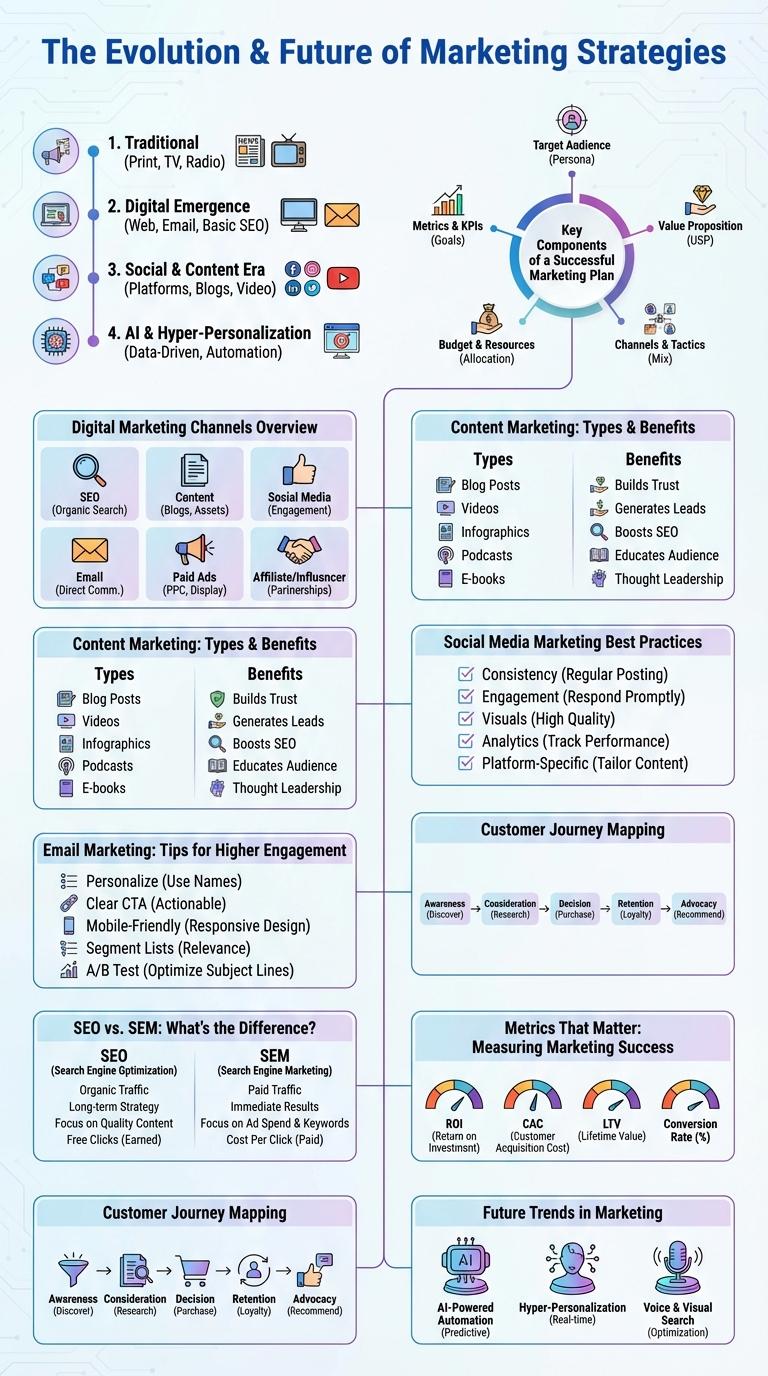
Marketing infographics visually present complex data and strategies in an easily digestible format. They enhance understanding of key concepts like target audiences, campaign metrics, and brand positioning. Effective infographics boost engagement and facilitate clearer communication of marketing insights.
The Evolution of Marketing Strategies
Marketing strategies have rapidly evolved from traditional advertising to data-driven digital approaches. Understanding this progression helps businesses adapt and thrive in competitive markets.
- Traditional Marketing - Focused on print, radio, and TV ads targeting broad audiences without personalized messaging.
- Digital Marketing Emergence - Introduced internet-based channels such as email, SEO, and social media to reach segmented audiences effectively.
- Data-Driven Marketing - Utilizes big data analytics and AI to create personalized campaigns and optimize customer engagement in real time.
Key Components of a Successful Marketing Plan
A successful marketing plan consists of clear objectives, target audience analysis, and strategic action steps. It integrates market research, budgeting, and performance metrics to guide decision-making. Effective execution requires ongoing evaluation and adjustment to optimize results.
Digital Marketing Channels Overview
Digital marketing channels encompass a variety of platforms that help businesses connect with their target audience online. Key channels include social media, email marketing, search engine optimization (SEO), pay-per-click advertising (PPC), and content marketing.
Each channel offers unique advantages for brand visibility, customer engagement, and lead generation. Selecting the right mix of digital marketing channels maximizes campaign effectiveness and return on investment.
Content Marketing: Types & Benefits
Content marketing is a strategic approach focused on creating and distributing valuable, relevant content to attract and retain a clearly defined audience. It aims to drive profitable customer actions through engaging and informative material.
- Blogs - These are regularly updated articles that improve SEO and establish industry authority.
- Videos - Visual content that boosts engagement and conveys messages quickly and effectively.
- Social Media Posts - Short, impactful updates that enhance brand awareness and community interaction.
- Ebooks and Whitepapers - In-depth resources that provide expert insights and generate leads.
- Infographics - Visual representations of data that simplify complex information for better audience understanding.
Content marketing increases brand loyalty by providing consistent value and building trust with the target audience.
Social Media Marketing Best Practices
| Best Practice | Description |
|---|---|
| Consistent Posting | Maintain a regular posting schedule to keep the audience engaged and improve algorithm favorability across platforms like Facebook, Instagram, and LinkedIn. |
| Targeted Content | Create content tailored to specific audience segments by analyzing demographics, interests, and behaviors using tools like Facebook Audience Insights or Twitter Analytics. |
| Engagement Focus | Encourage interaction through likes, comments, and shares by asking questions and responding promptly to user feedback to build community trust and loyalty. |
| Visual Appeal | Use high-quality images, videos, and infographics to capture attention and convey messages quickly, optimizing for platform-specific formats. |
| Data-Driven Strategy | Leverage analytics to measure campaign performance. Adjust strategies based on metrics like reach, conversion rates, and click-throughs for continuous improvement. |
Email Marketing: Tips for Higher Engagement
How can you boost engagement through email marketing? Crafting personalized content tailored to your audience increases open rates. Optimizing subject lines and sending times further enhances interaction.
What are effective strategies for email segmentation? Dividing your email list based on demographics and behavior allows targeted messaging. This leads to higher click-through rates and better conversion opportunities.
Why is mobile optimization crucial for email campaigns? Over half of emails are opened on mobile devices, requiring responsive design. Ensuring readability and fast loading improves user experience and engagement.
How does A/B testing improve email marketing results? Testing different elements like subject lines, images, and call-to-actions reveals what resonates best with recipients. Data-driven adjustments maximize impact and ROI.
What role does clear call-to-action play in emails? A prominent and compelling CTA directs readers to take desired steps quickly. This clarity drives higher conversion rates and supports campaign goals.
SEO vs. SEM: What's the Difference?
SEO (Search Engine Optimization) enhances organic search rankings by optimizing website content, structure, and backlinks. SEM (Search Engine Marketing) involves paid advertising to increase visibility on search engine results pages.
SEO offers long-term growth through sustained efforts, while SEM provides immediate results through targeted ads. Both strategies are essential for a comprehensive digital marketing approach.
Customer Journey Mapping
Customer Journey Mapping is a strategic tool that visualizes every interaction a customer has with a brand, from awareness to purchase and beyond. It highlights key touchpoints, pain points, and emotional responses to enhance customer experience and drive loyalty. Businesses use this map to optimize marketing strategies, personalize communication, and improve overall customer satisfaction.
Metrics That Matter: Measuring Marketing Success
Understanding key marketing metrics is essential for measuring success and making informed decisions. These metrics provide insights into campaign performance and customer engagement.
Conversion rate tracks the percentage of visitors who complete a desired action, reflecting campaign effectiveness. Customer acquisition cost measures the budget spent to gain a new customer, indicating cost-efficiency. Return on investment (ROI) calculates the profitability of marketing efforts, guiding resource allocation.