
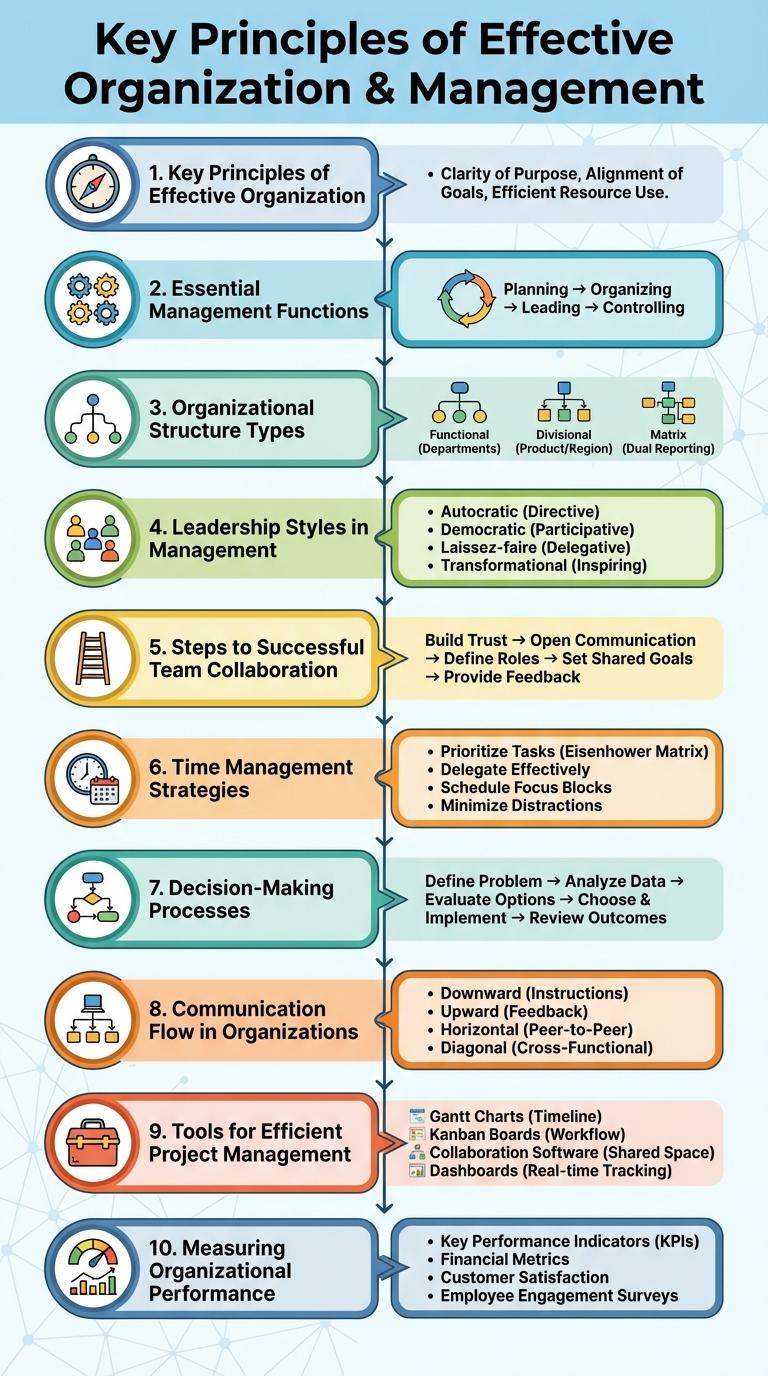
Effective organization and management are essential for achieving business goals and optimizing productivity. Clear structures and defined roles enhance communication and streamline decision-making processes. Visual tools like infographics simplify complex information, making management strategies easier to understand and implement.
Key Principles of Effective Organization
What are the key principles of effective organization? Effective organization maximizes efficiency by structuring resources and workflows strategically. Clear roles, communication, and goal alignment drive productivity and success.
How does clear communication influence organization? Open, transparent communication ensures that team members understand their responsibilities and expectations. It minimizes errors and promotes collaboration across all levels of management.
Why is goal alignment critical in management? Aligning individual and team objectives with the organization's mission creates focus and motivation. This alignment helps prioritize tasks and measure progress effectively.
What role do defined roles and responsibilities play? Clearly defined roles prevent overlap and confusion within teams. Accountability increases as each member knows their specific duties and authority.
How does flexibility contribute to effective management? Flexibility allows organizations to adapt to changing environments without losing momentum. It encourages innovative solutions and resilience in the face of challenges.
Essential Management Functions
Essential management functions include planning, organizing, leading, and controlling, which form the foundation of effective organizational operations. Planning involves setting objectives and determining the best course of action to achieve goals. Organizing arranges resources and tasks, leading motivates and directs personnel, while controlling monitors performance to ensure objectives are met efficiently.
Organizational Structure Types
Organizational structures define how activities such as task allocation, coordination, and supervision are directed toward achieving organizational goals. Understanding various types of organizational structures helps businesses optimize management and improve efficiency.
- Functional Structure - Groups employees based on specialized roles or functions, such as marketing, finance, or production.
- Divisional Structure - Organizes departments based on products, services, or geographic locations for focused management.
- Matrix Structure - Combines functional and divisional approaches, allowing dual reporting relationships to enhance flexibility and collaboration.
Leadership Styles in Management
Leadership styles in management significantly influence organizational culture and employee performance. Common styles include autocratic, democratic, transformational, transactional, and laissez-faire, each with distinct approaches to decision-making and motivation. Effective leaders adapt their style to the context, fostering collaboration, innovation, and productivity within teams.
Steps to Successful Team Collaboration
Effective team collaboration drives organizational success and enhances productivity. Clear, structured steps enable teams to work cohesively toward shared goals.
- Define Roles Clearly - Assign specific responsibilities to each team member to avoid confusion and overlap.
- Establish Open Communication - Foster transparent dialogue to ensure information flows freely among members.
- Set Common Goals - Align team efforts around shared objectives to maintain focus and motivation.
- Utilize Collaboration Tools - Leverage digital platforms like project management software for real-time coordination.
- Monitor Progress Regularly - Track milestones and provide feedback to keep the team on course.
Following these steps maximizes team efficiency and drives successful project outcomes.
Time Management Strategies
Effective time management strategies empower organizations to enhance productivity and meet deadlines consistently. Prioritizing tasks ensures that critical activities receive focused attention, minimizing wasted effort.
Techniques such as the Pomodoro Technique and time blocking help employees maintain concentration and reduce burnout. Utilizing digital tools for scheduling and reminders optimizes resource allocation and workflow management.
Decision-Making Processes
Decision-making processes are vital for effective organization and management. They involve selecting the best course of action from multiple alternatives to achieve organizational goals.
Structured decision-making enhances clarity and reduces risks in dynamic business environments. Techniques such as SWOT analysis, cost-benefit evaluation, and decision trees aid managers in evaluating options systematically. Transparent communication during decision-making fosters team alignment and accelerates implementation.
Communication Flow in Organizations
Effective communication flow in organizations ensures seamless exchange of information across all levels. It enhances decision-making, fosters collaboration, and boosts overall productivity.
Communication can follow downward, upward, or lateral paths, each serving distinct purposes in management processes. Clear channels reduce misunderstandings and support a healthy organizational culture.
Tools for Efficient Project Management
| Project Management Tool | Key Features |
|---|---|
| Trello | Visual task boards, drag-and-drop interface, collaboration |
| Asana | Task tracking, timeline view, team communication |
| Microsoft Project | Gantt charts, resource management, project scheduling |
| Jira | Issue tracking, agile workflow, sprint planning |
| Slack | Real-time messaging, file sharing, integration with tools |