
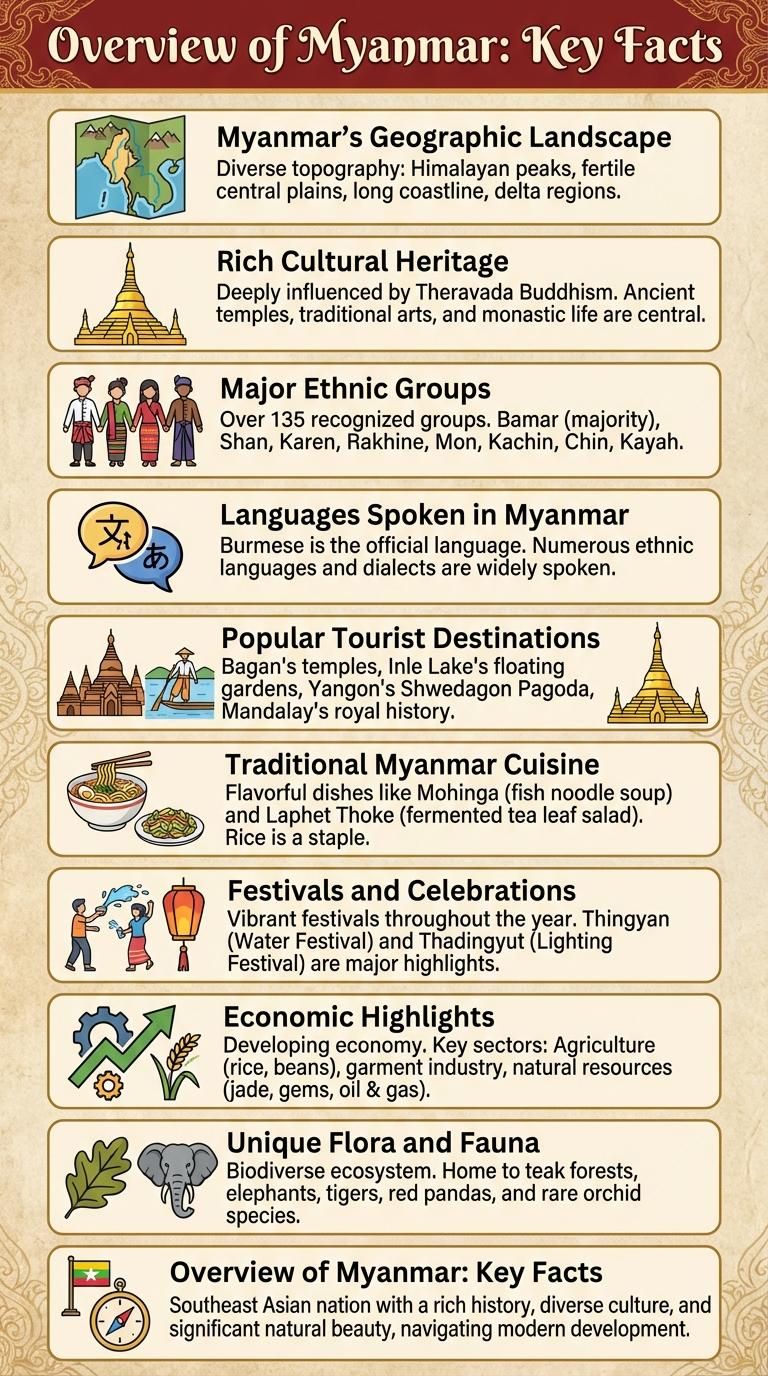
Myanmar's rich cultural heritage and diverse landscapes are vividly captured in this infographic, highlighting key aspects such as its population, major cities, and economic sectors. The visual presentation offers a concise overview of Myanmar's historical landmarks, natural resources, and demographic trends. Essential data points reveal the country's unique blend of tradition and modern development.
Overview of Myanmar: Key Facts
| Key Fact | Details |
|---|---|
| Official Name | Republic of the Union of Myanmar |
| Capital City | Naypyidaw |
| Population | Approx. 55 million (2024 estimate) |
| Area | 676,578 square kilometers |
| Official Language | Burmese |
Myanmar's Geographic Landscape
What defines Myanmar's geographic landscape? Myanmar spans 676,578 square kilometers, featuring diverse terrains from coastal regions to mountainous areas. Its strategic location in Southeast Asia borders China, India, Bangladesh, Laos, and Thailand, influencing its climate and biodiversity.
Rich Cultural Heritage
Myanmar, also known as Burma, boasts a rich cultural heritage shaped by centuries of diverse ethnic groups and traditions. The country's vibrant festivals and ancient temples reflect its deep-rooted Buddhist influence.
Traditional arts such as weaving, lacquerware, and dance play a vital role in preserving Myanmar's cultural identity. The stunning Shwedagon Pagoda in Yangon stands as a symbol of spiritual and architectural heritage.
Major Ethnic Groups
Myanmar is home to over 135 recognized ethnic groups, each with unique languages, cultures, and traditions. The country's diverse population plays a crucial role in its cultural richness and social dynamics.
- Bamar - The majority ethnic group, comprising around 68% of the population, predominantly practices Buddhism and primarily resides in central Myanmar.
- Shan - Representing about 9% of the population, the Shan people live mainly in the eastern region and speak Shan, a Tai-Kadai language.
- Karen - Making up roughly 7% of Myanmar's population, the Karen group is known for its distinct languages and Christian and Buddhist religious practices.
Languages Spoken in Myanmar
Myanmar is a linguistically diverse country with over 100 languages spoken across its regions. Burmese is the official language and widely used for communication and education.
- Burmese Language - Burmese, the official and most widely spoken language, serves as the lingua franca for over 32 million people.
- Ethnic Languages - Ethnic groups such as the Shan, Karen, and Kachin speak their own languages, reflecting the rich cultural diversity.
- Language Preservation - Many minority languages face challenges of preservation amid modernization but remain vital to community identity.
Popular Tourist Destinations
Myanmar, a Southeast Asian gem, offers travelers rich cultural heritage and stunning landscapes. The country's popular tourist destinations provide unique experiences blending history, nature, and spirituality.
Bagan, famous for its thousands of ancient temples and pagodas, is a must-visit site for history enthusiasts. Inle Lake attracts visitors with its floating villages, vibrant markets, and traditional leg-rowing fishermen. Yangon features the iconic Shwedagon Pagoda, a sacred Buddhist site known for its golden stupa and intricate architecture.
Traditional Myanmar Cuisine
Traditional Myanmar cuisine showcases a rich blend of flavors influenced by regional ethnic groups, featuring staple ingredients like rice, fish sauce, and fresh herbs. Popular dishes include Mohinga, a savory fish broth noodle soup, and Laphet Thoke, a unique fermented tea leaf salad. Meals often combine textures and tastes, balancing sour, salty, spicy, and bitter elements for a harmonious culinary experience.
Festivals and Celebrations
Myanmar is rich in vibrant festivals that reflect its deep cultural and religious heritage. These celebrations bring communities together through colorful rituals and traditional performances.
- Thingyan Water Festival - Marking the Burmese New Year, this festival involves water-throwing to cleanse sins and welcome the new year.
- Taunggyi Balloon Festival - Held in Taunggyi, it features soaring hot air balloons illuminated at night to honor the Tazaungdaing Festival.
- Thadingyut Festival of Lights - Celebrated at the end of Buddhist Lent, it involves lighting candles and lanterns to pay respect to monks.
Festivals in Myanmar offer a unique insight into the country's traditions, spirituality, and social cohesion.
Economic Highlights
Myanmar's economy is characterized by abundant natural resources, including natural gas, oil, and minerals, contributing significantly to its GDP. The agricultural sector remains a major employer, with rice, pulses, and beans as key exports.
Recent economic growth has been driven by industries such as manufacturing, construction, and telecommunications. Foreign direct investment continues to increase, particularly in energy and infrastructure projects.