
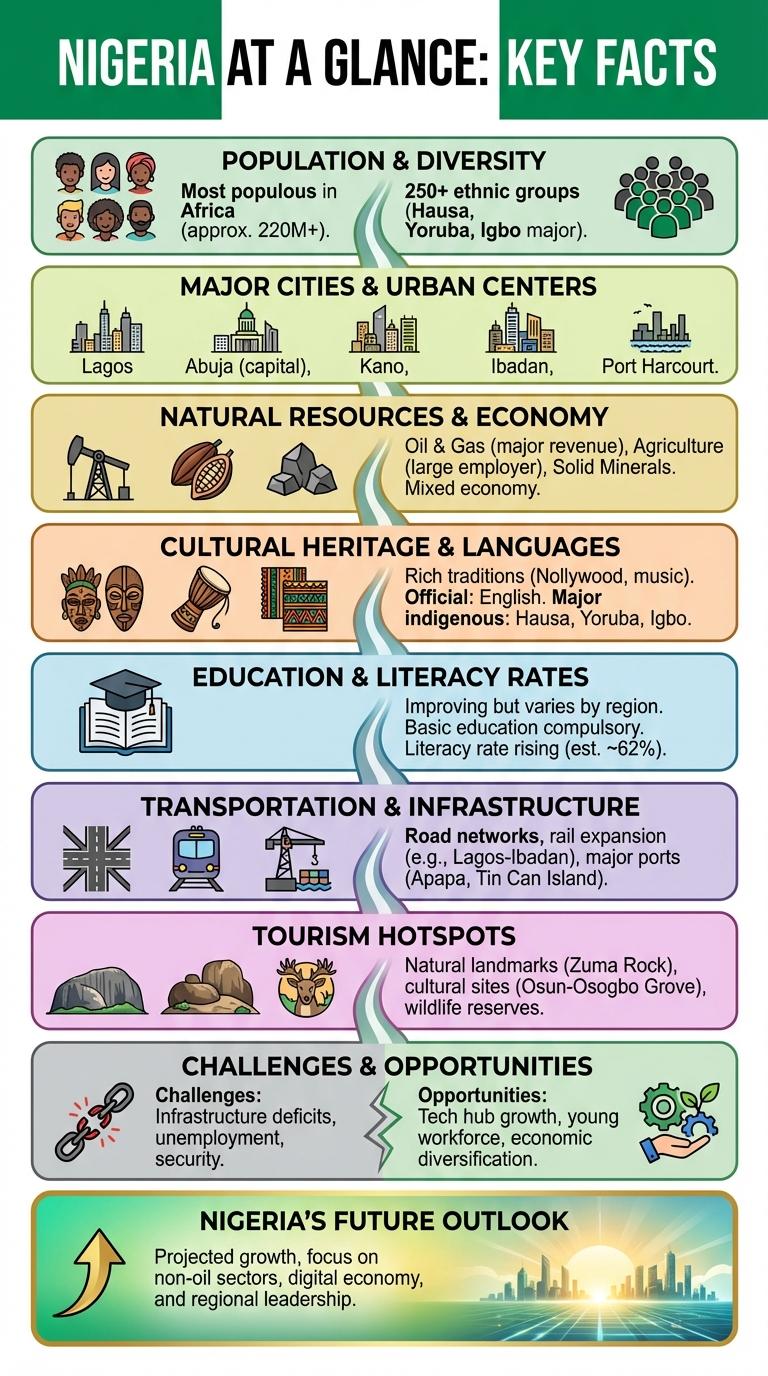
Nigeria, known as the Giant of Africa, boasts a rich cultural heritage and diverse population exceeding 200 million people. Its thriving economy, fueled by oil production and a burgeoning tech sector, positions Nigeria as a key player on the continent. This infographic highlights essential facts and figures that showcase Nigeria's dynamic growth and vibrant society.
Nigeria at a Glance: Key Facts
Nigeria is the most populous country in Africa, with over 220 million people as of 2024. It boasts the largest economy in Africa, driven by oil exports, agriculture, and telecommunications. The capital city is Abuja, while Lagos is the largest urban center and a major financial hub.
Population & Diversity
Nigeria stands as Africa's most populous nation, showcasing immense ethnic and cultural diversity. Its dynamic demographic landscape shapes the country's social, economic, and political fabric.
- Population Size - Nigeria's population exceeds 220 million, making it the most populous country in Africa and the seventh largest globally.
- Ethnic Groups - Over 250 distinct ethnic groups reside in Nigeria, with Hausa, Yoruba, and Igbo among the largest.
- Languages Spoken - More than 500 languages are spoken nationwide, reflecting the country's rich linguistic heritage.
The diversity of Nigeria's population continues to influence its development and cultural identity profoundly.
Major Cities & Urban Centers
Nigeria is home to some of the largest and most dynamic urban centers in Africa. These cities drive the country's economic growth, culture, and demographic expansion.
- Lagos - Nigeria's largest city and economic hub, Lagos is known for its vibrant markets and bustling ports.
- Kano - A major commercial center in northern Nigeria, Kano is renowned for its historic architecture and textile industry.
- Abuja - The capital city of Nigeria, Abuja is the center of government and modern infrastructure development.
Natural Resources & Economy
Nigeria is richly endowed with abundant natural resources, including oil, natural gas, coal, limestone, and tin. Oil and gas constitute the backbone of Nigeria's economy, accounting for over 90% of export revenues and approximately 10% of GDP.
The country is the largest oil producer in Africa, with estimated reserves of over 37 billion barrels of crude oil. Agriculture also plays a vital role, employing more than 30% of the workforce and contributing significantly to GDP through crops like cocoa, cassava, and maize.
Cultural Heritage & Languages
Nigeria boasts a rich cultural heritage characterized by diverse ethnic groups and vibrant traditions. The nation's cultural tapestry reflects centuries of history, art, music, and folklore unique to its regions.
Over 500 languages are spoken across Nigeria, making it one of the most linguistically diverse countries in the world. Major languages include Hausa, Yoruba, and Igbo, each with its own distinct dialects and cultural significance. Nigeria's festivals, traditional dances, and art forms are deeply influenced by these languages and the histories of its ethnic communities.
Education & Literacy Rates
| Category | Data |
|---|---|
| Adult Literacy Rate | 62.02% (2023, UNESCO) |
| Primary School Enrollment | 83% (2023, UNICEF) |
| Secondary School Enrollment | 44% (2023, World Bank) |
| Female Literacy Rate | 54.4% (2023, UNESCO) |
| Male Literacy Rate | 70.7% (2023, UNESCO) |
Transportation & Infrastructure
How developed is Nigeria's transportation and infrastructure network?
Nigeria features a growing transportation system with key modes including road, rail, air, and waterways. Investments focus on expanding highways, modernizing rail lines, and upgrading ports to support economic growth.
| Transportation Mode | Key Details |
|---|---|
| Roads | Over 200,000 km of roads, with about 38,000 km paved |
| Railways | Approximately 3,500 km of rail lines, undergoing modernization |
| Airports | More than 30 airports, with Lagos, Abuja, and Kano as main hubs |
| Ports | Major seaports include Lagos, Port Harcourt, and Calabar |
| Inland Waterways | Extensive river systems used for transportation and trade |
Tourism Hotspots
Nigeria boasts vibrant tourism hotspots that attract millions each year. Key destinations include Yankari National Park, renowned for its wildlife and warm springs, and the historic city of Lagos, famous for its bustling markets and beaches. The Olumo Rock in Abeokuta offers cultural significance alongside panoramic views, making it a must-visit site for travelers.
Challenges & Opportunities
Nigeria faces significant challenges including infrastructural deficits, limited access to quality education, and ongoing security concerns. These issues hamper economic growth and social development across the country.
Opportunities in Nigeria abound with a young population, abundant natural resources, and a growing technology sector. Strategic investments in innovation and sustainable development can drive long-term prosperity.