
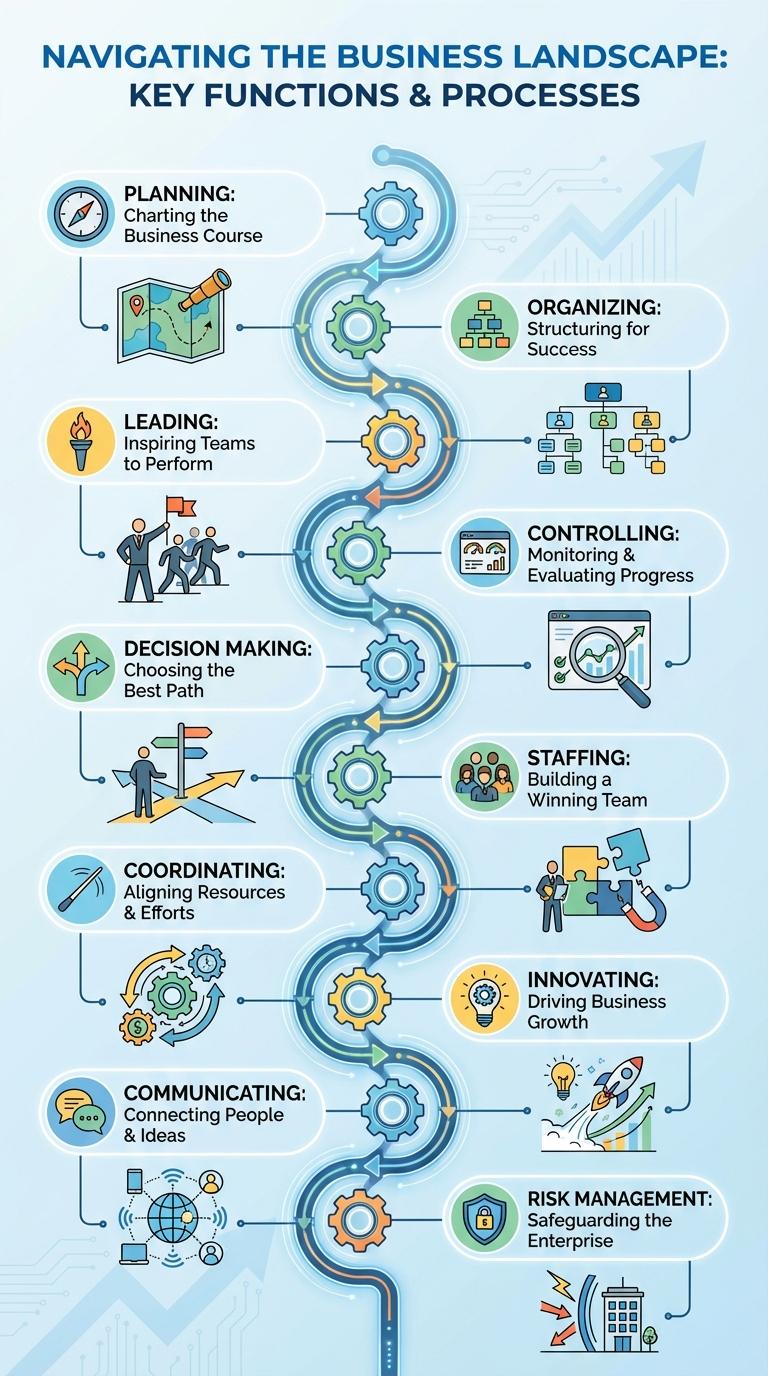
Effective entrepreneurs excel by mastering key management functions that drive business success. These functions include planning, organizing, leading, and controlling resources to achieve organizational goals. Understanding and applying these principles enhances decision-making and operational efficiency.
Planning: Charting the Business Course
Planning is a crucial management function that defines the entrepreneur's strategic direction. It involves setting clear goals and outlining the steps to achieve business success.
- Goal Setting - Establishes specific, measurable objectives to guide business activities.
- Resource Allocation - Determines how to effectively distribute assets and capital for optimal results.
- Risk Assessment - Identifies potential challenges and develops strategies to mitigate them.
Organizing: Structuring for Success
How does organizing contribute to an entrepreneur's success? Organizing involves structuring resources and tasks efficiently to achieve business goals. This function ensures that roles and responsibilities are clearly defined, promoting productivity and collaboration.
Leading: Inspiring Teams to Perform
Leading is a critical management function where entrepreneurs motivate and guide their teams toward achieving business goals. Effective leaders inspire confidence, foster collaboration, and build a shared vision.
Entrepreneurs use communication skills and emotional intelligence to drive team performance and innovation. Inspiring teams involves recognizing individual strengths and aligning them with the company's mission for maximum impact.
Controlling: Monitoring & Evaluating Progress
Controlling in entrepreneurship involves continuously monitoring business activities to ensure they align with established goals. Entrepreneurs evaluate progress by comparing actual performance against planned objectives. This function allows timely adjustments to strategies, enhancing overall business effectiveness.
Decision Making: Choosing the Best Path
Decision making is a crucial management function for entrepreneurs, involving the selection of the best path to achieve business goals. Effective decision making requires analyzing data, evaluating alternatives, and anticipating potential risks and rewards. Entrepreneurs who master this skill enhance organizational efficiency and drive sustainable growth.
Staffing: Building a Winning Team
| Staffing Function | Key Elements |
|---|---|
| Recruitment | Identifying talent aligned with business vision and goals. |
| Selection | Evaluating candidates based on skills, experience, and cultural fit. |
| Training & Development | Providing continuous learning to enhance team capabilities. |
| Retention | Creating a motivating environment with competitive benefits and recognition. |
| Team Building | Encouraging collaboration and strong interpersonal relationships. |
Coordinating: Aligning Resources & Efforts
Coordinating is a critical management function where entrepreneurs align resources and efforts to achieve business goals efficiently. It involves harmonizing activities across departments to ensure seamless collaboration and workflow.
Effective coordination optimizes resource utilization, reduces redundancies, and enhances productivity. Entrepreneurs who excel in this function create a synchronized environment that drives organizational success.
Innovating: Driving Business Growth
Innovating is a core management function that drives business growth by introducing new ideas, products, and processes. Entrepreneurs leverage innovation to gain competitive advantages and meet evolving market demands.
Effective innovation requires vision, creativity, and strategic planning. Entrepreneurs must identify opportunities, allocate resources efficiently, and foster a culture that encourages experimentation. Innovation fuels business expansion and long-term sustainability by continuously improving value propositions.
Communicating: Connecting People & Ideas
Effective communication is a vital management function for entrepreneurs, enabling the seamless exchange of ideas and information. It bridges gaps between team members, stakeholders, and customers to foster collaboration and drive innovation.
- Message Clarity - Entrepreneurs ensure their ideas are conveyed clearly to avoid misunderstandings and align team efforts.
- Active Listening - Successful entrepreneurs prioritize understanding feedback to improve decision-making and relationships.
- Information Flow - Maintaining open channels helps entrepreneurs connect people and ideas, enhancing productivity and problem-solving.