
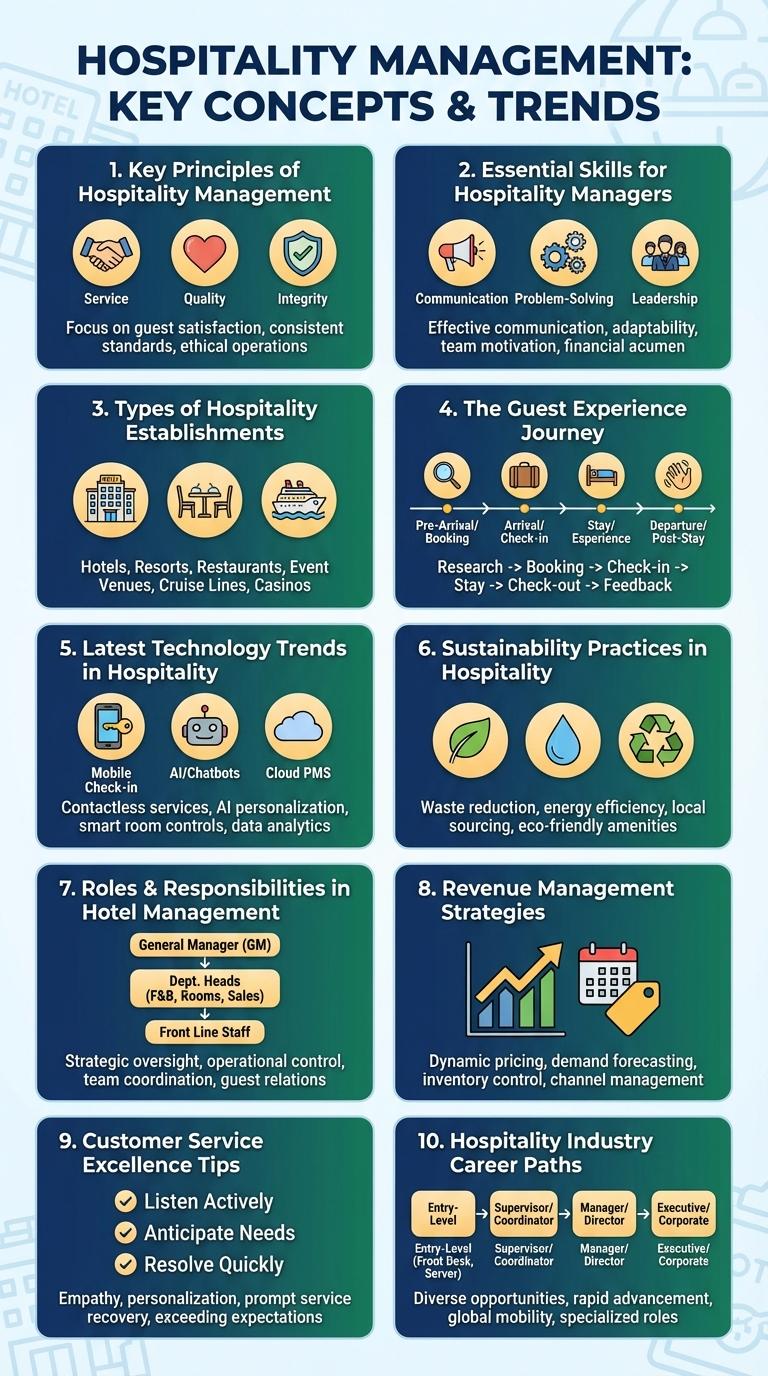
Hospitality management involves coordinating services to enhance guest experiences in hotels, restaurants, and resorts. Effective management focuses on optimizing operations, staff training, and customer satisfaction. This infographic highlights key strategies, industry trends, and essential skills for success in hospitality management.
Key Principles of Hospitality Management
Hospitality management revolves around delivering exceptional guest experiences through effective service and operational excellence. Understanding core principles is essential for success in the competitive hospitality industry.
- Customer Focus - Prioritizing guest satisfaction by anticipating needs and providing personalized service enhances loyalty and reputation.
- Effective Communication - Clear communication among staff and with guests ensures smooth operations and reduces misunderstandings.
- Operational Efficiency - Streamlining processes in areas like housekeeping, food service, and front desk boosts productivity and guest satisfaction.
Mastering these principles drives sustainable growth and a positive brand image in hospitality businesses.
Essential Skills for Hospitality Managers
Hospitality management demands a diverse set of skills to ensure exceptional guest experiences and efficient operations. Mastering these essential skills empowers managers to lead teams effectively and drive business success.
- Communication Skills - Effective communication facilitates clear instructions, guest relations, and conflict resolution within hospitality environments.
- Leadership Abilities - Strong leadership inspires staff, promoting teamwork and maintaining high service standards.
- Problem-Solving - Rapid and strategic problem-solving addresses guest concerns and operational challenges promptly.
- Organizational Skills - Efficient organization ensures smooth daily operations and resource management.
- Financial Acumen - Understanding budgeting and cost control supports profitability and sustainable business growth.
Types of Hospitality Establishments
Hospitality management encompasses various types of establishments including hotels, restaurants, and resorts, each offering distinct services tailored to guest needs. Hotels provide lodging and amenities, while restaurants focus on food and beverage experiences. Resorts combine accommodation with leisure activities, creating comprehensive vacation destinations.
The Guest Experience Journey
What are the key stages of the guest experience journey in hospitality management?
The guest experience journey involves pre-arrival, arrival, stay, and post-departure phases. Each stage requires tailored strategies to ensure guest satisfaction and loyalty.
| Stage | Description |
|---|---|
| Pre-Arrival | Booking, inquiries, personalized communication to set expectations. |
| Arrival | Check-in process, welcoming atmosphere, first impressions. |
| Stay | Room comfort, service quality, on-site amenities, problem resolution. |
| Post-Departure | Feedback collection, loyalty programs, follow-up communication. |
How do hospitality managers optimize the guest experience journey?
They utilize guest feedback data and technology to personalize services. Continuous staff training and process improvements enhance each touchpoint effectively.
Latest Technology Trends in Hospitality
| Technology Trend | Impact on Hospitality Management |
|---|---|
| Artificial Intelligence (AI) | Enhances personalized guest experiences through chatbots and predictive analytics. |
| Internet of Things (IoT) | Enables smart room controls and energy management to improve comfort and reduce costs. |
| Contactless Technology | Facilitates mobile check-ins, digital payments, and keyless room entry for increased safety and convenience. |
| Virtual Reality (VR) and Augmented Reality (AR) | Offers immersive virtual tours and enhances event planning through interactive experiences. |
| Cloud-Based Property Management Systems (PMS) | Streamlines operations, enables real-time data access, and supports remote management of hotel resources. |
Sustainability Practices in Hospitality
Sustainability practices in hospitality are essential for reducing environmental impact and promoting eco-friendly operations. Hotels and resorts increasingly adopt energy-efficient technologies and waste reduction strategies to minimize their carbon footprint.
Water conservation methods and sustainable sourcing of food contribute significantly to greener hospitality management. Implementing these practices not only protects natural resources but also enhances guest satisfaction and operational efficiency.
Roles & Responsibilities in Hotel Management
Hospitality management encompasses a wide range of roles essential for the smooth operation of hotels, including front desk management, housekeeping supervision, and food and beverage coordination. Hotel managers ensure guest satisfaction by overseeing staff performance, managing budgets, and maintaining quality service standards. Effective communication and leadership skills are crucial for managing teams and resolving guest issues promptly within the hospitality industry.
Revenue Management Strategies
Hospitality management integrates strategic approaches to maximize revenue through careful analysis of market demand and customer behavior. Revenue management strategies focus on optimizing pricing, inventory control, and distribution channels to enhance profitability.
Effective revenue management utilizes dynamic pricing models that adjust rates based on real-time data and competitor analysis. Inventory control ensures rooms or services are allocated efficiently to meet fluctuating demand. Distribution strategies leverage online travel agencies, direct bookings, and global distribution systems to reach diverse customer segments.
Customer Service Excellence Tips
Outstanding customer service is the cornerstone of successful hospitality management. Providing seamless and personalized experiences enhances guest satisfaction and loyalty.
- Active Listening - Pay close attention to guests' needs to tailor services effectively.
- Prompt Response - Address inquiries and issues quickly to demonstrate care and professionalism.
- Empathy and Patience - Show understanding and remain calm to build trust with guests.