
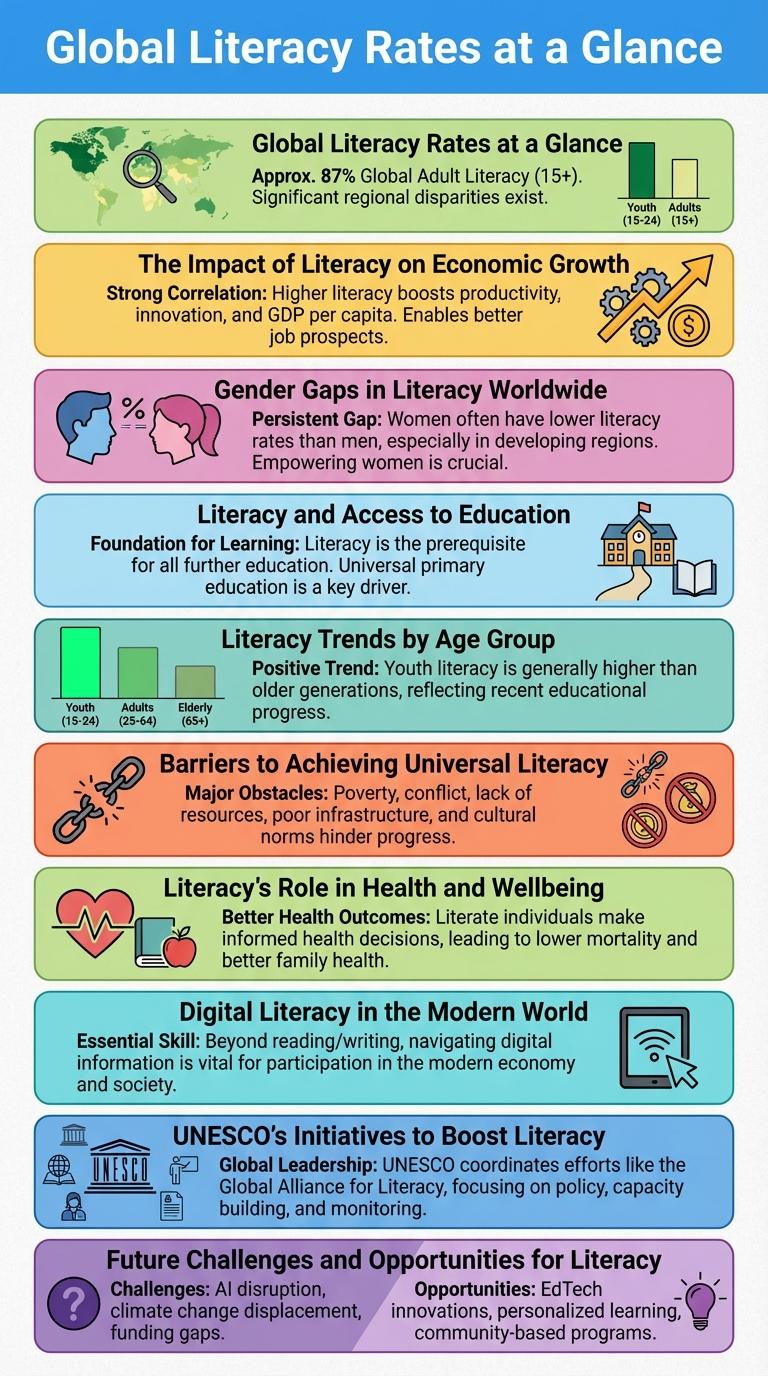
Literacy shapes the foundation of knowledge and communication, influencing every aspect of daily life and societal progress. Visualizing key statistics and trends through an infographic highlights disparities, achievements, and the urgent need for global education initiatives. Such visual tools make complex data accessible, driving awareness and inspiring action toward improving literacy rates worldwide.
Global Literacy Rates at a Glance
Global literacy rates have significantly improved over the past decades, with an estimated 86% of the world's population aged 15 and above now able to read and write. Literacy rates vary widely by region, with North America and Europe achieving rates near 99%, while parts of sub-Saharan Africa and South Asia remain below 65%. Efforts to enhance education access and quality continue to be critical in addressing literacy disparities worldwide.
The Impact of Literacy on Economic Growth
Literacy significantly influences economic development by enhancing workforce skills and productivity. Countries with higher literacy rates generally experience stronger economic growth and improved living standards.
- Increased Workforce Productivity - Literate individuals can perform complex tasks and adapt to new technologies, boosting overall productivity.
- Higher Employment Rates - Literacy improves employability and access to better-paying jobs in various sectors of the economy.
- Economic Innovation - Literacy supports education and skill development, fostering innovation and entrepreneurship.
Investing in literacy programs is essential for sustainable economic growth and poverty reduction worldwide.
Gender Gaps in Literacy Worldwide
Gender gaps in literacy remain a significant challenge worldwide, with women and girls disproportionately affected. In many regions, cultural and socioeconomic barriers limit access to education for females, resulting in lower literacy rates compared to males.
Sub-Saharan Africa and South Asia exhibit some of the widest literacy gender disparities, where female literacy rates can be 20-30% lower than male rates. Closing these gaps is essential for promoting gender equality and fostering sustainable development globally.
Literacy and Access to Education
Literacy rates are closely linked to access to quality education worldwide. Improving educational opportunities significantly boosts literacy development across all age groups.
- Global Literacy Gap - Over 750 million adults lack basic literacy skills, largely due to limited educational access.
- Education Infrastructure - Schools in rural and underserved areas often face resource shortages impacting literacy outcomes.
- Gender Disparity - Girls and women face higher barriers to education, resulting in lower literacy rates compared to males.
Literacy Trends by Age Group
Literacy rates vary significantly across different age groups, reflecting changes in education accessibility and societal emphasis over time. Younger generations typically show higher literacy levels due to improved schooling and digital resources.
Adults aged 25-34 exhibit the highest literacy rates, often exceeding 95%, driven by widespread access to primary and secondary education. Literacy rates tend to decline gradually in older age groups, influenced by historical educational disparities. Efforts to improve adult and senior literacy remain crucial for social inclusion and economic participation.
Barriers to Achieving Universal Literacy
Barriers to achieving universal literacy include limited access to quality education and socioeconomic challenges. Many children in low-income regions face difficulties in attending school regularly due to poverty and lack of resources.
Gender inequality and cultural norms also contribute to disparities in literacy rates worldwide. In some communities, girls are less likely to receive formal education, impacting overall literacy progress.
Literacy's Role in Health and Wellbeing
Literacy significantly impacts individual health and overall wellbeing. Improved literacy skills enable better comprehension of medical information, fostering healthier choices.
- Health Communication - High literacy levels allow individuals to understand prescription labels, medical instructions, and health warnings accurately.
- Preventive Care - Literate individuals are more likely to engage in preventive measures such as vaccinations and screenings, reducing disease risk.
- Mental Wellbeing - Literacy enhances access to resources on mental health, facilitating early intervention and coping strategies.
Digital Literacy in the Modern World
Digital literacy is essential in the modern world, enabling individuals to effectively use technology for communication, information, and problem-solving. It involves skills such as evaluating online sources, managing digital privacy, and understanding digital tools. Enhancing digital literacy boosts employability, supports lifelong learning, and promotes informed participation in a digital society.
| Key Aspect | Details |
|---|---|
| Information Evaluation | Ability to assess the credibility of online content. |
| Digital Privacy | Understanding how to protect personal information online. |
| Technical Skills | Proficiency with software, devices, and online platforms. |
| Communication | Using digital tools for effective interaction and collaboration. |
| Problem-Solving | Applying technology to find solutions and create content. |
UNESCO's Initiatives to Boost Literacy
What initiatives does UNESCO implement to boost global literacy rates?
UNESCO spearheads multiple programs designed to enhance literacy worldwide. These initiatives focus on improving access to quality education, especially for marginalized communities.
How does UNESCO's Global Alliance for Literacy support education?
The Global Alliance for Literacy fosters partnerships to amplify literacy programs. It emphasizes digital learning tools and community engagement to reach remote areas.
What role does UNESCO play in promoting literacy among youth and adults?
UNESCO offers tailored literacy campaigns that address diverse learning needs. Efforts include training educators and expanding adult literacy classes.
How does UNESCO measure the impact of its literacy initiatives?
UNESCO utilizes data collection and analysis to track literacy improvements. Regular reporting helps refine strategies to meet evolving global challenges.
In what ways does UNESCO collaborate with governments to enhance literacy?
UNESCO partners with national governments to design inclusive literacy policies. Support includes funding, technical expertise, and capacity-building programs.