
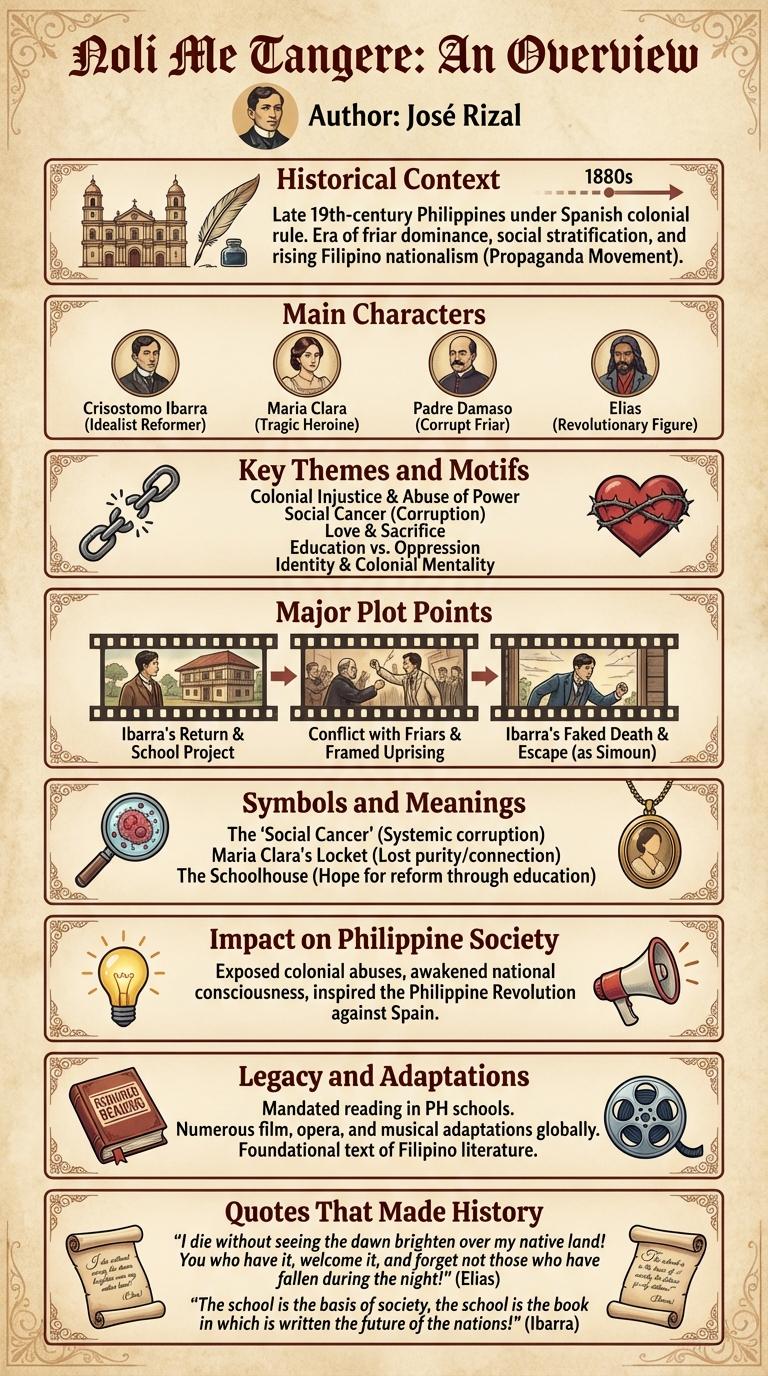
Noli Me Tangere visually captures the essence of Jose Rizal's novel, highlighting its critical characters, themes, and historical context. This infographic breaks down the social injustices and colonial critique embedded in the story, making complex narratives accessible. Readers gain a clear understanding of the novel's impact on Philippine society and its role in sparking reform.
Noli Me Tangere: An Overview
Noli Me Tangere is a seminal novel written by Philippine national hero Jose Rizal in 1887 that exposed the social injustices under Spanish colonial rule. The novel played a critical role in inspiring the Philippine Revolution and awakening Filipino nationalism.
- Publication Date - First published in 1887, the novel was written in Spanish to reach educated Filipinos and reformists.
- Main Characters - The story features characters like Crisostomo Ibarra, Maria Clara, and Padre Damaso symbolizing Filipino society.
- Themes - Major themes include colonial oppression, corruption, social injustice, and the quest for freedom.
Noli Me Tangere remains a powerful literary work essential for understanding Philippine history and culture.
Author: José Rizal
Jose Rizal, a Filipino nationalist and reformist, authored the novel Noli Me Tangere in 1887. The work exposed the social injustices and abuses under Spanish colonial rule in the Philippines. Rizal's novel played a pivotal role in inspiring the Philippine revolution against colonial tyranny.
Historical Context
What is the historical context of Noli Me Tangere? The novel was written by Dr. Jose Rizal in 1887 during the Spanish colonial period in the Philippines. It reveals the social injustices and abuses suffered by Filipinos under Spanish rule.
| Historical Aspect | Description |
|---|---|
| Spanish Colonial Rule | Philippines was colonized by Spain for over 300 years, facing oppression and limited freedoms. |
| Censorship and Persecution | Rizal's novel was banned, and he faced persecution for exposing corruption within the clergy and government. |
| Propaganda Movement | Noli Me Tangere became a significant literary work supporting Filipino reformists seeking equality and justice. |
| Societal Impact | The novel awakened Filipino nationalism and inspired revolutionary movements against Spanish rule. |
Main Characters
Noli Me Tangere is a novel by Jose Rizal that reveals the social injustices in the Philippines during Spanish colonization. It features complex characters representing various facets of Filipino society.
Crisostomo Ibarra, the protagonist, is a young and idealistic Filipino who seeks reform through education and love. Maria Clara, his beloved, symbolizes purity and the struggles faced by Filipino women under colonial rule.
Pilosopo Tasyo, the wise philosopher, questions societal norms and promotes critical thinking. Padre Damaso, a corrupt friar, embodies the abuses of the clergy and colonial authorities.
Key Themes and Motifs
Noli Me Tangere by Jose Rizal is a foundational novel exposing the social cancer of 19th-century Philippine society under Spanish rule. It blends personal tragedy with urgent political critique to highlight the urgent need for reform.
The narrative employs deep symbolism and recurring motifs to communicate themes of oppression, identity, and resistance.
- Colonial Oppression - Depicts abuses by Spanish friars and authorities symbolizing systemic injustice and cruelty towards Filipinos.
- Social Stratification - Illustrates the rigid class hierarchy that suppresses the Filipino lower class and nurtures inequality.
- National Identity - Explores awakening Filipino consciousness and desire for freedom amid cultural erosion and subjugation.
- Love and Sacrifice - Highlights personal relationships intertwined with nationalist ideals, reflecting the cost of reform.
- Religion and Hypocrisy - Critiques the abuse of religious power masking corruption and moral decay in colonial society.
Major Plot Points
Noli Me Tangere, written by Jose Rizal, is a Philippine novel that exposes the social injustices during Spanish colonization. The story follows Crisostomo Ibarra, who returns to the Philippines after studying in Europe.
Ibarra discovers the corruption and abuse perpetrated by the friars and local officials, which leads to his eventual persecution. Maria Clara, his love interest, faces her own struggles imposed by societal expectations. The novel culminates in Ibarra's failed attempt at reform and a call for Filipino awakening and resistance.
Symbols and Meanings
| Symbol | Meaning |
|---|---|
| Noli Me Tangere (Title) | Latin phrase meaning "Touch Me Not," symbolizing the social cancer and the call for reform during Spanish colonial rule in the Philippines. |
| Crisostomo Ibarra | Represents the Filipino intellectual and reformist, symbolizing hope and resistance against oppression. |
| Sisa | Embodies the suffering of the Filipino people under colonial tyranny and injustice. |
| Maria Clara | Symbolizes the idealized Filipino woman, representing purity, tradition, and the cultural identity of the nation. |
| The Church | Represents the power and influence of religious authorities in perpetuating colonial control and social inequality. |
Impact on Philippine Society
Noli Me Tangere, written by Jose Rizal in 1887, played a crucial role in awakening Filipino national consciousness. The novel exposed social injustices under Spanish colonial rule, sparking revolutionary ideas among Filipinos.
Its vivid depiction of oppression and corruption inspired key figures in the Philippine Revolution against Spain. The book remains a powerful symbol of Filipino identity and resistance, influencing educational curricula and cultural discussions today.
Legacy and Adaptations
Legacy of Noli Me Tangere: Jose Rizal's novel exposed Spanish colonial abuses, igniting Filipino nationalism and inspiring the Philippine Revolution. Its themes of social justice and reform continue to influence Philippine literature, education, and political discourse. The book remains a symbol of resistance against oppression and a cornerstone of Filipino identity.
Adaptations of Noli Me Tangere: The novel has been adapted into various forms including stage plays, films, television series, and graphic novels that bring Rizal's message to new audiences. Notable adaptations include the 1961 film directed by Gerardo de Leon and the 1992 television drama series by ABS-CBN. These adaptations highlight the timeless relevance of Noli Me Tangere in Filipino culture and history.